
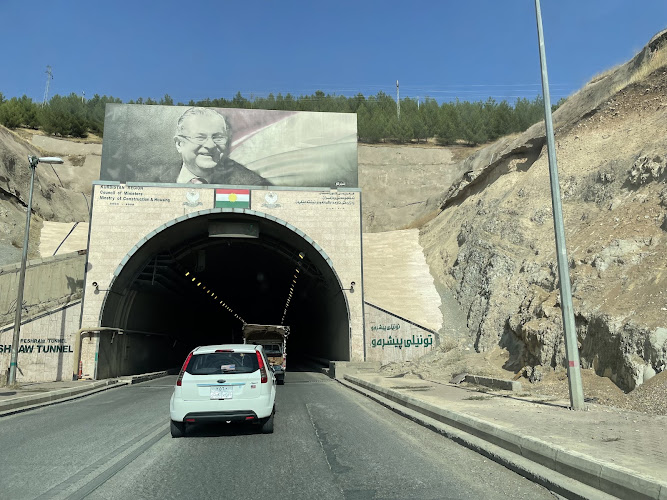
تونێلەكەی سیتەك Sulaymaniyah Tunnel
About تونێلەكەی سیتەك Sulaymaniyah Tunnel
Description
تونێلەكەی سیتەك Sulaymaniyah Tunnel, commonly called the Sitak Tunnel by locals, is more than a quick route through the mountain flank east of the city—it is a small lesson in how Sulaymaniyah keeps moving. As a functioning road tunnel, it links the urban heart of Sulaymaniyah with the Sitak area and the scenic uplands beyond, shaving precious minutes off drives that used to snake across steep switchbacks. Travelers who love road trips and highland panoramas will appreciate how this tunnel anchors a vital corridor in Sulaymaniyah Governorate, Iraq, while offering a unique glimpse of the region’s rugged beauty and evolving infrastructure.
Those traveling in Iraqi Kurdistan often come for the mountains and the slow, generous hospitality. And yes, that still shows up here—odd as it sounds when talking about a tunnel. Before entering, it’s common to see families pause at pull-offs near the portal for a quick photo of the ridgelines or to stretch their legs. The tunnel itself is modern and no-nonsense: engineered for efficiency, safety, and steady traffic flow. The portals frame the roadway like concrete gateways, set against slopes that turn deep green after spring rains and a dusty gold by late summer.
Most visitors describe the drive as calm and practical, especially outside rush hours. Some—especially those who enjoy civil-engineering curiosities—remark on the ventilation fans and the simple, clean inner cladding. Others, to be fair, note that at busy periods it can feel loud, and the air gets a touch diesel-heavy. It is a living piece of infrastructure, after all, serving daily commuters, freight, and weekenders heading for hill villages. That mix is part of the appeal: the تونێلەكەی سیتەك Sulaymaniyah Tunnel is a straightforward engineering answer to an old topographic riddle.
There’s an occasional confusion worth clearing up: some travelers mix up the Sitak Tunnel with the Peshraw Tunnel or other underpasses within Sulaymaniyah’s expanding road network. These are different assets that together reduce congestion and improve regional circulation. If a driver says “tunnel road toward Sitak,” they’re directing you towards the Sulaymaniyah Tunnel that serves this particular corridor, not the urban underpass closer to the city center. Keep that in mind if hiring a taxi—names get used interchangeably, and it’s totally okay to confirm the direction of the Sulaymaniyah Tunnel before you hop in.
This writer remembers a spring squall nudging the clouds low around the west portal. In that soft rain hush, the mountains felt close enough to touch. A trucker stood near his cab and offered tea—because of course he did. Moments like that stick. It’s not a “tour” in the conventional sense, but the tunnel and its approaches pull you into Sulaymaniyah’s everyday rhythm. Commuters, families, travelers, all sharing the same corridor, all trying to get somewhere. It’s a journey through time in a subtle way: yesterday’s long, winding road now replaced by a clean, lit passage through rock, the city’s ambitions literally cut into the hillside.
From an engineering perspective, the tunnel’s significance is straightforward. It smooths a key gradient, helps lessen congestion on older roads, and integrates into a regional road network that keeps trade and tourism moving. The inner bore is lit, signage is generally clear, and there are visible safety panels and emergency markers at set intervals. Is it perfect? Not quite. Lighting can feel stark in spots, and drivers sometimes treat the tunnel like a fast pass—so stay alert and respect the posted limits. But in terms of utility, it’s a solid piece of infrastructure that elevates quality of life by tightening connections between the city center and the highland settlements to the east.
For travelers, the Sitak Tunnel becomes an easy waypoint in a broader day out. Many combine a drive through the tunnel with stops at hillside cafes, scenic terraces, and viewpoints that catch sunsets flushing the Azmar range. Photography lovers—please don’t stop inside the tunnel—often aim for the lookouts before or after the portals. The contrast is photogenic: concrete geometry giving way to rolling valleys and terraced slopes. On clear days after winter, the air is sharp and colors pop; in high summer, heat hazes the horizon a bit, but golden hour still brings that honeyed glow you’ll want in your images.
Key Features
- Purpose-built mountain passage: a modern road tunnel that shortens drives between Sulaymaniyah and the Sitak area in Iraqi Kurdistan
- Efficient connection: part of a vital regional road network that trims travel time and reduces congestion on older winding routes
- Lighting and ventilation: a lit bore with ventilation fans for continuous air flow, plus visible emergency signage in tunnel
- Real-world utility: open year-round (24/7 under normal conditions), serving commuters, freight, and weekend travelers
- Scenic approaches: photogenic mountain corridors, with pull-offs and viewpoints outside the portals for safe photography
- Clear wayfinding: signs directing you towards the Sulaymaniyah Tunnel from the city center and onward to Sitak
- Local character: roadside kiosks, tea stands, and casual cafes appear near approaches in peak seasons
- Close to other attractions: makes it easy to explore nearby hills, small villages, and picnic spots beyond Sulaymaniyah’s urban edge
- No designated accessible parking: there is no wheelchair accessible parking lot at the portal areas; plan alternatives accordingly
- Practical for road-trippers: an excellent waypoint on a loop combining city sights with mountain drives in Sulaymaniyah Governorate, Iraq
Best Time to Visit
The Sitak Tunnel is a working roadway, so “best time” is really about comfort and traffic. Spring (March–May) and autumn (late September–November) offer the most pleasant conditions for those scenic stops around the portals. In spring, fresh greens return to the slopes; after a rain, the air carries that clean, post-storm clarity photographers adore. Autumn brings calmer light and less heat, with evening drives especially appealing.
Summer in Sulaymaniyah can run hot. If driving in July or August, aim for early morning or late afternoon to avoid the harshest sun—and the heavier midday traffic. In winter, check conditions if there’s been recent snowfall or persistent rains; the tunnel itself usually stays open, but approach roads can occasionally run slick. Early mornings are typically smoother for traffic, while weekday late afternoons and evenings see commuter peaks. Fridays (the local weekend) can also see midday bunching as families head out of the city.
For the best photography around the approaches, golden hour does the heavy lifting. Sunrise catches pinks on the upper ridges, while sunset leans warm and dramatic. This writer swears by the hour after rain in spring—colors are richer, and the valley views beyond the tunnel look like a newly washed canvas. Not a scientific fact, but it’s one of those little tips that makes a difference.
How to Get There
From the city center of Sulaymaniyah, head east following signs directing you towards the Sulaymaniyah Tunnel or Sitak. Major arteries funnel drivers naturally toward the mountain corridor; you’ll see standard road signs in Kurdish and Arabic as you approach. As you arrive at the tunnel entrance, keep to your lane, observe the posted speed, and prepare for changing light conditions—eyes need a second to adjust from bright sun to the tunnel’s interior lighting.
Taxi is the simplest option for many travelers. Negotiate fare upfront or ask the driver to run the meter if available. For short hops from the city center out to the tunnel area and back, rates vary widely based on traffic and car type, but expect a modest fare by international standards. Shared taxis or minivans running toward the Sitak side may also be an option; ask at your hotel, and they’ll point you to the right stand. Ride-hailing apps are hit-and-miss here; conventional street taxis usually respond faster.
Self-driving is very doable. Road surfaces on main routes are generally decent, though occasional potholes and speed bumps appear without much warning. Fuel stations are common along arterial roads; carry some cash in Iraqi dinar in case card machines take a day off. Parking near the actual portals is limited and informal—essentially pull-offs—so only stop where it’s clearly safe, well off the traffic flow, and legal. Do not walk inside the tunnel or stand near the entrance. Between air flow and noise, it’s not a pedestrian environment, nor is it designed as one.
A note for clarity: visitors sometimes hear people refer to a “tunnel road” inside the city associated with newer upgrades. That’s typically the Peshraw Tunnel or similar urban underpasses improving Sulaymaniyah’s internal traffic. For this attraction, you’re after the sitak tunnel on the mountain corridor—make sure your driver understands you want the tunnel that carries you out toward Sitak and the uplands beyond.
Tips for Visiting
Here’s a short, straight-shooting list to make the experience smoother and more enjoyable:
- Time your drive: Avoid heavy traffic windows if possible—weekday late afternoons and early evenings tend to clump. Early morning runs feel calm and make the most of gentle light.
- Photography strategy: No photos inside, please; it’s unsafe to stop. Instead, take advantage of pull-offs and small viewpoints before or after the portals. The mountain backdrop plays nicely with wide-angle lenses.
- Know the rules: Keep headlights on, respect the speed limit, and maintain lane discipline. Treat the tunnel like any controlled section of highway—because it is.
- Air quality: Ventilation fans do their job, but during bursts of heavy traffic you’ll notice exhaust. If traveling with sensitive lungs, time the visit during quieter periods.
- Accessibility: There is no designated wheelchair accessible parking lot near the tunnel portals. Travelers with mobility needs may prefer to enjoy the mountain scenery from accessible cafes or viewpoints farther from the traffic stream.
- Carry small cash: Nearby kiosks or tea stands sometimes accept only cash. Small bills in dinar go a long way for water, tea, and quick snacks.
- Drive defensively: Some drivers push the pace. Maintain safe distance and resist the urge to match local habits. Better to arrive unruffled than to shave two minutes off the drive.
- Combine with a day out: Use the tunnel as your springboard to explore villages and hillside terraces beyond Sulaymaniyah. Think slow lunches, a short hike, and a sunset return.
- Safety common sense: Sulaymaniyah is generally considered one of the safer urban areas in Iraq, especially for travelers who use trusted transport and stay aware. Still, check current guidance, keep valuables discreet, and share your route with your hotel if heading far into the hills.
- Maintenance closures: While the tunnel is typically open 24/7, occasional maintenance or traffic controls can occur. Local drivers and hotel staff will have the latest updates.
What’s special about Sulaymaniyah, and how does the tunnel fit into that story? The city has that industrious, open-armed energy—artists and academics, entrepreneurs and families—woven into its daily life. The تونێلەكەی سیتەك Sulaymaniyah Tunnel advances that story on the road network level: improving access, shortening commutes, and, yes, boosting weekend tourism toward the slopes. It is a practical piece of regional infrastructure that, cumulatively, nudges quality of life upward.
And here’s a tiny aside: sometimes the best travel memories come from unglamorous places. A roadside tea after a cloudburst. A quick chat with a taxi driver who points out his favorite lamb joint over the next ridge. The tunnel itself is brief; the experiences you stack around it are the point. This corridor gets you out there—toward quieter valleys, cooler air, and the kind of unplanned stops that stick with you long after the wheels stop turning.
If the goal is a smooth, safe drive and a scenic day, this tunnel delivers. The signage is decent, lighting functional, and the bore wide enough to keep a steady pace even with moderate traffic. Some visitors wish for prettier cladding or fancier portals, but honestly, the mountain views do the heavy lifting. And yes, once in a while, traffic bunches up and it gets loud. That’s the tradeoff of a road that does real work. Take it as part of the experience, then let the open road beyond the exit bring your sense of wonder right back.
Call it Sitak Tunnel, call it the Sulaymaniyah Tunnel—the name matters less than the utility. As a tourist attraction, it’s admittedly unconventional. But as a travel tool, it’s excellent. Use it to explore, to reach highland tables where tea tastes different in the thinner air, to catch sightlines that remind you how mountainous this corner of Iraq truly is. The tunnel is the quiet hero of that day—here to get you through the mountain and into the rest of your story.
Key Features
- Purpose-built mountain passage: a modern road tunnel that shortens drives between Sulaymaniyah and the Sitak area in Iraqi Kurdistan
- Efficient connection: part of a vital regional road network that trims travel time and reduces congestion on older winding routes
- Lighting and ventilation: a lit bore with ventilation fans for continuous air flow, plus visible emergency signage in tunnel
- Real-world utility: open year-round (24/7 under normal conditions), serving commuters, freight, and weekend travelers
- Scenic approaches: photogenic mountain corridors, with pull-offs and viewpoints outside the portals for safe photography
- Clear wayfinding: signs directing you towards the Sulaymaniyah Tunnel from the city center and onward to Sitak
- Local character: roadside kiosks, tea stands, and casual cafes appear near approaches in peak seasons
- Close to other attractions: makes it easy to explore nearby hills, small villages, and picnic spots beyond Sulaymaniyah’s urban edge
More Details
Updated November 4, 2025
Table of Contents
- Description
- Key Features
- Best Time to Visit
- How to Get There
- Tips for Visiting
- Key Highlights
- Location
- Places to Stay Near تونێلەكەی سیتەك Sulaymaniyah Tunnel
- Find and Book a Tour
- Explore More Travel Guides
- Nearby Places You Might Like
- Traveler Reviews for تونێلەكەی سیتەك Sulaymaniyah Tunnel
- Share Your Experience
Description
تونێلەكەی سیتەك Sulaymaniyah Tunnel, commonly called the Sitak Tunnel by locals, is more than a quick route through the mountain flank east of the city—it is a small lesson in how Sulaymaniyah keeps moving. As a functioning road tunnel, it links the urban heart of Sulaymaniyah with the Sitak area and the scenic uplands beyond, shaving precious minutes off drives that used to snake across steep switchbacks. Travelers who love road trips and highland panoramas will appreciate how this tunnel anchors a vital corridor in Sulaymaniyah Governorate, Iraq, while offering a unique glimpse of the region’s rugged beauty and evolving infrastructure.
Those traveling in Iraqi Kurdistan often come for the mountains and the slow, generous hospitality. And yes, that still shows up here—odd as it sounds when talking about a tunnel. Before entering, it’s common to see families pause at pull-offs near the portal for a quick photo of the ridgelines or to stretch their legs. The tunnel itself is modern and no-nonsense: engineered for efficiency, safety, and steady traffic flow. The portals frame the roadway like concrete gateways, set against slopes that turn deep green after spring rains and a dusty gold by late summer.
Most visitors describe the drive as calm and practical, especially outside rush hours. Some—especially those who enjoy civil-engineering curiosities—remark on the ventilation fans and the simple, clean inner cladding. Others, to be fair, note that at busy periods it can feel loud, and the air gets a touch diesel-heavy. It is a living piece of infrastructure, after all, serving daily commuters, freight, and weekenders heading for hill villages. That mix is part of the appeal: the تونێلەكەی سیتەك Sulaymaniyah Tunnel is a straightforward engineering answer to an old topographic riddle.
There’s an occasional confusion worth clearing up: some travelers mix up the Sitak Tunnel with the Peshraw Tunnel or other underpasses within Sulaymaniyah’s expanding road network. These are different assets that together reduce congestion and improve regional circulation. If a driver says “tunnel road toward Sitak,” they’re directing you towards the Sulaymaniyah Tunnel that serves this particular corridor, not the urban underpass closer to the city center. Keep that in mind if hiring a taxi—names get used interchangeably, and it’s totally okay to confirm the direction of the Sulaymaniyah Tunnel before you hop in.
This writer remembers a spring squall nudging the clouds low around the west portal. In that soft rain hush, the mountains felt close enough to touch. A trucker stood near his cab and offered tea—because of course he did. Moments like that stick. It’s not a “tour” in the conventional sense, but the tunnel and its approaches pull you into Sulaymaniyah’s everyday rhythm. Commuters, families, travelers, all sharing the same corridor, all trying to get somewhere. It’s a journey through time in a subtle way: yesterday’s long, winding road now replaced by a clean, lit passage through rock, the city’s ambitions literally cut into the hillside.
From an engineering perspective, the tunnel’s significance is straightforward. It smooths a key gradient, helps lessen congestion on older roads, and integrates into a regional road network that keeps trade and tourism moving. The inner bore is lit, signage is generally clear, and there are visible safety panels and emergency markers at set intervals. Is it perfect? Not quite. Lighting can feel stark in spots, and drivers sometimes treat the tunnel like a fast pass—so stay alert and respect the posted limits. But in terms of utility, it’s a solid piece of infrastructure that elevates quality of life by tightening connections between the city center and the highland settlements to the east.
For travelers, the Sitak Tunnel becomes an easy waypoint in a broader day out. Many combine a drive through the tunnel with stops at hillside cafes, scenic terraces, and viewpoints that catch sunsets flushing the Azmar range. Photography lovers—please don’t stop inside the tunnel—often aim for the lookouts before or after the portals. The contrast is photogenic: concrete geometry giving way to rolling valleys and terraced slopes. On clear days after winter, the air is sharp and colors pop; in high summer, heat hazes the horizon a bit, but golden hour still brings that honeyed glow you’ll want in your images.
Key Features
- Purpose-built mountain passage: a modern road tunnel that shortens drives between Sulaymaniyah and the Sitak area in Iraqi Kurdistan
- Efficient connection: part of a vital regional road network that trims travel time and reduces congestion on older winding routes
- Lighting and ventilation: a lit bore with ventilation fans for continuous air flow, plus visible emergency signage in tunnel
- Real-world utility: open year-round (24/7 under normal conditions), serving commuters, freight, and weekend travelers
- Scenic approaches: photogenic mountain corridors, with pull-offs and viewpoints outside the portals for safe photography
- Clear wayfinding: signs directing you towards the Sulaymaniyah Tunnel from the city center and onward to Sitak
- Local character: roadside kiosks, tea stands, and casual cafes appear near approaches in peak seasons
- Close to other attractions: makes it easy to explore nearby hills, small villages, and picnic spots beyond Sulaymaniyah’s urban edge
- No designated accessible parking: there is no wheelchair accessible parking lot at the portal areas; plan alternatives accordingly
- Practical for road-trippers: an excellent waypoint on a loop combining city sights with mountain drives in Sulaymaniyah Governorate, Iraq
Best Time to Visit
The Sitak Tunnel is a working roadway, so “best time” is really about comfort and traffic. Spring (March–May) and autumn (late September–November) offer the most pleasant conditions for those scenic stops around the portals. In spring, fresh greens return to the slopes; after a rain, the air carries that clean, post-storm clarity photographers adore. Autumn brings calmer light and less heat, with evening drives especially appealing.
Summer in Sulaymaniyah can run hot. If driving in July or August, aim for early morning or late afternoon to avoid the harshest sun—and the heavier midday traffic. In winter, check conditions if there’s been recent snowfall or persistent rains; the tunnel itself usually stays open, but approach roads can occasionally run slick. Early mornings are typically smoother for traffic, while weekday late afternoons and evenings see commuter peaks. Fridays (the local weekend) can also see midday bunching as families head out of the city.
For the best photography around the approaches, golden hour does the heavy lifting. Sunrise catches pinks on the upper ridges, while sunset leans warm and dramatic. This writer swears by the hour after rain in spring—colors are richer, and the valley views beyond the tunnel look like a newly washed canvas. Not a scientific fact, but it’s one of those little tips that makes a difference.
How to Get There
From the city center of Sulaymaniyah, head east following signs directing you towards the Sulaymaniyah Tunnel or Sitak. Major arteries funnel drivers naturally toward the mountain corridor; you’ll see standard road signs in Kurdish and Arabic as you approach. As you arrive at the tunnel entrance, keep to your lane, observe the posted speed, and prepare for changing light conditions—eyes need a second to adjust from bright sun to the tunnel’s interior lighting.
Taxi is the simplest option for many travelers. Negotiate fare upfront or ask the driver to run the meter if available. For short hops from the city center out to the tunnel area and back, rates vary widely based on traffic and car type, but expect a modest fare by international standards. Shared taxis or minivans running toward the Sitak side may also be an option; ask at your hotel, and they’ll point you to the right stand. Ride-hailing apps are hit-and-miss here; conventional street taxis usually respond faster.
Self-driving is very doable. Road surfaces on main routes are generally decent, though occasional potholes and speed bumps appear without much warning. Fuel stations are common along arterial roads; carry some cash in Iraqi dinar in case card machines take a day off. Parking near the actual portals is limited and informal—essentially pull-offs—so only stop where it’s clearly safe, well off the traffic flow, and legal. Do not walk inside the tunnel or stand near the entrance. Between air flow and noise, it’s not a pedestrian environment, nor is it designed as one.
A note for clarity: visitors sometimes hear people refer to a “tunnel road” inside the city associated with newer upgrades. That’s typically the Peshraw Tunnel or similar urban underpasses improving Sulaymaniyah’s internal traffic. For this attraction, you’re after the sitak tunnel on the mountain corridor—make sure your driver understands you want the tunnel that carries you out toward Sitak and the uplands beyond.
Tips for Visiting
Here’s a short, straight-shooting list to make the experience smoother and more enjoyable:
- Time your drive: Avoid heavy traffic windows if possible—weekday late afternoons and early evenings tend to clump. Early morning runs feel calm and make the most of gentle light.
- Photography strategy: No photos inside, please; it’s unsafe to stop. Instead, take advantage of pull-offs and small viewpoints before or after the portals. The mountain backdrop plays nicely with wide-angle lenses.
- Know the rules: Keep headlights on, respect the speed limit, and maintain lane discipline. Treat the tunnel like any controlled section of highway—because it is.
- Air quality: Ventilation fans do their job, but during bursts of heavy traffic you’ll notice exhaust. If traveling with sensitive lungs, time the visit during quieter periods.
- Accessibility: There is no designated wheelchair accessible parking lot near the tunnel portals. Travelers with mobility needs may prefer to enjoy the mountain scenery from accessible cafes or viewpoints farther from the traffic stream.
- Carry small cash: Nearby kiosks or tea stands sometimes accept only cash. Small bills in dinar go a long way for water, tea, and quick snacks.
- Drive defensively: Some drivers push the pace. Maintain safe distance and resist the urge to match local habits. Better to arrive unruffled than to shave two minutes off the drive.
- Combine with a day out: Use the tunnel as your springboard to explore villages and hillside terraces beyond Sulaymaniyah. Think slow lunches, a short hike, and a sunset return.
- Safety common sense: Sulaymaniyah is generally considered one of the safer urban areas in Iraq, especially for travelers who use trusted transport and stay aware. Still, check current guidance, keep valuables discreet, and share your route with your hotel if heading far into the hills.
- Maintenance closures: While the tunnel is typically open 24/7, occasional maintenance or traffic controls can occur. Local drivers and hotel staff will have the latest updates.
What’s special about Sulaymaniyah, and how does the tunnel fit into that story? The city has that industrious, open-armed energy—artists and academics, entrepreneurs and families—woven into its daily life. The تونێلەكەی سیتەك Sulaymaniyah Tunnel advances that story on the road network level: improving access, shortening commutes, and, yes, boosting weekend tourism toward the slopes. It is a practical piece of regional infrastructure that, cumulatively, nudges quality of life upward.
And here’s a tiny aside: sometimes the best travel memories come from unglamorous places. A roadside tea after a cloudburst. A quick chat with a taxi driver who points out his favorite lamb joint over the next ridge. The tunnel itself is brief; the experiences you stack around it are the point. This corridor gets you out there—toward quieter valleys, cooler air, and the kind of unplanned stops that stick with you long after the wheels stop turning.
If the goal is a smooth, safe drive and a scenic day, this tunnel delivers. The signage is decent, lighting functional, and the bore wide enough to keep a steady pace even with moderate traffic. Some visitors wish for prettier cladding or fancier portals, but honestly, the mountain views do the heavy lifting. And yes, once in a while, traffic bunches up and it gets loud. That’s the tradeoff of a road that does real work. Take it as part of the experience, then let the open road beyond the exit bring your sense of wonder right back.
Call it Sitak Tunnel, call it the Sulaymaniyah Tunnel—the name matters less than the utility. As a tourist attraction, it’s admittedly unconventional. But as a travel tool, it’s excellent. Use it to explore, to reach highland tables where tea tastes different in the thinner air, to catch sightlines that remind you how mountainous this corner of Iraq truly is. The tunnel is the quiet hero of that day—here to get you through the mountain and into the rest of your story.
Key Highlights
- Purpose-built mountain passage: a modern road tunnel that shortens drives between Sulaymaniyah and the Sitak area in Iraqi Kurdistan
- Efficient connection: part of a vital regional road network that trims travel time and reduces congestion on older winding routes
- Lighting and ventilation: a lit bore with ventilation fans for continuous air flow, plus visible emergency signage in tunnel
- Real-world utility: open year-round (24/7 under normal conditions), serving commuters, freight, and weekend travelers
- Scenic approaches: photogenic mountain corridors, with pull-offs and viewpoints outside the portals for safe photography
- Clear wayfinding: signs directing you towards the Sulaymaniyah Tunnel from the city center and onward to Sitak
- Local character: roadside kiosks, tea stands, and casual cafes appear near approaches in peak seasons
- Close to other attractions: makes it easy to explore nearby hills, small villages, and picnic spots beyond Sulaymaniyah’s urban edge
Location
Places to Stay Near تونێلەكەی سیتەك Sulaymaniyah Tunnel
Find and Book a Tour
Explore More Travel Guides
No reviews found! Be the first to review!
Traveler Reviews for تونێلەكەی سیتەك Sulaymaniyah Tunnel
There are no reviews yet. Be the first one to write one.
Have you visited تونێلەكەی سیتەك Sulaymaniyah Tunnel? Help other travelers by sharing your review.
You Might Also Like

Hawary Shar Park

فولکەی دەستاڕەکە
Sulaymaniyah Heights
Find Accommodations Nearby
Recommended Tours & Activities
Visitor Reviews
There are no reviews yet. Be the first one to write one.
Share Your Experience
Have you visited تونێلەكەی سیتەك Sulaymaniyah Tunnel? Help other travelers by leaving a review.