
Last modified August 17, 2026
Let’s be honest—picking between Lucca and Ferrara? That’s a tough call. Both cities hand you a different flavor of Italy. Lucca draws you in with its Renaissance walls, leafy promenades, and those classic Tuscan hills just beyond the gates. Ferrara, meanwhile, lures you with medieval lanes, wide boulevards, and a cycling culture that makes getting lost kind of fun. If you’re after history, good eats, and that laid-back Italian rhythm, you really can’t go wrong—your choice just depends on the vibe you’re after.
Lucca’s got a quieter, almost small-town energy, and you can slip easily into Tuscany’s countryside. Ferrara feels more animated, with a strong local spirit and a real reputation for the arts. Getting between them? Not a headache at all. Trains, cars, buses—all options are on the table, so you could easily squeeze both into one trip. Just don’t forget to toss the right travel gear into your bag so you’re not caught off guard.
Italy always finds ways to surprise you. I’ve stumbled into Ferrara during a wild local festival—suddenly the streets just exploded with music and color. And then there’s Lucca, where I pedaled the walls at sunset, barely another soul in sight. These tiny, unexpected moments? They’re what make choosing between these two cities such a personal thing.
Key Takeaways
- Lucca feels smaller, historic, and cozies right up to Tuscany’s countryside
- Ferrara brings lively streets, a cycling heartbeat, and strong traditions
- Travel between them is painless and totally doable if you’ve got time
Lucca vs Ferrara: Quick Comparison
Both Lucca and Ferrara move at a slower pace, with deep cultural roots and a walkable scale that makes daily life a pleasure. The differences in climate, size, and overall atmosphere can really shape your trip—or even your decision to settle down.
Location and Region
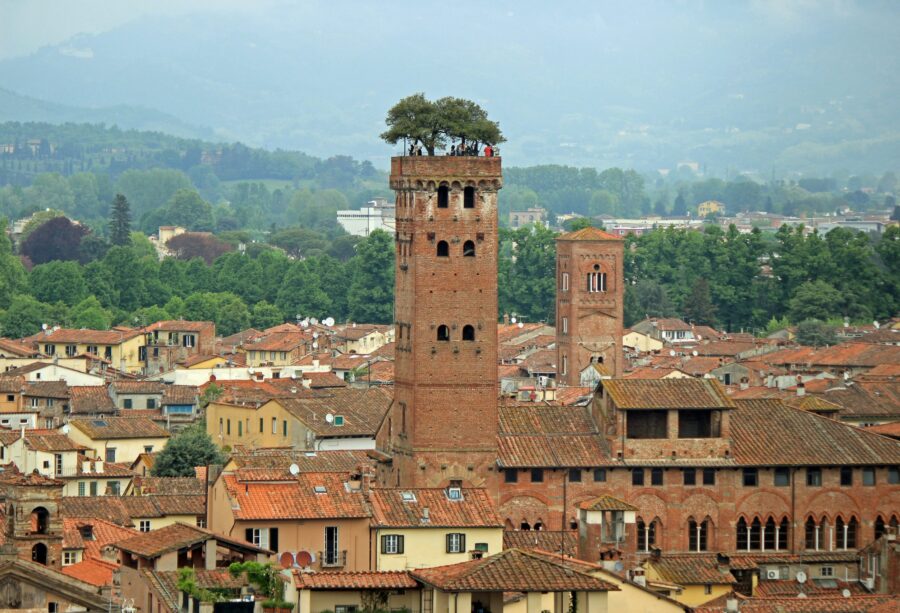
Lucca sits in Tuscany, wedged between Pisa and Florence, and it just oozes that Tuscan identity—rolling hills, olive groves, vineyards all within a short ride. You can hop on a train and make it to Florence in under 90 minutes. That’s perfect if you want a taste of the big-city buzz but don’t want to actually live in it.
Ferrara lives in Emilia-Romagna, famous for legendary foods like Parmigiano Reggiano and prosciutto. It’s closer to Bologna, Venice, and the flat Po River plain. The whole area is pretty flat and agricultural, and the cycling paths here? They make getting around by bike ridiculously easy.
Lucca and Ferrara are only about 142 kilometers apart—that’s roughly 88 miles. You could drive between them in a couple of hours, but the landscapes couldn’t be more different: Tuscany’s rolling hills vs. Emilia-Romagna’s open plains.
Population and Atmosphere
Lucca counts about 90,000 residents. Life here feels intimate, especially inside its compact, walled center. Tourists definitely show up in big numbers during summer, so prices for a meal or a bed can surprise you. Still, locals keep their routines, and you’ll spot families cycling or strolling the walls as the sun goes down.
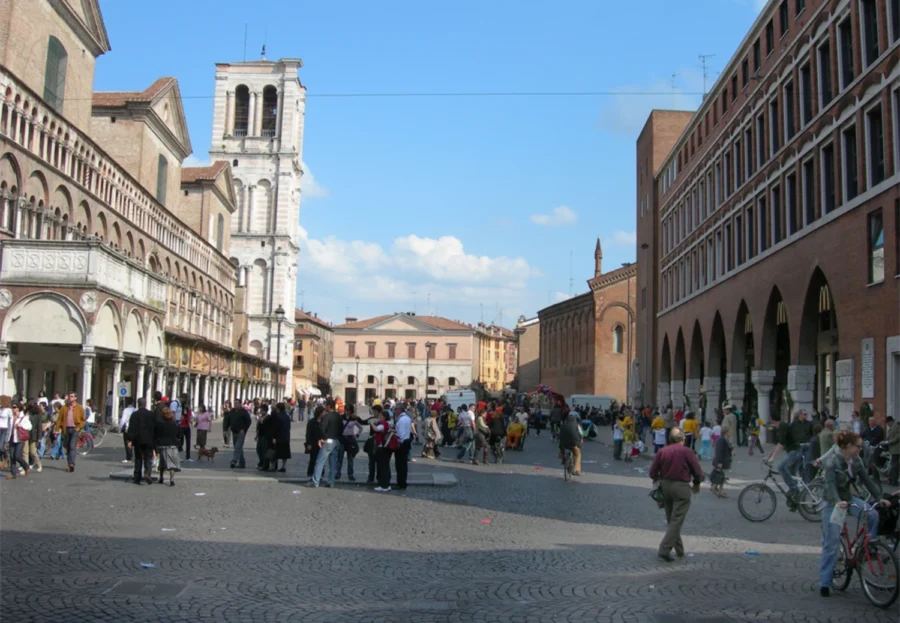
Ferrara’s bigger, with something like 130,000 people, and it feels more like a working Italian city than a tourist magnet. Fewer foreign faces make it easier to blend into daily life if you’re sticking around for a while. The city’s vibe stays laid back, but there’s a spark from its university crowd.
If you crave that postcard-perfect, quiet backdrop, Lucca might be your spot. But if you’re after more authenticity in daily rhythms and a break on living costs, Ferrara often gets the nod from expats who’ve debated the two on travel forums.
Historical Significance
Lucca’s pride is its Renaissance-era walls—still standing, still complete, and now a leafy public park. Walking or biking the walls gives you a sweeping view of the city, from ancient churches to tucked-away piazzas. Lucca once stood as an independent republic, and you can feel that stubborn pride in the city’s architecture and its cultural events.
Ferrara, meanwhile, was the stronghold of the Este family, one of Italy’s old powerhouses. The city’s UNESCO World Heritage badge comes from its Renaissance urban planning—broad streets, red-brick palaces, and the moated Castello Estense right in the middle. Some parts look a little rougher than Lucca, but honestly, that’s part of the charm.
Art and music run deep in both places. Lucca celebrates Puccini, while Ferrara puts on Renaissance art and opera. If you love history you can touch and feel, you’ll find it in both cities, but each tells its story in its own way.
Traveling Between Lucca and Ferrara
Traveling between Lucca and Ferrara is a breeze, whether you drive, hop a train, or catch a bus. The journey cuts through the heart of Italy, and along the way, you’ll pass through towns that beg for a quick stop—if you’re not in a rush, why not?
Driving Distance and Time
It’s about 142 km (88 miles) from Ferrara to Lucca. The drive usually takes 2 to 2.5 hours, traffic willing. You’ll follow the A1 and A11 motorways, swinging past Florence.
Driving gives you options. Leave early, grab coffee in a sleepy Tuscan town, or take a detour for lunch in Bologna. Parking in Lucca sits outside the old walls, but honestly, it’s a simple stroll inside.
No car? No problem. You can always snag a rental through comparison sites like KAYAK. If you’re traveling with friends or family, it sometimes works out cheaper than trains.
Train and Bus Options
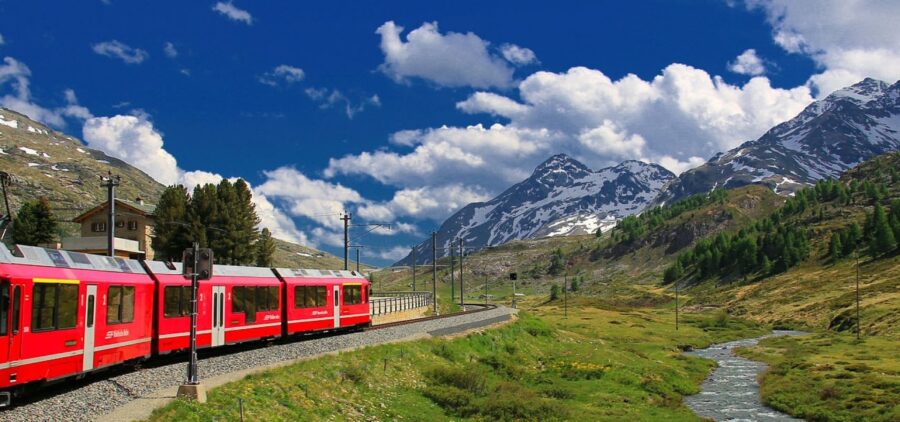
If you’d rather not deal with Italian traffic, trains are a solid bet. There’s no direct line, so you’ll change trains in Florence or Bologna. The whole trip usually takes 3 to 4 hours.
Regional trains save money but take longer, while the high-speed stretches between Florence and Bologna speed things up. On a tight budget? Buses can cost even less, but be ready for a 4- to 5-hour trip.
Booking tickets online is a breeze, and sometimes you’ll score discounts through platforms like Expedia. Just double-check bus schedules—Italian buses don’t run as often as trains.
Scenic Routes and Stops
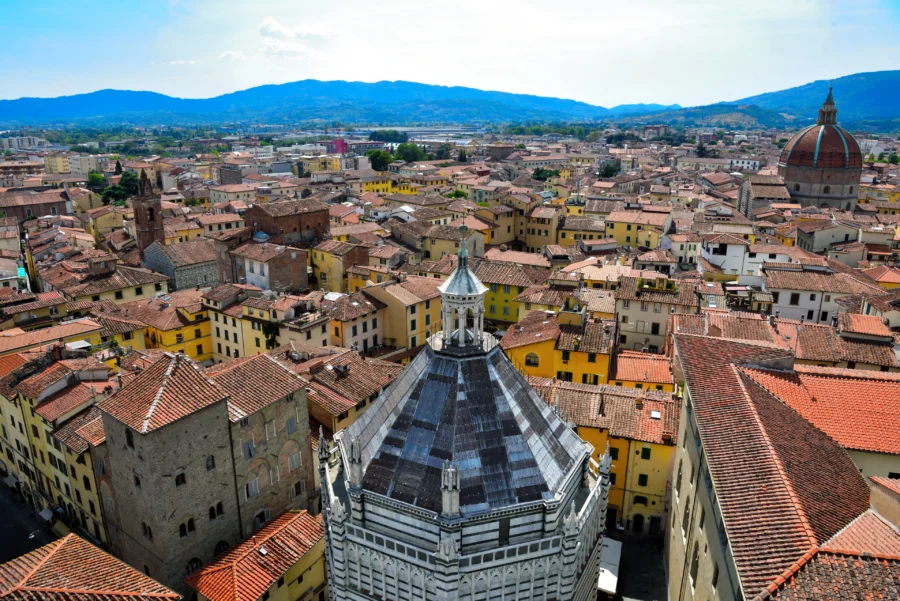
If you’re not racing the clock, the road between Lucca and Ferrara is packed with tempting detours. Florence is right there, with the Uffizi and Duomo calling. Bologna is another must, especially if you’re a foodie.
Feeling adventurous? Pull off into smaller Tuscan towns like Pistoia or Prato. These spots are less crowded than Florence but still deliver that piazza-and-espresso magic.
I’ve driven this route myself and couldn’t resist a detour into Bologna. That extra plate of tagliatelle al ragù made the whole trip feel more like an adventure than a transfer. If you’re thinking about overnight stops, you’ll find affordable hotels easily on Booking.
Top Attractions in Lucca
Lucca’s all about Renaissance walls, lively piazzas, and quirky towers that mix history with a dash of personality. The city feels laid-back and packed with detail, and every corner seems to hold a story if you’re willing to pause and notice.
City Walls and Historic Center
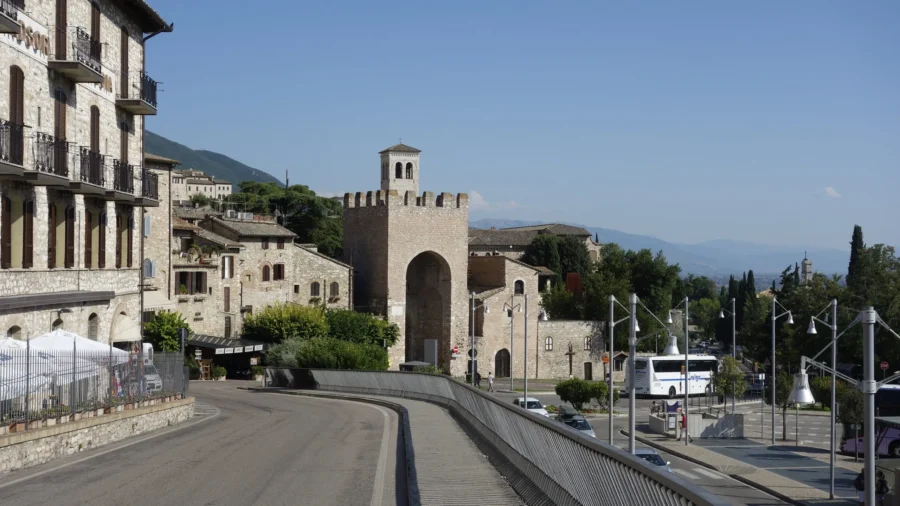
Lucca’s walls aren’t just relics to glance at. They’re intact, wide, and transformed into a leafy promenade where locals jog, cycle, and walk their dogs. You can do the full loop—about 4 kilometers—and it feels more like joining local life than ticking off a tourist sight.
I’ve biked those walls a few times, and honestly, it’s one of those rare places where history feels real, not staged. The bastions and gates like Porta San Pietro show off the city’s Renaissance engineering. Look down and you’ll spot kids playing soccer below or people sipping espresso in tucked-away cafés.
Inside the walls, the historic center is a tangle of narrow lanes and pocket-sized squares. Unlike Florence or Pisa, it’s not packed to the rafters. You can actually hear the church bells and catch the scent of fresh bread from tiny panetterie. That quiet, lived-in charm? It’s what makes Lucca’s center so magnetic.
Piazza dell’Anfiteatro

This oval piazza is instantly recognizable. Built on top of a Roman amphitheater, the curve of the arena still shapes the buildings. Step inside and it’s like discovering a secret courtyard that suddenly opens up after the twisty medieval streets.
The houses are all soft yellows and creams, with green shutters everywhere. Restaurants and cafés spill out into the square, and while some are clearly for tourists, you’ll still spot locals gathering for an aperitivo.
It’s a prime spot for people-watching. I once lost track of time here with a plate of pecorino and a glass of red, just watching kids chase pigeons. If you want to catch the pulse of Lucca, this is the place to linger.
Torre Guinigi

You can’t really miss the Guinigi Tower—it’s the one with oak trees sprouting from the roof. It wasn’t just a weird design choice; it symbolized rebirth for the Guinigi family back in the 14th century. These days, it’s the tower everyone climbs for the best view of Lucca.
The staircase is narrow and, yeah, a bit of a workout, but the view is worth every step. From the top, you’ll spot terracotta rooftops, the looping city walls, and if the weather’s clear, the Apuan Alps way off in the distance. Those shady oak trees? Total lifesaver in summer.
I’ll be honest, the first time I climbed it, I was too busy catching my breath to appreciate the view. But standing under those oaks, looking out over the city, it’s one of those moments where you think, “This—this is why I came.” History, nature, and a killer perspective all rolled together.
Top Attractions in Ferrara
Ferrara feels like a Renaissance city that’s both grand and totally approachable. Its landmarks tell the stories of dukes, merchants, and everyday folks whose lives shaped these streets. The best spots blend history and atmosphere, and you really get a sense of how the city once buzzed with life.
Este Castle

You just can’t miss Este Castle. It sits right smack in the middle of town, ringed by a deep moat that still glimmers with water.
Back in the 14th century, the Este family built this place as both a fortress and a home. Those red-brick towers shoot up over Ferrara, and honestly, it’s way too easy to picture armored guards pacing the ramparts.
Inside, the castle turns into a bit of a labyrinth. One minute you’re wandering grand halls with painted ceilings, the next you’re ducking into dungeons that are dark, chilly, and just a little bit creepy.
Terraces open up to views across Ferrara, and I remember standing in the courtyard, thinking how surreal it must’ve been to live somewhere that’s half palace, half prison.
They’ve packed the castle with museums, too—lots of Renaissance art and treasures from the Este court. If you’ve got even a passing interest in history, you’ll love how the place ties Ferrara to the wider story of northern Italy.
For more, check out this guide to must-see attractions.
Ferrara Cathedral

Right across from the castle, Ferrara Cathedral stands out with its wild mix of Romanesque and Gothic. The façade? It’s almost overwhelming—carved figures, arches, stonework so delicate you’ll keep looking twice just to believe it’s real.
Step inside and everything changes. The Baroque-era interior hits you with drama: frescoes overhead, gold everywhere, and marble columns so thick you can barely wrap your arms around them.
I’ve always been struck by how the outside and inside feel like totally different churches.
The square out front buzzes with life. Cafés spill into the piazza, and you’ll see locals zipping by on bikes.
If you can, time your visit for market day—it’s the best way to get a feel for Ferrara’s daily rhythm. There’s more about the cathedral and other sights in this list of Ferrara attractions.
Jewish Ghetto and Via delle Volte

Ferrara’s Jewish Ghetto is one of the city’s most evocative corners. Gates once enclosed the neighborhood, and you can still sense the weight of that history as you wander the tight, winding lanes.
The Jewish Museum here tells the story of a community that played a huge role in Renaissance Italy.
A quick stroll away, Via delle Volte is one of Ferrara’s oldest streets. Medieval arches link the buildings overhead, and the cobblestones make every step feel like a trip back in time.
There’s a hush here—something about the way the street narrows and curves makes you slow down and notice the small things.
If you can swing it, go in late afternoon when sunlight hits the bricks just right. The arches seem to glow, and the whole street turns golden.
It’s easy to see why this area pops up on so many top things to do in Ferrara lists. It’s the kind of place where Ferrara’s past really seeps into your bones.
Experiencing the Culture: Food, Festivals, and Local Life
Lucca and Ferrara each give you a taste of Italian daily life, but in totally different ways. One city leans into rustic Tuscan flavors and lively squares, while the other charms you with Renaissance traditions and slow evenings under porticos.
Food, festivals, and the easygoing rhythm of local life shape everything you’ll experience.
Culinary Highlights
In Lucca, meals tend to be hearty but unfussy. Dishes like tordelli lucchesi (meat-filled pasta) and farro soup show off the region’s peasant roots.
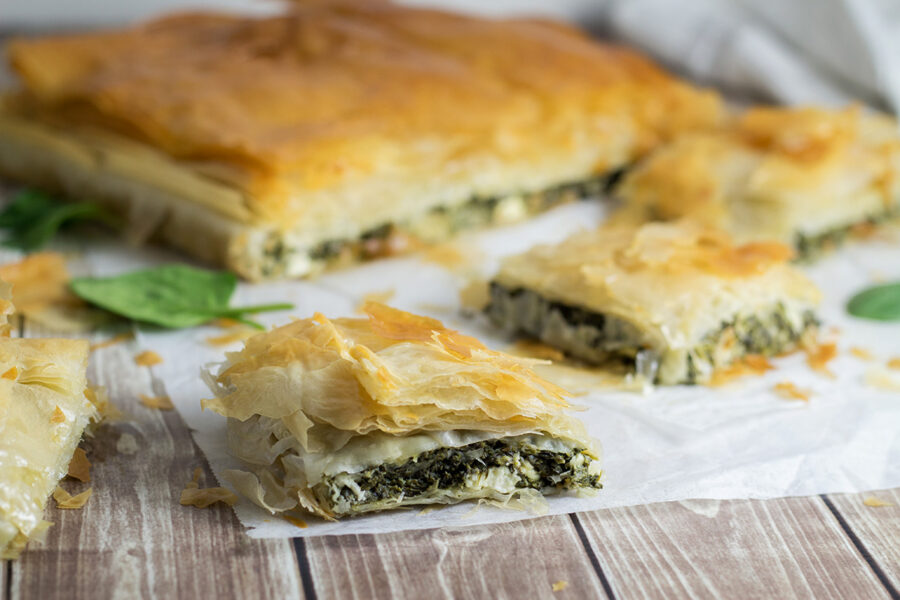
Don’t skip the savory torta di verdura—it’s a veggie pie locals love. Everything here revolves around Tuscany’s obsession with seasonal ingredients and olive oil.
Ferrara tells a different food story. Here, cappellacci di zucca (pumpkin-filled pasta) hits that perfect sweet-savory note.
You’ll also spot plenty of cured meats and rich game dishes, a nod to the city’s Renaissance courtly vibe.
Grab a glass of Lambrusco from Emilia-Romagna and you’ll get why dinners here stretch long into the night.
If you’re curious, both cities offer guided food walks and cooking classes. Small group tastings let you sample specialties while hearing the stories behind each bite.
It’s smart to check local experiences and book tours ahead, especially if you’re traveling during the busy season.
Annual Events and Festivals

Lucca really comes alive with its summer music festivals and the huge Lucca Comics & Games event in fall.
The city also throws food fairs where you’ll taste olive oil, wine, and chestnut sweets. These festivals fill the medieval streets with music, costumes, and food stalls.
Ferrara’s calendar looks different. The Palio di Ferrara—one of Italy’s oldest—takes over in May with parades, flag-throwing, and horse races.
In August, the Ferrara Buskers Festival fills the streets with music and performers from everywhere.
Winter brings Christmas markets that make the Renaissance squares glow.
Both cities turn their historic backdrops into stages. Whether you’re on Lucca’s walls during a concert or catching flag bearers in Ferrara’s piazza, the setting always adds something magical.
If you’re planning around these events, it’s wise to find activities early—tickets and hotels can disappear fast.
Local Lifestyle

Life in Lucca moves at a chilled-out Tuscan pace. Locals bike along the city walls, linger over espresso in tiny cafés, and gather in piazzas before dinner.
Everything feels unhurried, and you’ll see how daily life just revolves around food, family, and conversation.
Ferrara strikes a more formal note, shaped by centuries of Renaissance tradition. People still bike everywhere, but evenings are for strolling under the porticos or sipping aperitivo in the main square.
There’s this cool balance of elegance and everyday routine that makes Ferrara feel both lived-in and historic.
Both towns invite you to slow down and join in. You’re not just a tourist here—you’re part of the scene.
Whether you’re chatting with a baker in Lucca or watching families gather in Ferrara’s piazza, those small moments stick with you.
Day Trips and Nearby Cities
Traveling between Lucca and Ferrara opens up some of Italy’s most fascinating cities. You get world-class art, food traditions that go back centuries, and landscapes that shift from Tuscan hills to Emilia-Romagna’s fertile plains.
Each stop has its own flavor, so you can shape your trip around whatever excites you most.
Florence: Renaissance Capital

Florence is super close—less than an hour from Lucca, about two from Ferrara. It’s packed with Renaissance treasures: the Duomo, Uffizi Gallery, Michelangelo’s David.
Even if you’ve seen the photos a million times, standing in front of these masterpieces just feels different.
Honestly, I think Florence is best in small bites. The center gets crowded, so I’ll usually pick one or two big sights, then escape to the quieter Oltrarno district.
That’s where you stumble into artisan shops and wine bars full of locals, not just tourists.
Dragging bags around? Drop them at a luggage storage near the train station before you dive in.
And don’t skip the little things—an espresso at a stand-up bar, or a slice of schiacciata bread fresh from the oven.
Bologna: Culinary and Cultural Hub

Bologna sits north of Florence, closer to Ferrara, and rewards slow exploration. The portico-lined streets make walking easy, even when it’s hot.
Piazza Maggiore is a natural starting point. From there, climb the Asinelli Tower for a wild view over the red rooftops.
Let’s be honest, though—most folks come for the food. Tagliatelle al ragù, tortellini in brodo, mortadella… it all starts here.
I once spent a whole afternoon hopping between tiny trattorias, ordering just one dish at each. Hands down, one of the best meals of my life.
Bologna also has a strong cultural streak. The university is Europe’s oldest, and you can feel that student energy in the bookstores, cafes, and music scene.
It’s less polished than Florence, but honestly, that’s a big part of the charm.
Exploring Tuscany and Emilia-Romagna

Beyond the big cities, both regions are dotted with smaller towns that are so worth your time. From Lucca, you can head into Garfagnana for mountain villages and hiking trails, or drive to Pietrasanta, famous for marble carving and contemporary art.
These places move slower, feel more personal, and sometimes you’ll be the only traveler in the piazza.
On the Emilia-Romagna side, Modena is an easy hop from Bologna and it’s all about balsamic vinegar and Ferrari.
The Duomo and Piazza Grande are UNESCO sites, and if you’re into cars, the Enzo Ferrari Museum is a fun stop.
I once did a vinegar tasting here—tiny drops of 25-year-old balsamic on a spoon, and wow, it’s as complex as wine.
They don’t have blockbuster sights, but you’ll get a real taste of everyday life in central Italy.
Frequently Asked Questions
Lucca and Ferrara both layer on the history, food traditions, and real-life culture in their own ways. You’ll spot differences in architecture, festivals, and even how locals get around.
What unique architectural styles can I expect to find when exploring the historic centers of Lucca and Ferrara?
In Lucca, you’ll wind through narrow streets framed by u003cstrongu003eRenaissance wallsu003c/strongu003e that still circle the city. The old Roman amphitheater, now filled with homes and shops, is one of those surprises that reminds you how ancient this place really is.u003cbru003eu003cbru003eFerrara has a totally different vibe. The city shows off its u003cstrongu003eRenaissance urban planu003c/strongu003e, with broad streets and red-brick palaces from the Este family. The u003cstrongu003eCastello Estenseu003c/strongu003e, moat and all, anchors the city at its heart.
Could you highlight the main cultural differences between Lucca and Ferrara that a traveler should experience?
Lucca leans into that Tuscan flavor—relaxed evenings, small piazzas full of locals, and a slower pace than Florence or Pisa. Music runs deep here, too, since it’s Puccini’s hometown.u003cbru003eu003cbru003eFerrara, meanwhile, really leans into its u003ca href=u0022https://www.realjourneytravels.com/florence-vs-venice/u0022u003eRenaissance heritageu003c/au003e. The city feels more formal, tied to courtly traditions and art.u003cbru003eu003cbru003eYou’ll notice a northern Italian vibe—foggy mornings, heartier food, and a bit more of that old-world elegance.
What are the signature culinary delights in Lucca and Ferrara for food enthusiasts to try?
In Lucca, don’t miss u003cstrongu003etordelli lucchesiu003c/strongu003e, a meat-filled pasta with rich ragù. The soups, like u003cstrongu003efarro soupu003c/strongu003e, are rustic and filling—perfect after a day on the walls.u003cbru003eu003cbru003eFerrara’s claim to fame is u003cstrongu003ecappellacci di zuccau003c/strongu003e, pumpkin pasta with butter and sage. And for dessert, try u003cstrongu003epampepatou003c/strongu003e, a spiced chocolate cake dating back to the Renaissance.
Can you suggest the best times of year to visit Lucca and Ferrara for local festivals and events?
Lucca absolutely comes alive in summer—trust me, the u003cstrongu003eLucca Summer Festivalu003c/strongu003e is the big draw. Huge music acts fill the piazza, and the city just buzzes with energy.u003cbru003eu003cbru003eThen, autumn rolls around and suddenly the u003cstrongu003eLucca Comics u0026amp; Gamesu003c/strongu003e event takes over. Cosplayers, artists, and pop culture fans flood the streets. If you’re into that scene, you won’t want to miss it.u003cbru003eu003cbru003eFerrara, on the other hand, gets festive in May with the u003cstrongu003ePalio di Ferrarau003c/strongu003e. Locals say it’s the oldest palio in Italy, and you can really feel the tradition in the air.u003cbru003eu003cbru003eLate August is when Ferrara turns into a street stage for the u003cstrongu003eBuskers Festivalu003c/strongu003e. Musicians and performers fill every corner, and honestly, it’s impossible not to get swept up in the vibe.
In Lucca, you’ve got to climb the u003cstrongu003eu003ca href=u0022https://www.realjourneytravels.com/tours/explore-palazzo-vecchio-and-its-tower/u0022u003eTorre Guinigiu003c/au003eu003c/strongu003e. It’s a medieval tower with actual oak trees on top—kind of wild, right? The views are fantastic, and the climb’s half the fun.u003cbru003eu003cbru003eI always find myself ducking into Lucca’s smaller churches. They’re open most of the time, and even during the busiest months, you can find a quiet moment inside.u003cbru003eu003cbru003eFerrara’s Jewish Ghetto is a total hidden treasure. Those narrow lanes are packed with stories, but most people walk right past them.u003cbru003eu003cbru003eIf you’re up for something a bit different, check out the u003cstrongu003eCertosa of Ferrarau003c/strongu003e. It’s a monumental cemetery—strange as it sounds, it’s peaceful, atmospheric, and honestly, kind of beautiful in its own way.
How do the cycling paths in Lucca compare to those in Ferrara in terms of scenic beauty and ease of travel?
Cycling in Lucca? It’s really all about those legendary u003cstrongu003ecity wallsu003c/strongu003e. I love how locals and travelers alike glide along that tree-lined path circling the old town.u003cbru003eu003cbru003eThe route stays flat, never too tough, and honestly, the views are pretty dreamy without feeling like you’re on a postcard overload.u003cbru003eu003cbru003eNow, Ferrara calls itself Italy’s “city of bicycles,” and I can see why. The cycling network feels way broader, and you’re not just stuck in the center—you can venture out into the countryside if you’re feeling adventurous.u003cbru003eu003cbru003eEverything’s flatter here than in Lucca, so if you’re hoping to cover more ground, Ferrara’s got your back. Longer rides don’t feel intimidating at all.u003cbru003eu003cbru003eCurious about how both cities bring cycling into everyday life? Here’s a handy overview of u003ca href=u0022https://liveinitalymag.com/lucca-tuscanys-hidden-gem/u0022 target=u0022_blanku0022 rel=u0022noreferrer noopeneru0022u003eLucca’s Renaissance walls and Ferrara’s city layoutu003c/au003e.