Okayama is the principal city of Okayama Prefecture on the Seto Inland Sea side of western Honshu, in the Chugoku region. It is a practical rail crossroads between Kansai and Hiroshima, with Shikoku reached via the Seto-Ohashi Bridge corridor. Often called the Land of Sunshine for its comparatively low rainfall, the city combines a compact commercial center with castle-and-garden scenery along the Asahi River.
This is an especially good destination for first-time visitors who want a calmer Japanese city without sacrificing excellent transport, and for garden lovers, food-focused travelers, families, and anyone using it as a base for Kurashiki, Naoshima, Bizen, or the wider Setouchi region. Okayama’s headline sights can be covered in a day, but two days allow time for its museums, shopping streets, and a rewarding nearby excursion.
Quick Planning Snapshot
Planning pointWhat to knowBest seasonsLate March to April for cherry blossom; October to November for comfortable walking and autumn colorTypical trip length2 days in Okayama; add 1 to 2 days for Kurashiki, Naoshima, or BizenMain transport hubJR Okayama Station, served by the Sanyo Shinkansen and regional linesLocal currencyJapanese yenPrimary languageJapanese; English signage is common at major transport and visitor sitesWalkability and transitCentral sights are walkable; trams, buses, local trains, and bicycles extend the range
Getting There and Getting Around
JR Okayama Station is the simplest arrival point. The Sanyo Shinkansen links it directly with Shin-Osaka, Hiroshima, Hakata, Kyoto via Shin-Osaka, and Tokyo on through services or connections. The JR Seto-Ohashi Line runs south toward Takamatsu in Shikoku, while the Uno Line reaches Uno, the usual mainland gateway for ferries to Naoshima and Teshima. Highway buses also connect Okayama with regional cities, and the Sanyo Expressway serves drivers.
Okayama Momotaro Airport lies northwest of the center and is primarily useful for domestic flights, with airport buses to Okayama Station. For a broader international flight network, Kansai International Airport near Osaka and Hiroshima Airport are useful alternatives, though each requires onward rail or bus planning. From the station, the compact streetcar system is useful for the Omotecho shopping area and the castle-and-garden side of town. Walk from the east exit to the central business district; use a tram, bus, or taxi for Korakuen and Okayama Castle. Keep an IC transit card handy, but carry some cash for smaller operators and rural trips.
Best Areas to Stay and Neighborhood Character
JR Okayama Station and the west exit: Best for short stays, early trains, airport buses, business hotels, shopping, and easy regional day trips. The area is functional rather than historic.
East exit, Omotecho, and the city center: A better choice for independent restaurants, arcades, bars, the tram, and an evening stroll. It suits travelers who want urban convenience without the scale of Osaka.
Korakuen and the Asahi River side: Quieter and more scenic, with easy access to the garden, castle, and museums. Choose it for atmosphere, while checking the walk or transit connection back to the station.
Kurashiki Bikan Historical Quarter: Worth an overnight for canal-side evenings and a slower, heritage-focused stay. It is a separate city, reached quickly by JR from Okayama, rather than a central Okayama neighborhood.
Top Things to Do, Local Culture and Day Trips
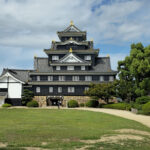
Start with Okayama Korakuen, one of Japan’s Three Great Gardens. Its broad lawns, ponds, tea houses, borrowed views, and carefully maintained hills are unusually open in character; allow time to circle the grounds rather than treating it as a photo stop. Across the river stands Okayama Castle, known as Ujo, or Crow Castle, for its dark exterior. The present main tower is a reconstruction, but the site remains a useful introduction to the castle town and its feudal history.
Near Korakuen, the Okayama Prefectural Museum of Art and the Hayashibara Museum of Art add depth for art and history enthusiasts. Downtown, explore the covered Omotecho Shopping Street for everyday retail and snacks, then look for the city’s enduring Momotaro connection: the folktale hero is strongly associated with Okayama, and peach imagery appears throughout the city. In spring, the Asahi River and garden surroundings are popular for hanami; summer is hot and humid, while autumn brings clearer walking weather and foliage.
Kurashiki is the essential half- or full-day trip. Its Bikan Historical Quarter preserves white-walled storehouses, willow-lined canals, and merchant-era lanes, while the Ohara Museum of Art is a major draw. For contemporary art islands, take the train to Uno and a ferry to Naoshima; start early and confirm ferry and museum entry arrangements. Bizen, east of Okayama, is known for unglazed Bizen ware, and the Bizen Osafune area is associated with Japanese swordmaking. Takamatsu in Kagawa is another straightforward rail excursion across the Seto-Ohashi Bridge.
Practical Planning Tips, Food Specialties and a 2-Day Flow
Try demi-katsu don, a rice bowl topped with pork cutlet and a rich demi-glace-style sauce; Okayama barazushi, scattered sushi traditionally associated with the region; and fruit when in season, especially white peaches and Muscat grapes. Kibi dango, soft millet dumplings named after the old Kibi region and linked to Momotaro, make an easy souvenir. Restaurant queues can build at lunch, so eat early or reserve for dinner where possible.
Tipping is not customary. Be quiet on public transport, queue carefully, and remove shoes when requested. Okayama is generally safe, but use the same late-night awareness you would in any city, secure valuables in crowded stations, and take heat precautions from June through September. Rainy season usually falls around June and July; a compact umbrella is useful year-round. Check official sites before visiting for seasonal illumination, garden events, museum closures, and changing transport timetables.
Day 1: Arrive at Okayama Station, explore Omotecho and central shopping streets, then visit Okayama Castle and Korakuen in the afternoon. Finish with demi-katsu don or local izakaya dishes near the station or downtown.
Day 2: Take an early local train to Kurashiki for the Bikan Historical Quarter and Ohara Museum of Art, returning to Okayama for an evening departure or a final walk around the station district. Replace Kurashiki with Naoshima only if art-island ferries and timed entries fit your schedule.
 Real Journey Travels