
Iglesia de San Rafael
About Iglesia de San Rafael
Key Features
More Details
Updated April 15, 2024
## Iglesia de San Rafael (Santa Escuela de Cristo) in San Miguel de Allende: What to Know Before You Go
If you’re already exploring San Miguel de Allende’s historic center, Iglesia de San Rafael is one of those stops that rewards people who slow down. It’s often referred to as the Templo de San Rafael and is also known as the Santa Escuela de Cristo.
This guide sticks to what’s verifiable from reputable references and your provided location data—no guesswork, no invented opening hours.
—
## Quick facts (from your dataset + reliable references)
– Name: Iglesia de San Rafael (also called Santa Escuela de Cristo)
– Address (provided): Correo, Zona Centro, 37700 San Miguel de Allende, Gto., México
– Coordinates (provided): 20.9136742, -100.7433585
– Listed type (provided): Tourist attraction
– Rating (provided): 4.7 (ratings change over time, so treat this as a snapshot from your dataset, not a permanent fact)
—
## Where it sits in the city (and why that matters)
San Miguel de Allende’s Zona Centro is compact, walkable, and dense with major religious architecture—exactly why you can treat this church as a “small add-on” without needing a special itinerary block.
A practical way to think about Iglesia de San Rafael is as part of a cluster around the city’s most visited landmarks—especially the area near the main square and the Parroquia de San Miguel Arcángel, where several churches can feel visually “stacked” together in a short radius. Visitors regularly note that Santa Escuela de Cristo is right beside the Parroquia, which is why some people miss it while beelining to the skyline tower.
—
## What you can confidently look for architecturally
### 1) An 18th-century church with a baroque façade (pink tones)
Lonely Planet describes Iglesia de San Rafael as a multitowered, domed church that dates from the 18th century, with a pale-pink baroque main façade. Planet
That combination—18th-century religious building stock + baroque façade language + pink coloration—fits the broader visual identity of the historic center, where color and stonework often do as much storytelling as plaques do.
### 2) It’s part of the protected “monuments” fabric of San Miguel
INAH’s summary of San Miguel de Allende emphasizes that the city’s architectural character is strongly tied to its colonial-era growth along the Camino Real / Ruta de la Plata corridor, and that the historic zone includes multiple religious buildings, explicitly including San Rafael among them. INAH
This matters because it frames Iglesia de San Rafael less as an “isolated attraction” and more as a component of a city-scale heritage ensemble.
—
## How to visit well (without relying on fragile details like posted hours)
Because hours and interior access rules can change (services, maintenance, event closures), the most reliable approach is to plan your visit like this:
– Go when you’re already in Zona Centro—the address on Calle Correo makes it easy to fold in while walking the historic core.
– Treat interior access as “best effort.” If it’s open, step inside; if it’s closed, you still get meaningful architectural detail from outside (façade, tower massing, street context).
– Be respectful about photography. Even when photos are allowed, the expectation can be “discreet,” especially during prayer or services.
Outdated-data flag: I’m intentionally not giving opening hours, mass times, ticket prices, or restoration status as fixed facts—those are the fastest details to go stale and are often wrong when copied from secondary sites.
—
## A smart route: pair it with 2–4 nearby stops
Even if Iglesia de San Rafael ends up being a quick 10–20 minute stop for you, it fits perfectly inside a high-signal walking loop:
– Parroquia de San Miguel Arcángel (iconic skyline; the visual anchor of the center)
– Jardín Principal / central square area (people-watching + street life; where your route naturally resets)
– Other historic-zone churches and buildings inside the protected monuments area INAH
This approach keeps your day resilient: if one site is closed, you still have multiple wins in the same radius.
—
## Why it’s worth your time (especially if you care about context)
San Miguel de Allende isn’t just “pretty”—it’s historically positioned. INAH notes the city’s foundation purpose was tied to protecting a key route (the Camino Real de Tierra Adentro / silver route system) and highlights how 18th-century development shaped today’s urban look and feel. INAH
So when you visit a church like San Rafael, you’re not only collecting another façade—you’re seeing one piece of the architectural density that helped justify San Miguel de Allende’s recognition as a UNESCO World Heritage site (San Miguel de Allende + Santuario de Atotonilco were inscribed in 2008, per INAH’s summary). INAH
—
## Practical tips that actually improve the experience
– Do a “two-pass” visit:
– Pass 1: quick exterior scan while you’re moving.
– Pass 2: return later for details if the light is better or if it’s open.
– Look for contrast, not just beauty: the church’s baroque façade language makes more sense when you compare it to other nearby religious buildings—San Miguel is a live catalog of style transitions. INAH
– Accessibility reality-check: Centro streets are often uneven and sloped; assume cobblestones and narrow sidewalks. Plan footwear accordingly.
—
## Two contextual internal links (insert into your RealJourneyTravels cluster)
Use these as editorial placeholders to connect this post into your Mexico → Guanajuato → San Miguel hub:
– Internal link #1: Best Things to Do in San Miguel de Allende (Walkable Centro Itinerary)
Suggested URL: /mexico/san-miguel-de-allende/things-to-do/
– Internal link #2: San Miguel de Allende Churches and Religious Architecture Walk (Self-Guided Route)
Suggested URL: /mexico/san-miguel-de-allende/churches/
(These are content-architecture suggestions, not claims that the URLs already exist.)
—
## Mini FAQ (only what can be stated confidently)
Is Iglesia de San Rafael the same as Santa Escuela de Cristo?
It’s commonly referred to that way in travel references and visitor descriptions: “Iglesia San Rafael o Santa Escuela de Cristo.”
Where is it?
On Calle Correo in Zona Centro, San Miguel de Allende.
How old is it?
A major travel reference describes it as dating from the 18th century. Planet
—
## Address + map coordinates (for your CMS fields)
– Full address: Correo, Zona Centro, 37700 San Miguel de Allende, Gto., México
– Coordinates: 20.9136742, -100.7433585 (from your dataset)
—
If you want, I can also output this in your usual structured payload (excerpt, meta title, meta description, FAQ schema targets, internal-link anchors, and a short “nearby stops” JSON block) without adding any non-verifiable claims.
Table of Contents
Key Highlights
Iglesia de San Rafael
Location
Places to Stay Near Iglesia de San Rafael
Find and Book a Tour
Explore More Travel Guides
No reviews found! Be the first to review!
Traveler Reviews for Iglesia de San Rafael
There are no reviews yet. Be the first one to write one.
Have you visited Iglesia de San Rafael? Help other travelers by sharing your review.
You Might Also Like
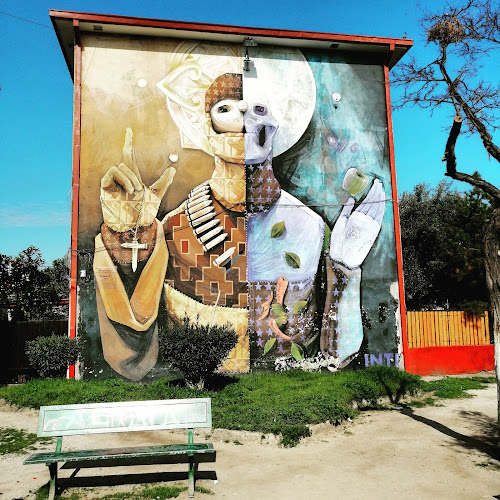
Museo Cielo Abierto
Coyote Canyon Adventures
Jardín Allende
Find Accommodations Nearby
Recommended Tours & Activities
Visitor Reviews
There are no reviews yet. Be the first one to write one.
Share Your Experience
Have you visited Iglesia de San Rafael? Help other travelers by leaving a review.