
Johnstone Park
About Johnstone Park
Key Features
More Details
Updated April 15, 2024
## Johnstone Park (Geelong, Victoria): what it is and why it’s worth a stop
Johnstone Park is a landscaped civic garden on Wadawurrung Country in central Geelong, Victoria. It sits right on the western edge of the CBD and is framed by major streets including Gheringhap Street and Railway Terrace.
If you’re building a Geelong day-plan, Johnstone Park works as a “between stops” anchor: a green pause point surrounded by cultural institutions, and (importantly) a place where Geelong’s civic history is physically on display—memorials, public art, and a landmark bandstand.
—
## Quick facts for planning
– Address: 24–28 Gheringhap Street, Geelong (also commonly referenced as Gheringhap St, Geelong VIC 3220).
– Coordinates: approximately -38.147, 144.357.
– Setting: a regional community park on the edge of Geelong’s CBD.
– What you’ll find: lawns, mature trees/shade, walking paths, a rotunda/bandstand, memorial elements, and nearby civic buildings.
—
## A park shaped by water (and by change)
The City of Greater Geelong’s own summary is unambiguous: this was once a water place for Wadawurrung people, with a creek running through the area as a water source—later “manipulated and changed.”
European settlement-era reshaping came quickly. The area was originally known as Western Gully, a watercourse draining toward Corio Bay; a dam was built downstream in the mid-1800s, and the location became a park in 1872 (named after former Geelong mayor Robert de Bruce Johnstone).
Over time, infrastructure and institutions tightened the footprint:
– Rail expansion in the 1870s cut through the broader site.
– Later development (including Gordon Technical College / Gordon TAFE) occupied part of the original area.
This backstory matters when you visit because Johnstone Park doesn’t read as “just a patch of green.” It reads as a deliberately designed civic space—where drainage, culture, memory, and modern city function overlap in a single block.
—
## What to look for inside the park
### The Hitchcock Memorial Bandstand (a defining landmark)
A bandstand/rotunda is a central visual anchor in the park, and it’s specifically called out as a key feature.
The City of Greater Geelong notes that Geelong mayor Cr Howard Hitchcock added the central bandstand and the Mercer Street entrance as part of a city beautification program in 1917.
How to use this as a visitor: walk a slow loop that keeps the bandstand in view, then step outward to the edges where the civic buildings frame your sightlines (it’s a great way to “read” the layout without needing a map).
### The Johnstone Park Raingarden (practical sustainability you can actually see)
Near the Mercer Street entrance, the Johnstone Park Raingarden is described as both “beautiful and functional.” It filters stormwater through terraced ponds to remove pollutants (including nitrogen and oils) before sending the treated water into a submerged 350,000-litre tank used to irrigate the park and surrounds.
The City states this raingarden was completed in 2018 as part of the Revitalising Central Geelong partnership.
Why this is a better-than-average detail: lots of parks talk sustainability; this one has a specific system, capacity figure, and clear downstream purpose.
### Kurrajong Seed Pod sculpture (public art with local botanical logic)
Near Little Malop and Fenwick Streets, you can find the Kurrajong Seed Pod sculpture (dated 2000) by Viktor Cebergs. The council description ties it directly to indigenous flora inspiration and says it’s based on the boat-shaped seedpod of the Kurrajong tree.
This is the kind of piece that rewards a second look if you’re into plant forms, design, or Australian public art that doesn’t feel generic.
### Apex Sculpture (a civic marker)
Also near the raingarden area, the council notes the three-pronged Apex Sculpture commemorates the formation of the Apex Clubs of Australia and stands at one end of Malop Street.
—
## The “surrounded by institutions” effect: what’s immediately next door
One of the reasons Johnstone Park feels unusually “city-centred” is what’s pressed up against its edges.
The City of Greater Geelong lists several adjacent buildings around the corner of Gheringhap and Little Malop Streets, including:
– the historic City Hall (with a note that the Aboriginal flag has flown from the roof since 12 December 2013)
– Wurriki Nyal (new Council Civic Centre)
– the Geelong Gallery
– the Geelong Peace Memorial
– the Geelong Library & Heritage Centre
Separately, Johnstone Park is also described as being surrounded by civic buildings including the Geelong City Hall, Geelong Art Gallery, Geelong Library, Geelong Law Courts, and Geelong Railway Station.
Practical move: if you’re arriving by train, you can treat the park as part of your “arrival corridor” into central Geelong, because the station is explicitly listed among the surrounding civic landmarks.
—
## Memorial presence: what it means for your visit
The park includes a war memorial presence (not just “nearby history,” but a central theme in the landscape).
The council page specifically lists the Geelong Peace Memorial among the adjacent key sites.
Visitor note (factual + respectful): because memorial spaces serve a commemorative purpose, keep noise and behavior mindful when ceremonies, wreaths, or visitors paying respects are present.
—
## Facilities you can count on (as listed by the City)
The council’s park listing includes the following facilities:
– Memorial
– Public Hall
– Rotunda
– Walking Path
It also links to a dog walking map for off-leash/on-leash guidance (rules can change, so use the map rather than assumptions).
—
## Accessibility + comfort: how to make it work in real life
These points are grounded in what the council explicitly states and what the park’s design implies:
– Shade + sit-down breaks: the city highlights “mature trees” and “extensive areas of grass,” so you can reliably plan for shade and a low-stress pause.
– Walk-through friendly: walking paths are listed as a facility, and the park sits between major civic buildings—so it naturally fits a walking itinerary.
– Accessible design element: the raingarden is described as “an accessible space.”
—
—
## Accuracy and freshness notes (what to double-check before publishing)
– The City of Greater Geelong page includes specific infrastructure details (like the raingarden’s 2018 completion and the 350,000-litre tank). If the council updates works, landscaping, or access, that’s the first source to trust.
– Wikipedia flags that its Johnstone Park article relies heavily on a single source and may need additional citations; treat it as helpful context, not your only authority.
If you want, I can pull an additional independent source set (heritage listings, on-site signage references, or local historical society material) to strengthen E-E-A-T—without adding any unverifiable claims.
Table of Contents
Key Highlights
Johnstone Park
Location
Places to Stay Near Johnstone Park
Find and Book a Tour
Explore More Travel Guides
No reviews found! Be the first to review!
Traveler Reviews for Johnstone Park
There are no reviews yet. Be the first one to write one.
Have you visited Johnstone Park? Help other travelers by sharing your review.
You Might Also Like

Eastern Beach Train Tours
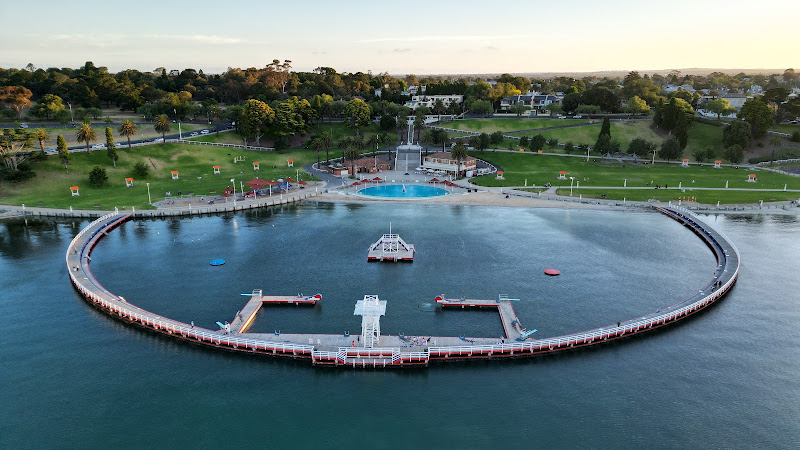
Eastern Beach Promenade
Geelong Arts Centre
Find Accommodations Nearby
Recommended Tours & Activities
Visitor Reviews
There are no reviews yet. Be the first one to write one.
Share Your Experience
Have you visited Johnstone Park? Help other travelers by leaving a review.