
Lajos Kossuth Monument
About Lajos Kossuth Monument
Key Features
More Details
Updated June 11, 2025
Lajos Kossuth Statue | Sightseeing | Debrecen
# Lajos Kossuth Monument (Debrecen): What You’re Looking At in Kossuth Square—and Why It Matters
Standing on Debrecen’s main square, the Lajos Kossuth Monument is more than a “quick photo stop.” It’s a compressed history lesson about the Hungarian War of Independence (1848–1849), the city’s moment as a provisional capital, and the political memory Hungarians still argue over in public spaces.
You’ll find it in Kossuth tér (Kossuth Square), Debrecen, 4025 Hungary, at the coordinates 47.5315481, 21.6241295. Your Pocket
—
## Where it is and how to orient yourself
The monument stands on Kossuth tér, the central square in Debrecen. Your Pocket
Your best landmark for navigation is the Reformed Great Church, which sits between Kossuth Square and Kálvin Square and is one of the city’s defining buildings.
Practical tip (no guesswork): If you’re already at the Reformed Great Church address area (“4025 Debrecen, Kossuth tér”), you’re in the right place for the monument as well—the square is the shared hub.
—
## Who Lajos Kossuth was (and why Debrecen keeps invoking him)
Lajos Kossuth (1802–1894) was a Hungarian politician and statesman who became a leading figure of the 1848–1849 revolution/war of independence, serving as governor-president during that conflict.
Debrecen’s connection is not symbolic—it’s literal. During the 1848–49 period, the Hungarian government and national assembly moved their seat to Debrecen, making the city a provisional capital.
—
## The monument’s “why”: unveiled in 1914, built as civic memory
Debrecen’s community decided to erect a monument to Kossuth after his death in 1894. The statue group was created by Ede Margó and Szigfrid Pongrácz, funded by public donations and the town budget, and unveiled on 3 May 1914 on the city’s main square.
That date matters: it places the monument in the era when Hungarian cities were actively shaping national memory through civic sculpture—what gets elevated to bronze, who gets named, and which “version” of history is staged in public.
—
## What you’re actually seeing: the figures and the story the sculpture tells
The central figure is Lajos Kossuth.
But the monument is designed as a narrative, not a solo statue:
### Left side figures (beneath Kossuth)
– Imre Szacsvay, who drew up the Declaration of Independence as notary of the National Assembly (and was executed).
– Zsigmond Perényi, second chair of the Upper House (also executed).
– Behind them: Mihály Könyves Tóth, described as a pro-Kossuth military chaplain—sentenced to death, later released after eight years in prison.
### Right side scene
A banner-bearing soldier of the Red Cap Battalion is shown saying goodbye to his mother as he leaves for battle.
How to “read” this on-site: The sculpture is basically a timeline in human form—leadership at the top, the legal/political machinery of independence on one side, and the human cost of war on the other.
—
## Pair it with the Reformed Great Church for the full context (this is the power move)
If you want the monument to mean something in your photos and memory, combine it with the Reformed Great Church visit.
According to Debrecen’s official tourism site, Kossuth read out the Declaration of Independence there on April 14, 1849, and the church treats Kossuth’s chair as a key relic in its exhibitions.
The same source notes the church was declared a National Monument in 2013, and you can get city views from the towers (and see the 4.6-ton Rákóczi Bell if you climb).
This pairing turns your stop into a coherent story:
– Square + monument = public memory of the revolution
– Church = the physical interior where pivotal events were performed and remembered
—
## Timing and photo logic (facts-first, no fantasy claims)
What I can say with confidence from the sources:
– The statue is on Kossuth tér, the main square.
– The setting is tightly linked to Debrecen’s 1849 role and the nearby Great Church.
On-the-ground photo cue: Use the church as your “scale and context” background—its classicist façade signals why this square matters in the first place. (That’s an interpretation of how to compose the shot, not a claim about access or lighting.)
—
## Two internal links you can add (contextual + useful)
If you have these pages on RealJourneyTravels.com (or equivalents), they fit naturally and keep readers moving:
– Debrecen travel guide (where to stay, what to do beyond the center)
– Hungary itinerary / Hungary travel tips (transport, seasons, cultural context)
—
## Accuracy notes and what to double-check locally
Some details around monuments and churches can change due to restoration, events, or policy shifts. The safest approach:
– Treat tower access, exhibits, concerts, and any entry conditions at the Reformed Great Church as variable—confirm on the official site or at the door.
– The monument’s historical facts (unveiling date, creators, named figures) are stable as published by Debrecen’s tourism authority.
—
## Quick takeaway
If you only give this 5 minutes, you’ll get a photo.
If you give it 25 minutes—monument → Great Church—you’ll understand why Debrecen claims a central place in Hungary’s 1848–49 story, and you’ll leave with a sharper sense of what this statue group is actually trying to say.
Table of Contents
Key Highlights
Lajos Kossuth Monument
Location
Places to Stay Near Lajos Kossuth Monument"Popular spot to see the sights."
Find and Book a Tour
Explore More Travel Guides
No reviews found! Be the first to review!
Traveler Reviews for Lajos Kossuth Monument
There are no reviews yet. Be the first one to write one.
Have you visited Lajos Kossuth Monument? Help other travelers by sharing your review.
You Might Also Like
Múzeum park
Debrecen
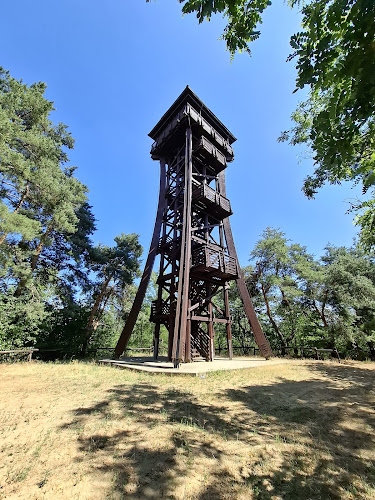
Hármashegy lookout point
Find Accommodations Nearby
Recommended Tours & Activities
Visitor Reviews
There are no reviews yet. Be the first one to write one.
Share Your Experience
Have you visited Lajos Kossuth Monument? Help other travelers by leaving a review.