
Buratha Mosque
About Buratha Mosque
Key Features
More Details
Updated April 15, 2024
Buratha Mosque in Baghdad isn’t just “a mosque and historical place” – it’s one of the most layered religious sites in Iraq, tying together early Islamic history, Christian heritage, and the modern story of Baghdad itself.
Below is a publish-ready guide for RealJourneyTravels.com based strictly on verifiable facts.
—
## Buratha Mosque in Baghdad: History, Significance & What to Know Before You Go
Buratha Mosque (Jamiʿ Buratha / جامع براثا) is a major Twelver Shia mosque in the Karkh district of Baghdad, on the city’s western side near the al-Kāẓimiyyah area. Today it functions as both an active place of worship and a highly respected pilgrimage site for Shia Muslims, with deep roots in the early centuries of Islam and earlier Christian tradition.
Located at approximately 33.3512° N, 44.3612° E in the Utaifiyya/Buratha neighborhood of Karkh, the mosque stands a few kilometers from the famous al-Kadhimayn Shrine and north-west of central Baghdad.
> Important note on safety: Baghdad’s overall security situation can change quickly. Many governments currently advise extreme caution or avoiding non-essential travel to Iraq, including Baghdad. Always check up-to-date travel advisories and local guidance before planning a visit.
—
## Why Buratha Mosque Matters
### A key Shia holy site in Baghdad
Buratha Mosque is recognized as an important holy place for Twelver Shia Muslims. Its significance comes largely from its association in Shia tradition with Imam Ali ibn Abi Talib, cousin and son-in-law of the Prophet Muhammad and the first Imam in Shia belief.
According to Shia narrations, Ali stopped here with his forces during his campaign against the Khawarij after the Battle of Nahrawan. Tradition says he prayed at this site with a large group of companions, and some accounts mention a miraculous spring revealed when he struck a stone, an element that still features in local religious memory.
For many pilgrims visiting Baghdad’s religious sites—such as al-Kadhimayn Mosque and the shrines of prominent scholars—Buratha forms part of a wider spiritual circuit around the city.
—
## Christian Roots and Shared Veneration
One of the most distinctive aspects of Buratha Mosque is its pre-Islamic Christian history. Multiple historical and religious sources describe the site as originally being a Nestorian Christian monastery.
Key points that are widely cited:
– A Christian monk named Hebar (or a similar Syriac name) is said to have overseen the monastery.
– After meeting Imam Ali, this monk is reported to have embraced Islam, leading to the conversion of the monastery into a mosque.
– The site later became associated in some traditions with Mary (Maryam) and even earlier patriarchs, with accounts suggesting that a stone at the mosque was linked to Christian veneration and that a patriarch is buried here.
These layered narratives mean Buratha is often described as a place respected by both Muslims and Christians, even if active Christian worship no longer happens here.
—
## Timeline: From Early Islam to the Present
### 7th century origins
Traditional accounts place the establishment of a Muslim place of worship here in 37 AH (approximately 657 CE), more than a century before Baghdad was founded by the Abbasids in 762 CE.
That makes Buratha one of the oldest Islamic religious sites in the Baghdad region, predating the city itself as a political capital.
### Demolition and rebuilding under the Abbasids
By the 10th century, the site’s Shia associations brought it into conflict with Abbasid politics. Historical Shia sources recall that the Abbasid caliph al-Radi ordered the demolition of Buratha as part of pressure on Shia communities. Locals are said to have appealed to the governor, who then rebuilt the mosque and inscribed the caliph’s name on it to discourage future attacks.
### Renovations and 20th-century reconstruction
Over the centuries, the mosque underwent several renovations. Available sources mention recorded works in 1659 and 1933. The current structure, with its modern Iraqi architectural style and two prominent minarets, largely dates from a major rebuild in 1955, when local efforts reconstructed the complex and expanded its capacity.
Today, the building features:
– Two tall minarets faced with patterned stone
– A central dome (single dome in most descriptions)
– A marble-clad entrance and courtyard with blue tile inscriptions
– Porticos and arcades around the main courtyard
Photos from mapping and travel platforms show a spacious courtyard often decorated with lights or banners during religious occasions, with pilgrims gathering under the minarets.
—
## The 2006 Buratha Mosque Bombing
No serious guide to Buratha Mosque can skip its role in Iraq’s recent history.
On 7 April 2006, during the height of the Iraqi conflict, Buratha Mosque was targeted in a triple suicide bombing as worshippers left Friday prayers.
– Three bombers detonated explosives in and around the mosque complex.
– Two attackers were reported to have been disguised as women to pass through security.
– The blasts killed around 85 people and injured about 160, making it one of the deadliest attacks in Baghdad at that time.
The attack also appeared to target Sheikh Jalaluddin al-Saghir, a prominent Shia cleric and politician who served as the mosque’s main preacher; he survived unharmed.
The bombing drew international condemnation, including statements from the UN Secretary-General and UNESCO, who highlighted the attempt to inflame sectarian divisions by striking a revered religious site. Information Service Vienna
For visitors today, this episode is a reminder that Buratha is not only an ancient shrine but also a symbol of the struggles Baghdad has faced in recent decades.
—
## Architecture and Layout: What You’ll See
Based on recent imagery and mapping descriptions, the modern Buratha Mosque complex has several recognizable elements:
– Courtyard: A large paved courtyard that serves as a gathering space; it may hold tents or shading structures during busy periods.
– Main prayer hall: Accessed from the courtyard, with marble or stone cladding and Quranic inscriptions in blue tile bands over doorways.
– Minarets: Two tall stone minarets, often photographed with strings of lights between them, dominate the skyline of the complex.
– Secondary structures: Side arcades, small domed elements and possibly a well or spring area referenced in religious tradition.
Because the mosque has been rebuilt and expanded multiple times, it blends modern Iraqi mosque architecture with a layout reflecting centuries of incremental development.
—
## Visiting Practicalities (Subject to Change)
### Location and access
– District: Karkh district, in the Buratha/Utaifiyya area on Baghdad’s west bank of the Tigris.
– Nearby landmarks: Often described as being on the road between central Baghdad and al-Kadhimiyya, home to the important al-Kadhimayn Shrine.
Most recent travel-platform descriptions suggest that local visitors typically reach the mosque by car or taxi, or on foot from surrounding neighborhoods. Because public transport patterns and security restrictions can vary, it’s best to rely on local advice and up-to-date maps rather than fixed public transport instructions.
### Dress code and etiquette
While specific, formal rules are not published in the sources consulted, Buratha functions as an active Shia mosque, so visitors can reasonably expect norms similar to other Iraqi religious sites:
– Modest clothing covering arms and legs is expected for all visitors.
– Women are typically expected to cover their hair and may be asked to wear an abaya or loose outer garment inside the mosque compound.
– Shoes are removed before entering prayer halls.
When in doubt, follow staff guidance and observe what local worshippers do.
### Photography
Public photos of the mosque exist on mapping, video and travel sites, indicating that photography in the courtyard and exterior areas has been possible for some visitors.
However, security protocols can change, especially at sensitive religious sites in Baghdad. Always ask permission before photographing people, security staff or specific religious areas, and be ready for restrictions on cameras in certain zones.
### Safety and current conditions
Because Baghdad has experienced periods of violence, including targeted attacks on mosques and shrines, any visit to Buratha Mosque should be planned with security foremost in mind:
– Check current travel advisories from your government. Many still advise against non-essential travel to Iraq.
– Local conditions—such as checkpoints, curfews, or restrictions on vehicle access during major prayers—may apply. News
If you are not already in Iraq for essential reasons or with a trusted local partner, this may be a site best approached as part of long-term research into Baghdad’s religious history rather than a casual city-break stop.
—
## Buratha Mosque in the Wider Story of Baghdad
Baghdad is home to a dense cluster of significant religious sites, including:
– Masjid al-Kadhimayn in Kadhimiya
– Shrine of Abdul-Qadir Gilani
– Abu Hanifa Mosque in Adhamiyah
– Numerous churches, mandis and other places of worship
Buratha Mosque sits within this mosaic as:
– One of the oldest Islamic-era shrines in the region around Baghdad.
– A site that bridges Christian and Muslim heritage, with stories linking it to a former church and to Mary and earlier patriarchal figures.
– A symbol of resilience in the face of sectarian violence, especially since the 2006 bombing.
For travellers building a deep historical itinerary through Iraq, Buratha helps illustrate how Baghdad’s religious geography stretches across centuries and across traditions.
—
## Suggested Internal Linking Opportunities
To support user journeys and topical depth on RealJourneyTravels.com, you could internally link this article to:
Table of Contents
Key Highlights
Buratha Mosque
Location
Places to Stay Near Buratha Mosque"mosque and historical place"
Find and Book a Tour
Explore More Travel Guides
No reviews found! Be the first to review!
Traveler Reviews for Buratha Mosque
There are no reviews yet. Be the first one to write one.
Have you visited Buratha Mosque? Help other travelers by sharing your review.
You Might Also Like
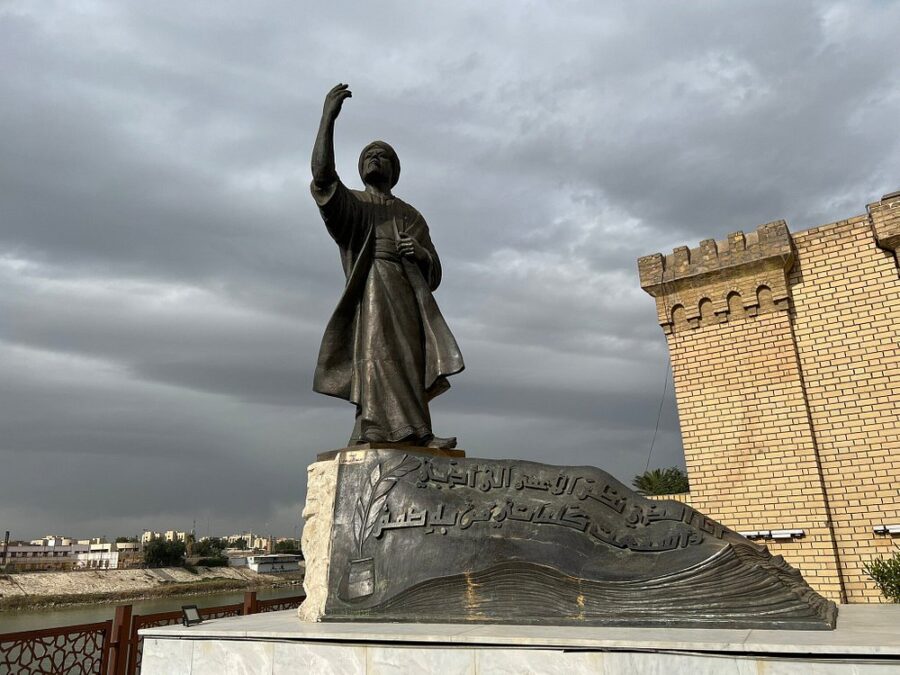
Mutanabbi Statue
Baghdad Square
Archaeological Ziggurat of Aqarquf
Find Accommodations Nearby
Recommended Tours & Activities
Visitor Reviews
There are no reviews yet. Be the first one to write one.
Share Your Experience
Have you visited Buratha Mosque? Help other travelers by leaving a review.