
Longmen
About Longmen
Key Features
More Details
Updated June 26, 2025
## Longmen, Kunming: What to Know Before You Visit Dragon Gate in the Western Hills
The coordinates you provided—24.949927, 102.639596—place this attraction in the Western Hills (Xishan) area of Kunming, Yunnan, overlooking Dianchi Lake. That matters because one field in your source data says Qujing, which does not match the location indicated by the coordinates or by widely cited descriptions of Longmen/Dragon Gate in Kunming. I would treat the city field as likely incorrect or outdated before publishing. China Guide
Longmen, usually translated as Dragon Gate, is one of the best-known viewpoints in the Western Hills Scenic Area west of central Kunming. It is not a standalone urban monument. It is part of a larger mountainside complex that includes stone paths, grottoes, cliffside carvings, and nearby religious sites such as Sanqing Pavilion, all set above Dianchi Lake, the large lake on Kunming’s southwest side. China Guide
What gives Longmen its appeal is the combination of engineering, religion, and topography. The most cited description of the site is a series of Taoist-related stone carvings and passages cut directly into a natural cliff face. Multiple sources describe the work as a major cliff-carving project carried out during the Qing dynasty, with construction spanning 1781 to 1853, or roughly 72 years. That long building period is one reason Longmen feels less like a single gate and more like a carved mountain route with chambers, ledges, and lookout points. China Guide
### Why Longmen stands out
Many China travel listings reduce Longmen to a photo stop, but that misses the point. The site is really about the approach. Visitors move through a sequence of narrow rock corridors, carved stairways, small grotto-like spaces, and cliff-edge viewpoints before reaching the best-known sections of Dragon Gate. That built experience is central to the attraction. It is also the practical reason some travelers find the visit memorable while others find it physically demanding. Several descriptions note that parts of the route are tight, steep, or narrow, with certain passages allowing only one person through at a time. China Guide
The other reason people come here is the view over Dianchi Lake. Kunming sits on the northern side of the lake basin, and the Western Hills rise sharply from the west. From Dragon Gate, the sightline opens across water, urban districts, and mountain slopes. That setting explains why Western Hills has long been treated as one of Kunming’s signature scenic areas rather than just a local park. Britannica
### The cultural meaning behind the name
The name Longmen, or Dragon Gate, carries cultural weight beyond the physical site. In Chinese tradition, “leaping the Dragon Gate” is tied to the idea of advancement, success, and difficult achievement, often linked historically to the imperial examination system. Travel references for Kunming’s Dragon Gate connect that symbolism directly to the site, noting that the carved Dragon Gate came to represent aspiration and status. Even if a visitor is not focused on symbolism, knowing that background helps explain why this mountain complex became so important in local culture. Travel China
That symbolism also shapes how many Chinese visitors experience the site today. Longmen is not just “scenic.” It is a place where landscape, carved architecture, and old ideas about perseverance and transformation meet in a very literal way: you climb, squeeze through the rock, and emerge at a higher point with a wider view. That meaning is part of the attraction’s identity, not just a decorative story attached afterward. China Guide
### What you will actually see on site
A visit to Longmen usually overlaps with the broader Western Hills/Xishan circuit. The area is commonly described as including Huating Temple, Taihua Temple, Sanqing Pavilion, and Dragon Gate, with Longmen forming the most dramatic cliffside section. That broader context matters because many travelers do not visit Dragon Gate in isolation; they experience it as the high point of a longer mountainside outing.
The route itself is the headline feature. Expect manually carved stone paths and tunnels, sections built directly into the cliff, and vantage points where the landscape drops away toward the lake. Some travel descriptions also mention stone figures and carved chambers, but the most consistently documented elements are the paths, grottoes, narrow tunnels, and elevated lake views. Since individual carvings and small site details are not always documented consistently in English-language sources, it is safer to describe the experience in those broader, verifiable terms. China Guide
### Practical advice most quick guides miss
The main thing to understand before visiting is that Longmen is better approached as a short mountain walk with narrow cliffside sections, not as an easy curbside stop. That means footwear matters more than many city guides suggest. The narrow passages and carved steps are part of the site’s character, but they can also make the visit less comfortable for anyone with mobility limitations, balance concerns, or sensitivity to enclosed rock passages. That is not a flaw in the attraction; it is a direct consequence of how it was built into the mountainside. China Guide
Accessibility is the biggest point that deserves an honest note in any publish-ready travel article. Based on the site descriptions available, Longmen should not be presented as fully accessible. The carved stone route includes steep and narrow sections, and sources describing the experience emphasize those features repeatedly. If your audience includes older travelers, families with very young children, or travelers using mobility aids, they should know in advance that the visit may be challenging or impractical. China Guide
Another useful distinction: the lower Western Hills area and the upper Dragon Gate area are often described separately. Older travel reporting notes that the lower slopes include temple visits, while the upper scenic area contains the Taoist grottoes and Longmen. That helps set expectations for pacing. Travelers interested mainly in panoramic views and cliff carvings will want to prioritize the upper section; those more interested in temple architecture may want more time lower down the mountain as well.
### Is Longmen worth visiting?
Yes—if you want a Kunming attraction with a stronger sense of place than a standard park viewpoint. Longmen stands out because it combines historic cliff carving, religious landscape, mountain walking, and a clear visual relationship with Dianchi Lake. It is one of those sites where the physical setting does a lot of the interpretive work for you. You do not need a long museum-style explanation to understand why it became important. The mountain, the lake, and the carved route make the case on their own. China Guide
It is less ideal for travelers who want a quick, low-effort stop or who are trying to cover many Kunming attractions in a short time without much walking. The site rewards patience more than speed. Even the best-known English descriptions of Longmen emphasize the sequence of climbing and moving through the rock rather than a single “must-photograph” object. China Guide
### Editorial fact-check notes for your draft
For accuracy, I would publish this attraction as something close to “Longmen (Dragon Gate), Western Hills, Kunming” rather than just “Longmen”. That makes the place identity much clearer and avoids confusion with other sites in China that also use the name Longmen. China Guide
I would also remove or correct the “Qujing” city field in your source data unless you have a stronger primary source proving otherwise. The available evidence points to Xishan District, Kunming, not Qujing. China Guide
I would avoid publishing exact ticket prices, opening hours, or transport instructions from older third-party sources unless you verify them from an up-to-date official page. Some English references to the site are old, and those details change more often than the site history or geography.
### Publish-ready description
Longmen, better known in English as Dragon Gate, is the most dramatic section of Kunming’s Western Hills Scenic Area. Built into the cliffs above Dianchi Lake, the site is known for its Qing-dynasty stone passages, grottoes, and narrow carved walkways that lead to some of the best elevated views in the city. Rather than a single gate, Longmen is a cliffside route shaped by religion, engineering, and mountain geography. It is one of the strongest places in Kunming for travelers who want more than a viewpoint: the appeal is in the climb, the carved rock spaces, and the way the site opens out over the lake below. Visitors should note that the route includes steep and narrow sections, so it is better suited to travelers comfortable with uneven stairs and tighter passageways. China Guide
I couldn’t add real internal links without knowing your existing Kunming or Yunnan URLs.
Table of Contents
Key Highlights
Longmen
Location
Places to Stay Near Longmen"While walking down, u'll meet various temple and pavilion."
Find and Book a Tour
Explore More Travel Guides
No reviews found! Be the first to review!
Traveler Reviews for Longmen
There are no reviews yet. Be the first one to write one.
Have you visited Longmen? Help other travelers by sharing your review.
You Might Also Like

Dahai Grass Mountain
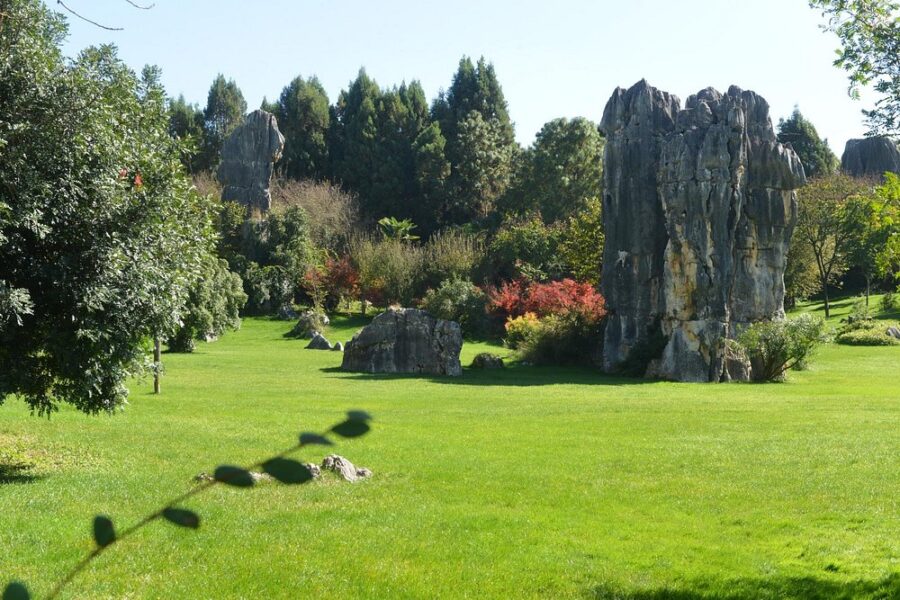
Naigu Stone Forest Scenic Area (Southeast Gate 2)
Jiuxiangxiang
Find Accommodations Nearby
Recommended Tours & Activities
Visitor Reviews
There are no reviews yet. Be the first one to write one.
Share Your Experience
Have you visited Longmen? Help other travelers by leaving a review.