
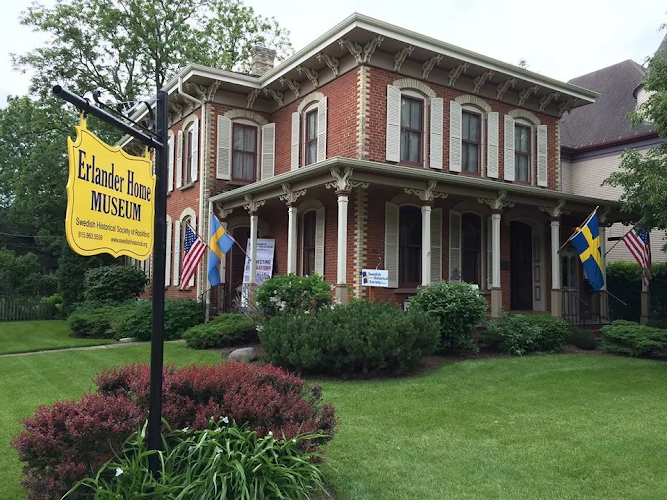
Erlander Home Museum
About Erlander Home Museum
Description
The Erlander Home Museum in Rockford, Illinois is a small but richly detailed museum housed in a historic family home that tells a vivid story of Swedish immigration and Swedish American life in northern Illinois. The museum is centered on the former residence of the Erlander family, a name tied closely to Rockford's Swedish heritage, and visitors step into rooms that still feel lived-in — furniture, textiles, photographs, and household objects arranged in ways that help trace the journey from Sweden to America. For anyone who cares about immigration stories, material culture, or the everyday lives that built Midwestern communities, this place is quietly compelling.
What sets the Erlander Home Museum apart is its focus on authenticity. The exhibits are not abstract displays behind glass; they are artifacts that once served real households — wooden chests, embroidered linens, tools, and printed ephemera — each one a small anchor to a family narrative. Room by room, the museum layers social history with craft and design. Visitors can see how Swedish taste and domestic practices were adapted in an American setting. It’s the kind of museum where a simple embroidered tablecloth can open conversation about identity, work, and the routines of daily life across continents. That detail-oriented approach rewards slow readers and curious hands-on learners alike.
The Erlander Home Museum also functions as a cultural hub. There are live performances and a small theater program at times, which gives the site a lively cultural pulse beyond static displays. Theater presentations, storytelling events, and occasional music performances bring the Swedish-American story into the present tense — and they give families something unexpected to enjoy. Speaking of families, the museum markets itself as family-friendly and genuinely kid-friendly; exhibits and programs are arranged to engage younger visitors without dumbing down the content.
Practical amenities are part of the experience. Onsite services include guided tours that help frame the artifacts with personal and community histories, and the museum offers a modest cafe area where visitors can pause between rooms. The tours are particularly valuable: volunteers and staff who lead them often know the provenance of pieces and can tell little human stories that aren’t printed on labels — those tidbits are exactly the kind of things that linger in memory after the trip home. Admission requires a fee, which supports preservation and programming — and honestly, it’s often less than people expect for the depth of the collection and the quality of the guides.
Accessibility is a mixed bag and an important thing to know before visiting. The museum provides wheelchair accessible parking and a wheelchair accessible restroom, which is appreciated and useful. However, the entrance to the historic home itself is not wheelchair accessible due to the building’s original architecture and stairs. That tension — wanting to preserve the historic fabric while trying to serve modern accessibility needs — is real. The staff are used to answering questions about access and often work with visitors to make tours and events as inclusive as possible, though those with limited mobility should contact the museum ahead of time to plan their visit.
Because it occupies a former home, the Erlander Home Museum offers an intimacy that larger institutions rarely achieve. Rooms are smaller, sightlines are close, and the scale invites quiet conversation rather than the echoing anonymity of a big gallery. This intimacy is a feature and occasionally a bottleneck: during popular events or performances the space can feel snug. If someone prefers wandering a sprawling museum at their own pace, they should know this is the kind of place better suited to focused visits rather than long aimless roaming.
There are several under-the-radar strengths to the museum that frequent visitors appreciate. For one, the collection includes items that illustrate the process of cultural transmission — furniture or decorative objects that show hybrid styles, for example — which make the narrative less about a single origin story and more about adaptation and exchange. The museum’s volunteer docents often share oral histories contributed by descendants; those small stories — like the recipe book someone saved from the old country or the brass lamp brought across the ocean — tend to be the moments that surprise visitors the most. Also, the museum’s programming calendar sometimes syncs with seasonal Swedish traditions, giving a rare chance to see live demonstrations or participate in folk customs in an American small-town context.
For travelers weighing how the Erlander Home Museum fits into a Rockford itinerary, it pairs especially well with nearby cultural stops. It’s compact enough to slot into a half-day that might also include local art venues or riverfront walks. Because the museum is intimate, visitors who enjoy thoughtful interpretation and stories about immigration, craftsmanship, and family life will likely find it more rewarding than outsiders might assume at first glance.
Finally, the museum’s tone is modest but purposeful. It does not try to dazzle with scale, but it does aim to invite curiosity, to make people pause and wonder about the objects and choices that shaped a community. People who visit tend to leave with a clearer sense of how Swedish immigrants contributed to Rockford’s growth, and with a few new stories that stick — often the very kind of local histories that get retold at dinner tables and on return trips. In short, the Erlander Home Museum is an effective, human-scale place of memory and learning, and it rewards visitors who come with an appetite for detail and a little patience to listen closely.
Key Features
More Details
Updated August 29, 2025
Table of Contents
Description
The Erlander Home Museum in Rockford, Illinois is a small but richly detailed museum housed in a historic family home that tells a vivid story of Swedish immigration and Swedish American life in northern Illinois. The museum is centered on the former residence of the Erlander family, a name tied closely to Rockford’s Swedish heritage, and visitors step into rooms that still feel lived-in — furniture, textiles, photographs, and household objects arranged in ways that help trace the journey from Sweden to America. For anyone who cares about immigration stories, material culture, or the everyday lives that built Midwestern communities, this place is quietly compelling.
What sets the Erlander Home Museum apart is its focus on authenticity. The exhibits are not abstract displays behind glass; they are artifacts that once served real households — wooden chests, embroidered linens, tools, and printed ephemera — each one a small anchor to a family narrative. Room by room, the museum layers social history with craft and design. Visitors can see how Swedish taste and domestic practices were adapted in an American setting. It’s the kind of museum where a simple embroidered tablecloth can open conversation about identity, work, and the routines of daily life across continents. That detail-oriented approach rewards slow readers and curious hands-on learners alike.
The Erlander Home Museum also functions as a cultural hub. There are live performances and a small theater program at times, which gives the site a lively cultural pulse beyond static displays. Theater presentations, storytelling events, and occasional music performances bring the Swedish-American story into the present tense — and they give families something unexpected to enjoy. Speaking of families, the museum markets itself as family-friendly and genuinely kid-friendly; exhibits and programs are arranged to engage younger visitors without dumbing down the content.
Practical amenities are part of the experience. Onsite services include guided tours that help frame the artifacts with personal and community histories, and the museum offers a modest cafe area where visitors can pause between rooms. The tours are particularly valuable: volunteers and staff who lead them often know the provenance of pieces and can tell little human stories that aren’t printed on labels — those tidbits are exactly the kind of things that linger in memory after the trip home. Admission requires a fee, which supports preservation and programming — and honestly, it’s often less than people expect for the depth of the collection and the quality of the guides.
Accessibility is a mixed bag and an important thing to know before visiting. The museum provides wheelchair accessible parking and a wheelchair accessible restroom, which is appreciated and useful. However, the entrance to the historic home itself is not wheelchair accessible due to the building’s original architecture and stairs. That tension — wanting to preserve the historic fabric while trying to serve modern accessibility needs — is real. The staff are used to answering questions about access and often work with visitors to make tours and events as inclusive as possible, though those with limited mobility should contact the museum ahead of time to plan their visit.
Because it occupies a former home, the Erlander Home Museum offers an intimacy that larger institutions rarely achieve. Rooms are smaller, sightlines are close, and the scale invites quiet conversation rather than the echoing anonymity of a big gallery. This intimacy is a feature and occasionally a bottleneck: during popular events or performances the space can feel snug. If someone prefers wandering a sprawling museum at their own pace, they should know this is the kind of place better suited to focused visits rather than long aimless roaming.
There are several under-the-radar strengths to the museum that frequent visitors appreciate. For one, the collection includes items that illustrate the process of cultural transmission — furniture or decorative objects that show hybrid styles, for example — which make the narrative less about a single origin story and more about adaptation and exchange. The museum’s volunteer docents often share oral histories contributed by descendants; those small stories — like the recipe book someone saved from the old country or the brass lamp brought across the ocean — tend to be the moments that surprise visitors the most. Also, the museum’s programming calendar sometimes syncs with seasonal Swedish traditions, giving a rare chance to see live demonstrations or participate in folk customs in an American small-town context.
For travelers weighing how the Erlander Home Museum fits into a Rockford itinerary, it pairs especially well with nearby cultural stops. It’s compact enough to slot into a half-day that might also include local art venues or riverfront walks. Because the museum is intimate, visitors who enjoy thoughtful interpretation and stories about immigration, craftsmanship, and family life will likely find it more rewarding than outsiders might assume at first glance.
Finally, the museum’s tone is modest but purposeful. It does not try to dazzle with scale, but it does aim to invite curiosity, to make people pause and wonder about the objects and choices that shaped a community. People who visit tend to leave with a clearer sense of how Swedish immigrants contributed to Rockford’s growth, and with a few new stories that stick — often the very kind of local histories that get retold at dinner tables and on return trips. In short, the Erlander Home Museum is an effective, human-scale place of memory and learning, and it rewards visitors who come with an appetite for detail and a little patience to listen closely.
Key Highlights
Erlander Home Museum
Location
Places to Stay Near Erlander Home Museum
Find and Book a Tour
Explore More Travel Guides
No reviews found! Be the first to review!
Traveler Reviews for Erlander Home Museum
There are no reviews yet. Be the first one to write one.
Have you visited Erlander Home Museum? Help other travelers by sharing your review.
You Might Also Like

Burpee Museum of Natural History
Blackhawk Springs Forest Preserve
Anderson Japanese Gardens
Find Accommodations Nearby
Recommended Tours & Activities
Visitor Reviews
There are no reviews yet. Be the first one to write one.
Share Your Experience
Have you visited Erlander Home Museum? Help other travelers by leaving a review.