

Museum of National History and Archaeology
About Museum of National History and Archaeology
Description
The Museum of National History and Archaeology in Constanța sits in a stately, historical building that announces itself before visitors even step inside. The façade, a bit grand and slightly stubborn against modernity, hints at layered stories: Roman merchants, Greek settlers, medieval fishermen, and more recently, the odd chapter of 20th-century politics. The museum is less a sterile vault and more like a patient storyteller — it takes its time, offers surprising details, and occasionally nudges visitors to reconsider what they thought they knew about the Black Sea coast and the ancient city of Tomis.
Inside, the collections concentrate on archaeology and national history, with a particularly strong emphasis on Roman and ancient Greek periods that shaped the region. The archaeological finds range from everyday pottery to intricately cut gems, from funerary stelae to fragments of Roman mosaics that, when reconstructed, read like postcards from another era. There are artifacts that date back centuries, some going as far as the 4th and 2nd centuries BC, and they are displayed in a way that balances academic rigor with an inviting presentation. The museum does not hide its research roots — labels are informative and often reference dating and provenance — but it also stages objects to spark curiosity, not just to lecture.
One of the museum’s distinctive attributes is its collection of Roman mosaics and associated pieces recovered from local sites. These mosaics are not simply pretty floor panels; they are cultural fingerprints of the people who lived in and traded through Tomis. The patterns, animals, and mythological scenes captured in tile and stone offer clues about wealth, trade routes, and even tastes. For travelers who normally skim postcards and museum plaques, spending fifteen minutes in front of a mosaic here can feel like decoding a small, elegant secret. And if mosaics are not your jam, the museum compensates with other tangible connections: amphorae that once carried olive oil and wine across the Black Sea, personal items that make ancient lives feel oddly familiar, and glassware that still catches the light in a way that makes one think of sunlit market stalls.
Guided tours are available and strongly recommended for first-time visitors. The guides bring the dry bones of history to life, weaving narratives that span centuries. A good guide here does three things: places artifacts within the larger sweep of regional history, points out small details most visitors miss, and shares local lore — the kind of stuff that makes a history museum feel like a living conversation rather than a textbook. The museum’s staff sometimes organize thematic tours that touch on topics less commonly found in mainstream guides, such as medieval trade networks near the Black Sea or the material culture of everyday life in ancient Tomis. Those thematic tours are a neat trick for repeat visitors: the building and many exhibits remain the same, but the storytelling changes the experience entirely.
Another less-obvious strength of the museum is its contextualization of 20th-century history, including exhibits about communism and the communist era in Romania. These sections are presented with nuance, neither romanticizing nor demonizing the period but offering artifacts, photographs, and documents that invite reflection. For travelers interested in modern history and how recent politics reshaped local identity, these displays provide a sobering and informative counterpoint to the ancient collections. The juxtaposition, side by side, of ancient relics and 20th-century material culture can be arresting: it reminds visitors that history here is continuous, messy, and very human.
The building itself contributes to the experience. It does feel like a historical monument and sometimes the rooms and halls are as interesting as what’s on display. Staircases, original flooring, and a few preserved interiors lend the visit an atmospheric quality that museum-goers often love. Visitors should know that parts of the museum can feel like a small labyrinth; this is part of the charm. The spatial layout encourages slow wandering rather than a checklist mentality. And true confession: the writer remembers getting pleasantly lost in the rooms on a rain-soaked afternoon, emerging with an unexpected favorite — a modest bronze figurine that made a simple sculpture of everyday life feel suddenly profound.
For families and casual travelers, the museum can be both educational and unexpectedly fun. Children who are drawn to hands-on activities will find select displays and occasional workshops meant to engage younger minds; these are not constant, so check ahead for scheduled events. For solo travelers and history buffs, the research-heavy panels and detailed artifact descriptions are a treat. The museum manages to be both approachable and scholarly, which is a delicate balancing act. It does not dumb down content; instead it provides multiple entry points so different kinds of visitors can take away something meaningful.
One practical but important detail: some of the best objects were discovered in nearby archaeological sites, so the museum doubles as a ticket to the region’s wider historical landscape. Visitors who stay curious will notice references to excavation sites and small maps indicating where specific pieces were found. This is great for those who want to extend their visit beyond the building and explore ruins, old ports, or even stroll along the Black Sea coast imagining active trade routes and ancient ships slicing through salty waves. The museum quietly acts as a launchpad for those adventures, offering context and a feel for what to look for outside its doors.
For photographers and social-media-minded travelers, many of the museum’s exhibits are photogenic without being gimmicky. The lighting tends to be museum-standard — dimmer in sensitive zones, brighter where detail matters — which means that photos will often benefit from a steady hand or a tripod if allowed. The museum sometimes restricts flash photography to protect delicate objects; this is standard practice, but it also means images look better in person than through a glare-prone phone snapshot.
There are also quiet corners and less-visited rooms that reveal local stories and regional craft traditions. These smaller displays often contain items that are fascinating precisely because they are not the headliners: a set of household tools, a fragment of a wooden object believed to be part of a ship, or small personal jewelry pieces with traces of enamel. For travelers who like to lean into detail and linger, these sections reward time and attention.
Visitors with a taste for scholarship will appreciate the museum’s commitment to research and conservation. The staff are often involved in excavations and publications, and there are occasional temporary exhibitions that highlight ongoing work, like recent digs or new conservation techniques applied to fragile mosaics. These rotating displays give repeat visitors a reason to come back; the museum is not static. It evolves as new discoveries occur, and the occasional temporary show can reveal the cutting edge of local archaeological work.
Accessibility is decent, though not perfect. The historical nature of the building means some areas are less easily adapted for full accessibility, so travelers with mobility concerns should inquire in advance. The museum tries to accommodate visitors where possible, but certain staircases and older rooms present challenges. It’s a fair trade-off for the atmospheric architecture, but worth mentioning so no one is caught off guard.
Finally, the museum excels at storytelling. It does not merely display artifacts; it arranges them into narratives about identity, trade, conquest, and daily life on the edge of the Black Sea. Visitors leave with a clearer sense of Constanța not just as a modern coastal city but as a place shaped by multiple civilizations — Greek, Roman, medieval, and modern — each leaving traces that the museum patiently collects and explains. It is the kind of place that improves a walk around the city afterwards: doorways, street names, and even ordinary stones feel a little richer with context.
In short, the Museum of National History and Archaeology in Constanța is for travelers who like their history with texture and context. It rewards slow exploration and curiosity. It blends rigorous archaeology with human stories and a touch of local color. Whether someone is fascinated by Roman mosaics, intrigued by the material culture of ancient Tomis, or interested in how 20th-century politics shaped daily life on the Black Sea, the museum offers plenty to ponder and remember. And yes, it’s worth budgeting at least a couple of hours — more if the weather is poor and the museum doubles as a cozy refuge from rain — because the building, the objects, and the quiet narratives inside have a way of making time pleasantly elastic.
Key Features
More Details
Updated August 29, 2025
Table of Contents
Description
The Museum of National History and Archaeology in Constanța sits in a stately, historical building that announces itself before visitors even step inside. The façade, a bit grand and slightly stubborn against modernity, hints at layered stories: Roman merchants, Greek settlers, medieval fishermen, and more recently, the odd chapter of 20th-century politics. The museum is less a sterile vault and more like a patient storyteller — it takes its time, offers surprising details, and occasionally nudges visitors to reconsider what they thought they knew about the Black Sea coast and the ancient city of Tomis.
Inside, the collections concentrate on archaeology and national history, with a particularly strong emphasis on Roman and ancient Greek periods that shaped the region. The archaeological finds range from everyday pottery to intricately cut gems, from funerary stelae to fragments of Roman mosaics that, when reconstructed, read like postcards from another era. There are artifacts that date back centuries, some going as far as the 4th and 2nd centuries BC, and they are displayed in a way that balances academic rigor with an inviting presentation. The museum does not hide its research roots — labels are informative and often reference dating and provenance — but it also stages objects to spark curiosity, not just to lecture.
One of the museum’s distinctive attributes is its collection of Roman mosaics and associated pieces recovered from local sites. These mosaics are not simply pretty floor panels; they are cultural fingerprints of the people who lived in and traded through Tomis. The patterns, animals, and mythological scenes captured in tile and stone offer clues about wealth, trade routes, and even tastes. For travelers who normally skim postcards and museum plaques, spending fifteen minutes in front of a mosaic here can feel like decoding a small, elegant secret. And if mosaics are not your jam, the museum compensates with other tangible connections: amphorae that once carried olive oil and wine across the Black Sea, personal items that make ancient lives feel oddly familiar, and glassware that still catches the light in a way that makes one think of sunlit market stalls.
Guided tours are available and strongly recommended for first-time visitors. The guides bring the dry bones of history to life, weaving narratives that span centuries. A good guide here does three things: places artifacts within the larger sweep of regional history, points out small details most visitors miss, and shares local lore — the kind of stuff that makes a history museum feel like a living conversation rather than a textbook. The museum’s staff sometimes organize thematic tours that touch on topics less commonly found in mainstream guides, such as medieval trade networks near the Black Sea or the material culture of everyday life in ancient Tomis. Those thematic tours are a neat trick for repeat visitors: the building and many exhibits remain the same, but the storytelling changes the experience entirely.
Another less-obvious strength of the museum is its contextualization of 20th-century history, including exhibits about communism and the communist era in Romania. These sections are presented with nuance, neither romanticizing nor demonizing the period but offering artifacts, photographs, and documents that invite reflection. For travelers interested in modern history and how recent politics reshaped local identity, these displays provide a sobering and informative counterpoint to the ancient collections. The juxtaposition, side by side, of ancient relics and 20th-century material culture can be arresting: it reminds visitors that history here is continuous, messy, and very human.
The building itself contributes to the experience. It does feel like a historical monument and sometimes the rooms and halls are as interesting as what’s on display. Staircases, original flooring, and a few preserved interiors lend the visit an atmospheric quality that museum-goers often love. Visitors should know that parts of the museum can feel like a small labyrinth; this is part of the charm. The spatial layout encourages slow wandering rather than a checklist mentality. And true confession: the writer remembers getting pleasantly lost in the rooms on a rain-soaked afternoon, emerging with an unexpected favorite — a modest bronze figurine that made a simple sculpture of everyday life feel suddenly profound.
For families and casual travelers, the museum can be both educational and unexpectedly fun. Children who are drawn to hands-on activities will find select displays and occasional workshops meant to engage younger minds; these are not constant, so check ahead for scheduled events. For solo travelers and history buffs, the research-heavy panels and detailed artifact descriptions are a treat. The museum manages to be both approachable and scholarly, which is a delicate balancing act. It does not dumb down content; instead it provides multiple entry points so different kinds of visitors can take away something meaningful.
One practical but important detail: some of the best objects were discovered in nearby archaeological sites, so the museum doubles as a ticket to the region’s wider historical landscape. Visitors who stay curious will notice references to excavation sites and small maps indicating where specific pieces were found. This is great for those who want to extend their visit beyond the building and explore ruins, old ports, or even stroll along the Black Sea coast imagining active trade routes and ancient ships slicing through salty waves. The museum quietly acts as a launchpad for those adventures, offering context and a feel for what to look for outside its doors.
For photographers and social-media-minded travelers, many of the museum’s exhibits are photogenic without being gimmicky. The lighting tends to be museum-standard — dimmer in sensitive zones, brighter where detail matters — which means that photos will often benefit from a steady hand or a tripod if allowed. The museum sometimes restricts flash photography to protect delicate objects; this is standard practice, but it also means images look better in person than through a glare-prone phone snapshot.
There are also quiet corners and less-visited rooms that reveal local stories and regional craft traditions. These smaller displays often contain items that are fascinating precisely because they are not the headliners: a set of household tools, a fragment of a wooden object believed to be part of a ship, or small personal jewelry pieces with traces of enamel. For travelers who like to lean into detail and linger, these sections reward time and attention.
Visitors with a taste for scholarship will appreciate the museum’s commitment to research and conservation. The staff are often involved in excavations and publications, and there are occasional temporary exhibitions that highlight ongoing work, like recent digs or new conservation techniques applied to fragile mosaics. These rotating displays give repeat visitors a reason to come back; the museum is not static. It evolves as new discoveries occur, and the occasional temporary show can reveal the cutting edge of local archaeological work.
Accessibility is decent, though not perfect. The historical nature of the building means some areas are less easily adapted for full accessibility, so travelers with mobility concerns should inquire in advance. The museum tries to accommodate visitors where possible, but certain staircases and older rooms present challenges. It’s a fair trade-off for the atmospheric architecture, but worth mentioning so no one is caught off guard.
Finally, the museum excels at storytelling. It does not merely display artifacts; it arranges them into narratives about identity, trade, conquest, and daily life on the edge of the Black Sea. Visitors leave with a clearer sense of Constanța not just as a modern coastal city but as a place shaped by multiple civilizations — Greek, Roman, medieval, and modern — each leaving traces that the museum patiently collects and explains. It is the kind of place that improves a walk around the city afterwards: doorways, street names, and even ordinary stones feel a little richer with context.
In short, the Museum of National History and Archaeology in Constanța is for travelers who like their history with texture and context. It rewards slow exploration and curiosity. It blends rigorous archaeology with human stories and a touch of local color. Whether someone is fascinated by Roman mosaics, intrigued by the material culture of ancient Tomis, or interested in how 20th-century politics shaped daily life on the Black Sea, the museum offers plenty to ponder and remember. And yes, it’s worth budgeting at least a couple of hours — more if the weather is poor and the museum doubles as a cozy refuge from rain — because the building, the objects, and the quiet narratives inside have a way of making time pleasantly elastic.
Key Highlights
Museum of National History and Archaeology
Location
Places to Stay Near Museum of National History and Archaeology
Find and Book a Tour
Explore More Travel Guides
No reviews found! Be the first to review!
Traveler Reviews for Museum of National History and Archaeology
There are no reviews yet. Be the first one to write one.
Have you visited Museum of National History and Archaeology? Help other travelers by sharing your review.
You Might Also Like
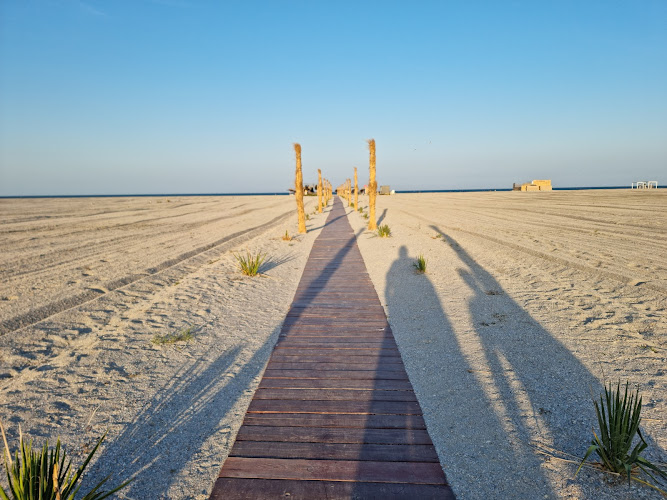
Mamaia beach, Constanta Romania
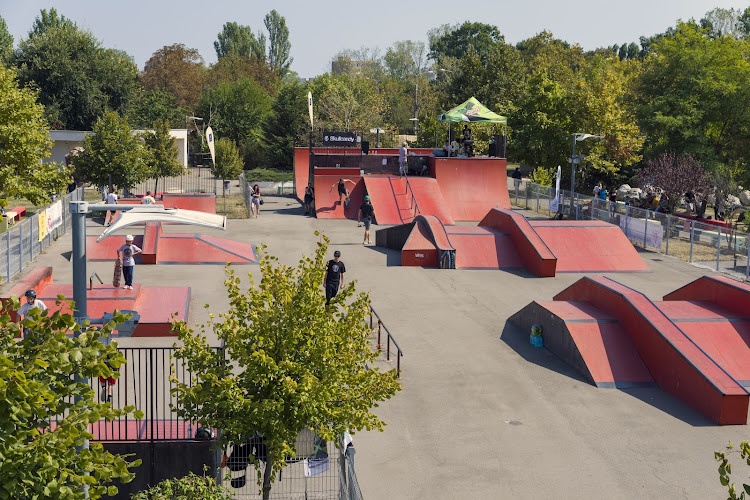
Gravity Park
Constanța Dolphinarium
Find Accommodations Nearby
Recommended Tours & Activities
Visitor Reviews
There are no reviews yet. Be the first one to write one.
Share Your Experience
Have you visited Museum of National History and Archaeology? Help other travelers by leaving a review.