
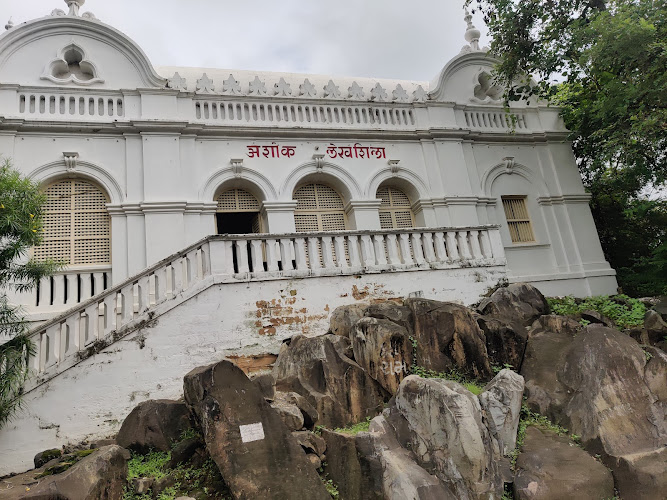
Ashok Shilalekh Junagadh
About Ashok Shilalekh Junagadh
Description
There’s something quietly awe-inspiring about standing before the Ashok Shilalekh in Junagadh — a massive rock that has been silently carrying Emperor Ashoka’s words for more than two millennia. It’s not flashy or overly grand, but it holds a weight of history that you can almost feel in the air. This enormous boulder, carved around 250 BC, bears the Fourteen Major Rock Edicts of Emperor Ashoka, written in ancient Brahmi script and Pali language. These inscriptions preach moral values, compassion, and the importance of ethical living — ideas that still resonate today.
What I find truly fascinating is that this site isn’t just about old inscriptions; it’s about a turning point in human thought. Ashoka, once a fierce conqueror, transformed into a ruler guided by peace and empathy after the Kalinga War. And here, on this very rock in Junagadh, he chose to immortalize that transformation. You can almost imagine the artisans carefully carving each line, knowing that they were shaping something timeless.
The site itself feels peaceful, almost meditative. You’ll hear the rustle of trees, maybe a few temple bells in the distance, and the occasional chatter of curious visitors. It’s family-friendly and good for kids too — especially if you want to introduce them to ancient Indian history in a way that feels real and tangible. Sure, the place isn’t loaded with modern amenities (don’t expect a café or a fancy restroom nearby), but honestly, that’s part of its charm. It’s raw, authentic, and deeply rooted in the soil of Gujarat’s past.
While some travelers might wish for better maintenance or more detailed signage, most leave with a sense of awe. There’s an energy here that connects you to something far older than any modern monument. It’s not just a museum piece; it’s a living testament to India’s philosophical evolution — from conquest to compassion.
Key Features
- Ancient Inscriptions: The edicts date back to around 250 BC, carved during Emperor Ashoka’s reign, inscribed in Brahmi script and Pali language.
- Historical Significance: These edicts reflect Ashoka’s shift from a warrior king to a proponent of Buddhist principles like non-violence and moral conduct.
- Architectural Simplicity: The rock itself is a natural formation, with inscriptions etched directly into its surface — no ornate carvings, just pure history.
- Cultural Heritage: Recognized as one of India’s earliest archaeological treasures, it offers insight into ancient governance and spirituality.
- Proximity to Girnar Hills: Located on the way to Mount Girnar, making it a great stop for those exploring Junagadh’s religious and historical circuit.
- Educational Value: Ideal for students, history enthusiasts, and travelers curious about India’s early written records.
What I personally love about this site is how unassuming it is. There’s no dramatic entrance or fancy display — just a rock that has seen centuries pass by. And yet, it’s one of the most profound historical artifacts you’ll ever encounter. It’s humbling, really, to realize that these same words were read by people thousands of years ago, standing right where you stand now.
Best Time to Visit
If you’re planning a trip, the best time to visit Ashok Shilalekh is between October and February. The weather in Junagadh during these months is cooler and more comfortable for exploring outdoor sites. Summers can be scorching, and trust me, standing under the Gujarat sun while trying to read ancient inscriptions isn’t exactly pleasant. Monsoon season, from June to September, brings lush greenery to the area, but the paths can get slippery, so tread carefully if you go then.
Early mornings or late afternoons are perfect for photography — the sunlight hits the rock at just the right angle, making the inscriptions stand out beautifully. And if you’re lucky, you might catch a local guide who can narrate the stories behind each edict with genuine passion. I once visited around 8 AM, and there was this quiet calm — just the sound of the breeze and the faint hum of the city waking up. It’s moments like that which make travel so rewarding.
How to Get There
Reaching the Ashok Shilalekh is quite straightforward. The site lies on the route leading from Junagadh city toward the Girnar Hills, roughly 3 kilometers from Bhavnath Taleti. If you’re coming from Rajkot or Ahmedabad, Junagadh is well-connected by road and rail. The nearest airport is at Rajkot, about 100 kilometers away, and from there, you can hire a cab or take a bus to Junagadh.
Once in Junagadh, local auto-rickshaws or taxis can take you to the site easily. The road leading up to it winds through a scenic stretch with glimpses of the Girnar range — honestly, the drive itself feels like part of the experience. For those who enjoy walking, you can even take a short trek from Bhavnath to the edict site, though it’s best done in mild weather. Parking is limited, so plan accordingly if you’re driving.
Public transport options are available, but I’d personally recommend hiring a local driver who knows the area. They often share little stories and legends about Junagadh that you won’t find in any guidebook. And if you’re lucky, they might even point out a few lesser-known spots nearby that are worth exploring.
Tips for Visiting
Before you head out, here are a few tips that can make your visit smoother and more enjoyable:
- Go early in the day. The site tends to be quieter in the mornings, and the lighting is perfect for photography.
- Carry water and snacks. There aren’t restaurants or cafes nearby, so it’s best to bring your own refreshments.
- Wear comfortable shoes. You’ll be walking on uneven terrain, so sturdy footwear helps.
- Respect the site. This isn’t just a tourist spot; it’s a sacred piece of history. Avoid touching the inscriptions or littering.
- Hire a local guide. They can explain the meaning behind each edict and share fascinating stories about Emperor Ashoka’s reign.
- Combine your visit. Since it’s close to Girnar Hills and Uparkot Fort, plan a half-day trip covering all three — it’s a great way to experience Junagadh’s layered history.
- Travel light. The area doesn’t have lockers or storage facilities, so keep your belongings minimal.
One thing I always tell fellow travelers: don’t rush through the Ashok Shilalekh. Take a moment to stand quietly, maybe run your eyes over the ancient script, and think about how far humanity has come since those words were first carved. It’s humbling. And it’s a reminder that even thousands of years ago, people were already thinking deeply about kindness, morality, and peace — things we still strive for today.
To sum it up, the Ashok Shilalekh Junagadh isn’t just an archaeological site; it’s a conversation across time. It’s simple, yes, but profoundly meaningful. Whether you’re a history buff, a curious traveler, or someone just looking for a quiet corner to reflect, this place has a way of leaving an imprint on your mind. So, if you ever find yourself in Gujarat, make sure to stop by. You’ll walk away with more than just photos — you’ll carry a little piece of history in your heart.
Key Features
- Key Features
- Best Time to Visit
- How to Get There
- Tips for Visiting
More Details
Updated December 1, 2025
Table of Contents
Description
There’s something quietly awe-inspiring about standing before the Ashok Shilalekh in Junagadh — a massive rock that has been silently carrying Emperor Ashoka’s words for more than two millennia. It’s not flashy or overly grand, but it holds a weight of history that you can almost feel in the air. This enormous boulder, carved around 250 BC, bears the Fourteen Major Rock Edicts of Emperor Ashoka, written in ancient Brahmi script and Pali language. These inscriptions preach moral values, compassion, and the importance of ethical living — ideas that still resonate today.
What I find truly fascinating is that this site isn’t just about old inscriptions; it’s about a turning point in human thought. Ashoka, once a fierce conqueror, transformed into a ruler guided by peace and empathy after the Kalinga War. And here, on this very rock in Junagadh, he chose to immortalize that transformation. You can almost imagine the artisans carefully carving each line, knowing that they were shaping something timeless.
The site itself feels peaceful, almost meditative. You’ll hear the rustle of trees, maybe a few temple bells in the distance, and the occasional chatter of curious visitors. It’s family-friendly and good for kids too — especially if you want to introduce them to ancient Indian history in a way that feels real and tangible. Sure, the place isn’t loaded with modern amenities (don’t expect a café or a fancy restroom nearby), but honestly, that’s part of its charm. It’s raw, authentic, and deeply rooted in the soil of Gujarat’s past.
While some travelers might wish for better maintenance or more detailed signage, most leave with a sense of awe. There’s an energy here that connects you to something far older than any modern monument. It’s not just a museum piece; it’s a living testament to India’s philosophical evolution — from conquest to compassion.
Key Features
- Ancient Inscriptions: The edicts date back to around 250 BC, carved during Emperor Ashoka’s reign, inscribed in Brahmi script and Pali language.
- Historical Significance: These edicts reflect Ashoka’s shift from a warrior king to a proponent of Buddhist principles like non-violence and moral conduct.
- Architectural Simplicity: The rock itself is a natural formation, with inscriptions etched directly into its surface — no ornate carvings, just pure history.
- Cultural Heritage: Recognized as one of India’s earliest archaeological treasures, it offers insight into ancient governance and spirituality.
- Proximity to Girnar Hills: Located on the way to Mount Girnar, making it a great stop for those exploring Junagadh’s religious and historical circuit.
- Educational Value: Ideal for students, history enthusiasts, and travelers curious about India’s early written records.
What I personally love about this site is how unassuming it is. There’s no dramatic entrance or fancy display — just a rock that has seen centuries pass by. And yet, it’s one of the most profound historical artifacts you’ll ever encounter. It’s humbling, really, to realize that these same words were read by people thousands of years ago, standing right where you stand now.
Best Time to Visit
If you’re planning a trip, the best time to visit Ashok Shilalekh is between October and February. The weather in Junagadh during these months is cooler and more comfortable for exploring outdoor sites. Summers can be scorching, and trust me, standing under the Gujarat sun while trying to read ancient inscriptions isn’t exactly pleasant. Monsoon season, from June to September, brings lush greenery to the area, but the paths can get slippery, so tread carefully if you go then.
Early mornings or late afternoons are perfect for photography — the sunlight hits the rock at just the right angle, making the inscriptions stand out beautifully. And if you’re lucky, you might catch a local guide who can narrate the stories behind each edict with genuine passion. I once visited around 8 AM, and there was this quiet calm — just the sound of the breeze and the faint hum of the city waking up. It’s moments like that which make travel so rewarding.
How to Get There
Reaching the Ashok Shilalekh is quite straightforward. The site lies on the route leading from Junagadh city toward the Girnar Hills, roughly 3 kilometers from Bhavnath Taleti. If you’re coming from Rajkot or Ahmedabad, Junagadh is well-connected by road and rail. The nearest airport is at Rajkot, about 100 kilometers away, and from there, you can hire a cab or take a bus to Junagadh.
Once in Junagadh, local auto-rickshaws or taxis can take you to the site easily. The road leading up to it winds through a scenic stretch with glimpses of the Girnar range — honestly, the drive itself feels like part of the experience. For those who enjoy walking, you can even take a short trek from Bhavnath to the edict site, though it’s best done in mild weather. Parking is limited, so plan accordingly if you’re driving.
Public transport options are available, but I’d personally recommend hiring a local driver who knows the area. They often share little stories and legends about Junagadh that you won’t find in any guidebook. And if you’re lucky, they might even point out a few lesser-known spots nearby that are worth exploring.
Tips for Visiting
Before you head out, here are a few tips that can make your visit smoother and more enjoyable:
- Go early in the day. The site tends to be quieter in the mornings, and the lighting is perfect for photography.
- Carry water and snacks. There aren’t restaurants or cafes nearby, so it’s best to bring your own refreshments.
- Wear comfortable shoes. You’ll be walking on uneven terrain, so sturdy footwear helps.
- Respect the site. This isn’t just a tourist spot; it’s a sacred piece of history. Avoid touching the inscriptions or littering.
- Hire a local guide. They can explain the meaning behind each edict and share fascinating stories about Emperor Ashoka’s reign.
- Combine your visit. Since it’s close to Girnar Hills and Uparkot Fort, plan a half-day trip covering all three — it’s a great way to experience Junagadh’s layered history.
- Travel light. The area doesn’t have lockers or storage facilities, so keep your belongings minimal.
One thing I always tell fellow travelers: don’t rush through the Ashok Shilalekh. Take a moment to stand quietly, maybe run your eyes over the ancient script, and think about how far humanity has come since those words were first carved. It’s humbling. And it’s a reminder that even thousands of years ago, people were already thinking deeply about kindness, morality, and peace — things we still strive for today.
To sum it up, the Ashok Shilalekh Junagadh isn’t just an archaeological site; it’s a conversation across time. It’s simple, yes, but profoundly meaningful. Whether you’re a history buff, a curious traveler, or someone just looking for a quiet corner to reflect, this place has a way of leaving an imprint on your mind. So, if you ever find yourself in Gujarat, make sure to stop by. You’ll walk away with more than just photos — you’ll carry a little piece of history in your heart.
Key Highlights
- Key Features
- Best Time to Visit
- How to Get There
- Tips for Visiting
Location
Places to Stay Near Ashok Shilalekh Junagadh
Find and Book a Tour
Explore More Travel Guides
No reviews found! Be the first to review!
Traveler Reviews for Ashok Shilalekh Junagadh
There are no reviews yet. Be the first one to write one.
Have you visited Ashok Shilalekh Junagadh? Help other travelers by sharing your review.
You Might Also Like

Khapara Kodiya Caves

Jaysun Enterprise
Adi Kadi Vav
Find Accommodations Nearby
Recommended Tours & Activities
Visitor Reviews
There are no reviews yet. Be the first one to write one.
Share Your Experience
Have you visited Ashok Shilalekh Junagadh? Help other travelers by leaving a review.