
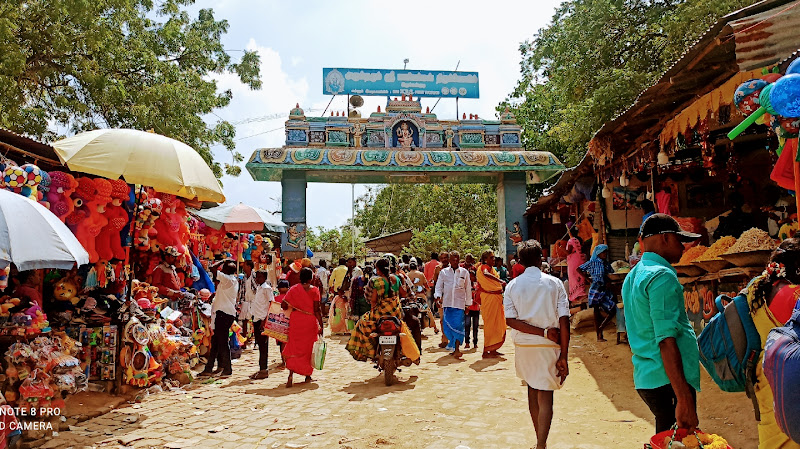
Irukkangudi Mariyamman Temple
About Irukkangudi Mariyamman Temple
Description
Irukkangudi Mariyamman Temple is one of those places that quietly pulls you in. You may arrive with a simple plan—tick it off your Tamil Nadu temple list—but you leave with something heavier in the heart, in a good way. Located in a rural stretch that still feels deeply lived-in, the temple is dedicated to Goddess Mariyamman, widely worshipped as a protector against illness, drought, and misfortune. And yes, people take that belief seriously here. You’ll see it in the way devotees queue patiently under the sun, barefoot, murmuring prayers that sound half-hope, half-thanksgiving.
What strikes most travelers first is the sense of raw faith. This isn’t a polished, overly curated attraction trying to impress with gimmicks. It’s real, sometimes chaotic, sometimes loud, sometimes uncomfortable—and that’s exactly why it works. The temple complex is spacious, functional, and designed around ritual rather than aesthetics alone. And yet, there’s beauty in the chaos. Red and yellow hues dominate the space, symbolic of Shakti worship, with the goddess depicted in a fierce but protective form.
I remember my first visit here—no grand expectations, just curiosity. But the energy was unmistakable. Women carrying neem leaves, men offering pots of pongal, kids running around until their parents hushed them near the sanctum. It felt less like a tourist spot and more like being allowed into someone else’s deeply personal prayer. And honestly, that’s what many travelers are craving now—authentic spiritual experiences, not filtered versions.
The temple is also surprisingly accessible. Facilities like restrooms and wheelchair-friendly entrances make it easier for elderly devotees and travelers with mobility needs. That matters more than people admit. Not every ancient or rural temple bothers with that, but here, the focus seems to be on welcoming everyone who comes with faith, curiosity, or even skepticism.
Another thing worth noting: the crowd. On regular days, it’s manageable. On special Fridays, festival days, or during Aadi month, it’s intense. But there’s a rhythm to it. You learn to move with the crowd, not against it. And somehow, even with thousands around, the moment you stand before Mariyamman, it feels oddly personal. Strange how that works.
Key Features
- Dedicated to Goddess Mariyamman, known for healing and protection
- Strong association with local folk rituals and traditional worship practices
- Spacious temple complex that accommodates large crowds during festivals
- Wheelchair accessible entrance and parking, which is not always a given
- Onsite services for devotees, including offerings and ritual assistance
- Restroom facilities available within the premises
- Major draw during Aadi month and festival days
- Deep-rooted connection with the surrounding villages and communities
Best Time to Visit
Timing your visit to Irukkangudi Mariyamman Temple can change your entire experience. If you prefer calm, mornings on weekdays are your best bet. The air feels lighter then, literally and metaphorically. Priests are less rushed, and you can stand quietly, absorbing the chants and the smell of incense without someone nudging you from behind.
But if you’re the kind who wants to witness devotion at full volume, come during Aadi month (July–August). It’s not for the faint-hearted, I’ll warn you. The crowds swell, rituals become more intense, and emotions run high. You’ll see fire-walking ceremonies, special poojas, and devotees fulfilling vows made months or even years ago. It can be overwhelming. And yet, it’s unforgettable.
Fridays are especially significant. Expect longer queues and a more charged atmosphere. I once visited on a Friday afternoon thinking it would be quieter—rookie mistake. Still, there was something powerful about seeing people wait for hours without complaint. It puts your own impatience into perspective.
Weather-wise, Tamil Nadu heat is no joke. Summers can be brutal, so plan early morning or late evening visits if you’re traveling between March and June. Monsoon months bring relief from heat but also muddy surroundings, so wear practical footwear. Not stylish sandals. Trust me on that.
How to Get There
Getting to Irukkangudi Mariyamman Temple requires a bit of planning, but nothing too complicated. The temple is well-known in the region, so asking locals usually gets you pointed in the right direction faster than GPS, which sometimes loses its mind in rural areas.
Most travelers reach the area via nearby towns connected by road. Buses are frequent and affordable, though they can be crowded during festival seasons. If you’re traveling with family or elderly members, hiring a taxi or using a private vehicle is far more comfortable. Roads are generally decent, though you might hit the occasional rough patch. That’s part of the charm, I suppose.
If you’re coming from a major city, plan for a half-day journey depending on traffic and stops. And don’t rush it. Some of my favorite memories involve stopping at small roadside tea shops, sipping overly sweet tea, and chatting with locals who proudly talk about their Mariyamman.
Once you reach the temple area, parking is available, including spaces designed for easier access. From there, it’s a short walk to the entrance. You’ll know you’re close when you see vendors selling flowers, bangles, and coconuts. The air changes too—more incense, more anticipation.
Tips for Visiting
First things first: dress modestly. This isn’t just about rules; it’s about respect. Lightweight cotton clothes work best, especially in the heat. And footwear—easy to remove. You’ll thank yourself later.
Carry some cash. While basic services are available onsite, digital payments aren’t always reliable in rural settings. Small denominations help, especially if you plan to buy offerings or prasad.
Hydration matters. Bring water, but be mindful of where you drink it. Dispose of bottles responsibly. It sounds obvious, but you’d be surprised how many forget.
If you’re sensitive to crowds, plan your visit carefully. Early mornings are calmer. Festival days are intense but culturally rich. Choose based on what you want from the experience. There’s no right or wrong way to visit.
Photography is usually allowed in outer areas, but be cautious near the sanctum. When in doubt, don’t. Sometimes it’s better to just stand there and feel the moment instead of framing it for social media. I say this as someone who’s guilty of over-clicking photos.
Finally, keep an open mind. You might see rituals that feel unfamiliar or even uncomfortable. Remember, you’re a guest here. Observe, learn, and let the experience unfold. Irukkangudi Mariyamman Temple doesn’t try to impress you—it simply exists in its truth. And that, oddly enough, is what makes people return again and again.
Key Features
- Dedicated to Goddess Mariyamman, known for healing and protection
- Strong association with local folk rituals and traditional worship practices
- Spacious temple complex that accommodates large crowds during festivals
- Wheelchair accessible entrance and parking, which is not always a given
- Onsite services for devotees, including offerings and ritual assistance
- Restroom facilities available within the premises
- Major draw during Aadi month and festival days
- Deep-rooted connection with the surrounding villages and communities
More Details
Updated December 31, 2025
Table of Contents
Description
Irukkangudi Mariyamman Temple is one of those places that quietly pulls you in. You may arrive with a simple plan—tick it off your Tamil Nadu temple list—but you leave with something heavier in the heart, in a good way. Located in a rural stretch that still feels deeply lived-in, the temple is dedicated to Goddess Mariyamman, widely worshipped as a protector against illness, drought, and misfortune. And yes, people take that belief seriously here. You’ll see it in the way devotees queue patiently under the sun, barefoot, murmuring prayers that sound half-hope, half-thanksgiving.
What strikes most travelers first is the sense of raw faith. This isn’t a polished, overly curated attraction trying to impress with gimmicks. It’s real, sometimes chaotic, sometimes loud, sometimes uncomfortable—and that’s exactly why it works. The temple complex is spacious, functional, and designed around ritual rather than aesthetics alone. And yet, there’s beauty in the chaos. Red and yellow hues dominate the space, symbolic of Shakti worship, with the goddess depicted in a fierce but protective form.
I remember my first visit here—no grand expectations, just curiosity. But the energy was unmistakable. Women carrying neem leaves, men offering pots of pongal, kids running around until their parents hushed them near the sanctum. It felt less like a tourist spot and more like being allowed into someone else’s deeply personal prayer. And honestly, that’s what many travelers are craving now—authentic spiritual experiences, not filtered versions.
The temple is also surprisingly accessible. Facilities like restrooms and wheelchair-friendly entrances make it easier for elderly devotees and travelers with mobility needs. That matters more than people admit. Not every ancient or rural temple bothers with that, but here, the focus seems to be on welcoming everyone who comes with faith, curiosity, or even skepticism.
Another thing worth noting: the crowd. On regular days, it’s manageable. On special Fridays, festival days, or during Aadi month, it’s intense. But there’s a rhythm to it. You learn to move with the crowd, not against it. And somehow, even with thousands around, the moment you stand before Mariyamman, it feels oddly personal. Strange how that works.
Key Features
- Dedicated to Goddess Mariyamman, known for healing and protection
- Strong association with local folk rituals and traditional worship practices
- Spacious temple complex that accommodates large crowds during festivals
- Wheelchair accessible entrance and parking, which is not always a given
- Onsite services for devotees, including offerings and ritual assistance
- Restroom facilities available within the premises
- Major draw during Aadi month and festival days
- Deep-rooted connection with the surrounding villages and communities
Best Time to Visit
Timing your visit to Irukkangudi Mariyamman Temple can change your entire experience. If you prefer calm, mornings on weekdays are your best bet. The air feels lighter then, literally and metaphorically. Priests are less rushed, and you can stand quietly, absorbing the chants and the smell of incense without someone nudging you from behind.
But if you’re the kind who wants to witness devotion at full volume, come during Aadi month (July–August). It’s not for the faint-hearted, I’ll warn you. The crowds swell, rituals become more intense, and emotions run high. You’ll see fire-walking ceremonies, special poojas, and devotees fulfilling vows made months or even years ago. It can be overwhelming. And yet, it’s unforgettable.
Fridays are especially significant. Expect longer queues and a more charged atmosphere. I once visited on a Friday afternoon thinking it would be quieter—rookie mistake. Still, there was something powerful about seeing people wait for hours without complaint. It puts your own impatience into perspective.
Weather-wise, Tamil Nadu heat is no joke. Summers can be brutal, so plan early morning or late evening visits if you’re traveling between March and June. Monsoon months bring relief from heat but also muddy surroundings, so wear practical footwear. Not stylish sandals. Trust me on that.
How to Get There
Getting to Irukkangudi Mariyamman Temple requires a bit of planning, but nothing too complicated. The temple is well-known in the region, so asking locals usually gets you pointed in the right direction faster than GPS, which sometimes loses its mind in rural areas.
Most travelers reach the area via nearby towns connected by road. Buses are frequent and affordable, though they can be crowded during festival seasons. If you’re traveling with family or elderly members, hiring a taxi or using a private vehicle is far more comfortable. Roads are generally decent, though you might hit the occasional rough patch. That’s part of the charm, I suppose.
If you’re coming from a major city, plan for a half-day journey depending on traffic and stops. And don’t rush it. Some of my favorite memories involve stopping at small roadside tea shops, sipping overly sweet tea, and chatting with locals who proudly talk about their Mariyamman.
Once you reach the temple area, parking is available, including spaces designed for easier access. From there, it’s a short walk to the entrance. You’ll know you’re close when you see vendors selling flowers, bangles, and coconuts. The air changes too—more incense, more anticipation.
Tips for Visiting
First things first: dress modestly. This isn’t just about rules; it’s about respect. Lightweight cotton clothes work best, especially in the heat. And footwear—easy to remove. You’ll thank yourself later.
Carry some cash. While basic services are available onsite, digital payments aren’t always reliable in rural settings. Small denominations help, especially if you plan to buy offerings or prasad.
Hydration matters. Bring water, but be mindful of where you drink it. Dispose of bottles responsibly. It sounds obvious, but you’d be surprised how many forget.
If you’re sensitive to crowds, plan your visit carefully. Early mornings are calmer. Festival days are intense but culturally rich. Choose based on what you want from the experience. There’s no right or wrong way to visit.
Photography is usually allowed in outer areas, but be cautious near the sanctum. When in doubt, don’t. Sometimes it’s better to just stand there and feel the moment instead of framing it for social media. I say this as someone who’s guilty of over-clicking photos.
Finally, keep an open mind. You might see rituals that feel unfamiliar or even uncomfortable. Remember, you’re a guest here. Observe, learn, and let the experience unfold. Irukkangudi Mariyamman Temple doesn’t try to impress you—it simply exists in its truth. And that, oddly enough, is what makes people return again and again.
Key Highlights
- Dedicated to Goddess Mariyamman, known for healing and protection
- Strong association with local folk rituals and traditional worship practices
- Spacious temple complex that accommodates large crowds during festivals
- Wheelchair accessible entrance and parking, which is not always a given
- Onsite services for devotees, including offerings and ritual assistance
- Restroom facilities available within the premises
- Major draw during Aadi month and festival days
- Deep-rooted connection with the surrounding villages and communities
Location
Places to Stay Near Irukkangudi Mariyamman Temple
Find and Book a Tour
Explore More Travel Guides
No reviews found! Be the first to review!
Traveler Reviews for Irukkangudi Mariyamman Temple
There are no reviews yet. Be the first one to write one.
Have you visited Irukkangudi Mariyamman Temple? Help other travelers by sharing your review.
Find Accommodations Nearby
Recommended Tours & Activities
Visitor Reviews
There are no reviews yet. Be the first one to write one.
Share Your Experience
Have you visited Irukkangudi Mariyamman Temple? Help other travelers by leaving a review.