
Cifra Palace
About Cifra Palace
Description
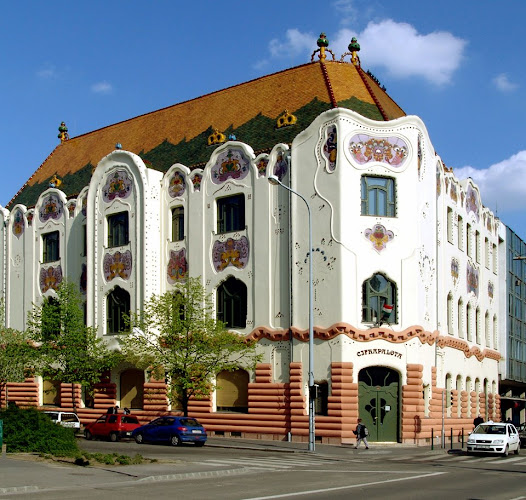
If you’re the sort who sees a rainbow on the face of a building and stops in their tracks, Cifra Palace in Kecskemét is the sort of place that’ll have your phone’s camera working overtime. The name itself literally means “Ornate Palace”—and I don’t think that’s overselling it at all. Walk up to the palace—I say “walk,” but really you glide through the heart of Kecskemét, because the city center draws you toward all the architectural surprises. Cifra Palace doesn’t hide; it shouts with color, flourishes, and a kind of joie de vivre you rarely see outside of Gaudí’s Barcelona or some of the great art nouveau icons of Europe.
Built in the early 20th century, the Cifra Palace is the icon of Hungarian art nouveau architecture (or “szecesszió” if you want to impress locals with your vocabulary). Designed by Gábor Ács, the building is smothered in brilliant majolica ceramics—deep turquoise, sunfire yellow, and leafy patterns swirling above you. It’s said that the design draws from Hungarian folk art, and when you see the stylized flowers and motifs, you can imagine them leaping straight from a Kalocsa embroidery or a traditional tapestry. The place is, frankly, a little over-the-top...and that’s half the fun.
Okay, so let’s get this out of the way: Cifra Palace is not just a building to gawk at from the outside (though, by all means, take your time, I’ve spent a good 20 minutes outside just getting the right photo). The inside is just as bewitching. These days, it houses the Kecskemét Gallery—permanent and rotating exhibits of Hungarian art, culture, and history. I once stumbled upon an interactive folk art workshop here—some teens were learning to carve wooden spoons while older visitors browsed early 20th-century paintings. The rooms themselves are an extension of the outer flair, with painted floral motifs climbing the walls, colored glass, and decorative stucco that feels almost alive.
Cifra Palace pops up often on travel guides for Kecskemét, and not for nothing. It’s a core experience for history buffs, art lovers, families (kids dig the color, no joke), and honestly anyone with a creative streak. People’s reactions are generally enthusiastic, though nobody’s perfect—some visitors expect a “grand palace” and get a very eccentric museum, which, if you ask me, is the charm. It’s quirky, it’s memorable, and yes, you’ll take more photos here than you intend to.
Key Features
- Striking Art Nouveau Facade: One of the region’s finest examples of Hungarian art nouveau/“szecesszió” design with dazzling majolica tiles and folk-art-inspired flourishes.
- Permanent and Temporary Exhibitions: Hosts a diverse collection of Hungarian paintings, sculpture, artifacts, and decorative art, plus fresh exhibits that change through the year.
- Immersive Interiors: Painted walls, stained glass, and elaborately decorated rooms seamlessly blend architecture with art.
- Interactive Cultural Experiences: Workshops and events spotlight regional folk art, crafts, and even music—so, yes, you might get the chance to try your hand at something.
- Accessibility: Wheelchair accessible entrance and restrooms allow comfortable exploration for people with mobility needs.
- Family-Friendly Destination: Engaging for kids—details and colors make it a hit with little ones, and they won’t be at all bored.
- On-Site Amenities: Clean restrooms are available. While there’s no restaurant, the city center’s cafes and pastry shops are just a few steps away—seriously, try the local pastries, especially if you like apricots.
- Paid Parking Nearby: Convenient car park close to the palace lets you travel at your own pace.
Best Time to Visit
You know, in my experience, there’s really no “wrong” time to see Cifra Palace, but I’ve got a few opinions. Spring and early autumn win the gold medal for most delightful atmosphere. The city of Kecskemét, which sits about an hour from Budapest, really comes alive when the flowers are in bloom or the leaves just start forming their gold and rust tones. The light at those times makes the colors of the palace absolutely zing—there’s something about Hungarian sunlight that turns everything a bit magical.
I once visited mid-July, and, not gonna lie, it was quite hot—temperatures can hit 30°C (that’s mid-80s Fahrenheit, if you’re counting). The flip side is that the city isn’t overrun by tourists, so you can appreciate the main square in a sort of peaceful haze. Winters are quieter; if you’re not afraid of a little chill and want those frosty, atmospheric photos with fewer people in your frame, then December through February is not a bad choice at all. Just keep in mind museum opening hours can be shorter, especially around public holidays.
The building’s opening hours do fluctuate seasonally, and sometimes local festivals or events spill over into the gallery—so it’s clever to check details before you swing by. If you time your visit during something like the Kecskemét Art Nouveau Festival, you might land in the midst of costumed parades, exhibitions, and music echoing through the center. Quite the treat!
How to Get There
Cifra Palace is hard to miss once you’re in Kecskemét’s center—it’s on the city’s main drag, a literal showstopper on Rákóczi út. That said, let’s talk logistics. If you’re coming from Budapest, hop on a train at Budapest-Nyugati station; you’ll be in Kecskemét in just over an hour. The train ride itself is comfy—grab a window seat to see the Great Hungarian Plain roll by, dotted with sunflowers in summer and mysterious mists in autumn. Once you hit the Kecskemét train station, it’s a leisurely walk (about 15-20 minutes) down leafy boulevards lined with 19th and early 20th-century buildings. You could take a local bus too, but honestly, walking lets you take in the city’s slower pace. Good for the legs, good for the soul.
Driving? Highways M5 and 441 make getting to Kecskemét by car straightforward from Budapest, Szeged, or the surrounds. Parking is paid but manageable—expect to find a paid lot close by, though in absolutely peak periods (weekends, big festival times), you may need to look a little further. I’ve never found it impossible. For those who prefer buses, there are direct coaches from Budapest and other Hungarian cities; the bus station’s also not far from the center, so you’ll only need a short stroll to reach the palace itself.
If you’re using public transport inside Kecskemét, local buses run frequently and taxis are available—but, at the risk of repeating myself, wandering the city center on foot is half the fun. Every corner offers up more architectural oddities—a “palota” here, a reformed church or city hall there—so allow time to get a bit lost, in the happy way.
Tips for Visiting
- Allow Some Time—Even if you think “It’s just a quick photo,” make space in your plans to see both the outside and inside exhibitions. The detail work rewards the curious eye. If you’re traveling as a group, plan for at least an hour; I usually spend two. Easy.
- Check for Special Exhibitions—Some of the best experiences I’ve had came from wandering into temporary exhibitions—especially those highlighting Hungarian folk crafts or the secession style. You might encounter live demonstrations, which are a real highlight.
- Photography Lovers—Natural light makes those majolica tiles sing, so midday or late afternoon can be golden. Watch your reflections in the glass when photographing inside. And don’t forget ceilings and small ornament details—they’re wild.
- Kid-Friendly—The lively décor tends to spark young imaginations. There may be activity sheets or simple games for kids available at the ticket counter, especially during school holidays.
- No Restaurant Onsite—But you won’t go hungry. Kecskemét’s main square has family-run pastry shops, traditional Hungarian lunch spots, and ice cream parlors just steps away. One pastry with apricot jam, and honestly, your day peaks there.
- Accessibility—Wheelchair users and those with limited mobility will find accessible bathrooms and an entrance ramp. If you have specific access needs, you might want to call ahead.
- Plan for Paid Parking—Bring some forint coins or be ready for contactless payment at the machines. Most streetside parking nearby is metered too, so take note of the time allowed.
- Combine with Other Sights—Cifra Palace is steps from the town hall, the Cathedral of the Ascension, and local parks. Easy to do a half-day “greatest hits” walk of Kecskemét city attractions.
- Take Your Time—This is one I learned the hard way: racing through to “see it all” means missing the gentle charm of this place. Have a seat on a bench outside; watch locals go by, then head back inside for another look. There’s always some odd detail you missed the first time around.
- If You Get Lucky: Trips during festivals or art events are packed with music, folk costume parades, and open-air markets. It’s loud, colorful, and—like the Cifra Palace itself—unforgettable.
I guess, at the end of the day, what stands out about Cifra Palace isn’t just the wild, bohemian look or the museum-quality exhibits. It’s the way it blurs boundaries: building, artwork, museum, city icon, gathering place. Few places in Hungary let you touch so many eras of artistic and cultural expression in such a little space. Whether you’re a design aficionado, a family looking for somewhere different, or just someone who finds joy in eccentric old palaces (like me), make a real point of stopping by. Kecskemét has treasures around every corner—but Cifra Palace is the jewel in the crown.
Key Features
- Key Features
- Best Time to Visit
- How to Get There
- Tips for Visiting
More Details
Updated July 12, 2025
Table of Contents
Description
If you’re the sort who sees a rainbow on the face of a building and stops in their tracks, Cifra Palace in Kecskemét is the sort of place that’ll have your phone’s camera working overtime. The name itself literally means “Ornate Palace”—and I don’t think that’s overselling it at all. Walk up to the palace—I say “walk,” but really you glide through the heart of Kecskemét, because the city center draws you toward all the architectural surprises. Cifra Palace doesn’t hide; it shouts with color, flourishes, and a kind of joie de vivre you rarely see outside of Gaudí’s Barcelona or some of the great art nouveau icons of Europe.
Built in the early 20th century, the Cifra Palace is the icon of Hungarian art nouveau architecture (or “szecesszió” if you want to impress locals with your vocabulary). Designed by Gábor Ács, the building is smothered in brilliant majolica ceramics—deep turquoise, sunfire yellow, and leafy patterns swirling above you. It’s said that the design draws from Hungarian folk art, and when you see the stylized flowers and motifs, you can imagine them leaping straight from a Kalocsa embroidery or a traditional tapestry. The place is, frankly, a little over-the-top…and that’s half the fun.
Okay, so let’s get this out of the way: Cifra Palace is not just a building to gawk at from the outside (though, by all means, take your time, I’ve spent a good 20 minutes outside just getting the right photo). The inside is just as bewitching. These days, it houses the Kecskemét Gallery—permanent and rotating exhibits of Hungarian art, culture, and history. I once stumbled upon an interactive folk art workshop here—some teens were learning to carve wooden spoons while older visitors browsed early 20th-century paintings. The rooms themselves are an extension of the outer flair, with painted floral motifs climbing the walls, colored glass, and decorative stucco that feels almost alive.
Cifra Palace pops up often on travel guides for Kecskemét, and not for nothing. It’s a core experience for history buffs, art lovers, families (kids dig the color, no joke), and honestly anyone with a creative streak. People’s reactions are generally enthusiastic, though nobody’s perfect—some visitors expect a “grand palace” and get a very eccentric museum, which, if you ask me, is the charm. It’s quirky, it’s memorable, and yes, you’ll take more photos here than you intend to.
Key Features
- Striking Art Nouveau Facade: One of the region’s finest examples of Hungarian art nouveau/“szecesszió” design with dazzling majolica tiles and folk-art-inspired flourishes.
- Permanent and Temporary Exhibitions: Hosts a diverse collection of Hungarian paintings, sculpture, artifacts, and decorative art, plus fresh exhibits that change through the year.
- Immersive Interiors: Painted walls, stained glass, and elaborately decorated rooms seamlessly blend architecture with art.
- Interactive Cultural Experiences: Workshops and events spotlight regional folk art, crafts, and even music—so, yes, you might get the chance to try your hand at something.
- Accessibility: Wheelchair accessible entrance and restrooms allow comfortable exploration for people with mobility needs.
- Family-Friendly Destination: Engaging for kids—details and colors make it a hit with little ones, and they won’t be at all bored.
- On-Site Amenities: Clean restrooms are available. While there’s no restaurant, the city center’s cafes and pastry shops are just a few steps away—seriously, try the local pastries, especially if you like apricots.
- Paid Parking Nearby: Convenient car park close to the palace lets you travel at your own pace.
Best Time to Visit
You know, in my experience, there’s really no “wrong” time to see Cifra Palace, but I’ve got a few opinions. Spring and early autumn win the gold medal for most delightful atmosphere. The city of Kecskemét, which sits about an hour from Budapest, really comes alive when the flowers are in bloom or the leaves just start forming their gold and rust tones. The light at those times makes the colors of the palace absolutely zing—there’s something about Hungarian sunlight that turns everything a bit magical.
I once visited mid-July, and, not gonna lie, it was quite hot—temperatures can hit 30°C (that’s mid-80s Fahrenheit, if you’re counting). The flip side is that the city isn’t overrun by tourists, so you can appreciate the main square in a sort of peaceful haze. Winters are quieter; if you’re not afraid of a little chill and want those frosty, atmospheric photos with fewer people in your frame, then December through February is not a bad choice at all. Just keep in mind museum opening hours can be shorter, especially around public holidays.
The building’s opening hours do fluctuate seasonally, and sometimes local festivals or events spill over into the gallery—so it’s clever to check details before you swing by. If you time your visit during something like the Kecskemét Art Nouveau Festival, you might land in the midst of costumed parades, exhibitions, and music echoing through the center. Quite the treat!
How to Get There
Cifra Palace is hard to miss once you’re in Kecskemét’s center—it’s on the city’s main drag, a literal showstopper on Rákóczi út. That said, let’s talk logistics. If you’re coming from Budapest, hop on a train at Budapest-Nyugati station; you’ll be in Kecskemét in just over an hour. The train ride itself is comfy—grab a window seat to see the Great Hungarian Plain roll by, dotted with sunflowers in summer and mysterious mists in autumn. Once you hit the Kecskemét train station, it’s a leisurely walk (about 15-20 minutes) down leafy boulevards lined with 19th and early 20th-century buildings. You could take a local bus too, but honestly, walking lets you take in the city’s slower pace. Good for the legs, good for the soul.
Driving? Highways M5 and 441 make getting to Kecskemét by car straightforward from Budapest, Szeged, or the surrounds. Parking is paid but manageable—expect to find a paid lot close by, though in absolutely peak periods (weekends, big festival times), you may need to look a little further. I’ve never found it impossible. For those who prefer buses, there are direct coaches from Budapest and other Hungarian cities; the bus station’s also not far from the center, so you’ll only need a short stroll to reach the palace itself.
If you’re using public transport inside Kecskemét, local buses run frequently and taxis are available—but, at the risk of repeating myself, wandering the city center on foot is half the fun. Every corner offers up more architectural oddities—a “palota” here, a reformed church or city hall there—so allow time to get a bit lost, in the happy way.
Tips for Visiting
- Allow Some Time—Even if you think “It’s just a quick photo,” make space in your plans to see both the outside and inside exhibitions. The detail work rewards the curious eye. If you’re traveling as a group, plan for at least an hour; I usually spend two. Easy.
- Check for Special Exhibitions—Some of the best experiences I’ve had came from wandering into temporary exhibitions—especially those highlighting Hungarian folk crafts or the secession style. You might encounter live demonstrations, which are a real highlight.
- Photography Lovers—Natural light makes those majolica tiles sing, so midday or late afternoon can be golden. Watch your reflections in the glass when photographing inside. And don’t forget ceilings and small ornament details—they’re wild.
- Kid-Friendly—The lively décor tends to spark young imaginations. There may be activity sheets or simple games for kids available at the ticket counter, especially during school holidays.
- No Restaurant Onsite—But you won’t go hungry. Kecskemét’s main square has family-run pastry shops, traditional Hungarian lunch spots, and ice cream parlors just steps away. One pastry with apricot jam, and honestly, your day peaks there.
- Accessibility—Wheelchair users and those with limited mobility will find accessible bathrooms and an entrance ramp. If you have specific access needs, you might want to call ahead.
- Plan for Paid Parking—Bring some forint coins or be ready for contactless payment at the machines. Most streetside parking nearby is metered too, so take note of the time allowed.
- Combine with Other Sights—Cifra Palace is steps from the town hall, the Cathedral of the Ascension, and local parks. Easy to do a half-day “greatest hits” walk of Kecskemét city attractions.
- Take Your Time—This is one I learned the hard way: racing through to “see it all” means missing the gentle charm of this place. Have a seat on a bench outside; watch locals go by, then head back inside for another look. There’s always some odd detail you missed the first time around.
- If You Get Lucky: Trips during festivals or art events are packed with music, folk costume parades, and open-air markets. It’s loud, colorful, and—like the Cifra Palace itself—unforgettable.
I guess, at the end of the day, what stands out about Cifra Palace isn’t just the wild, bohemian look or the museum-quality exhibits. It’s the way it blurs boundaries: building, artwork, museum, city icon, gathering place. Few places in Hungary let you touch so many eras of artistic and cultural expression in such a little space. Whether you’re a design aficionado, a family looking for somewhere different, or just someone who finds joy in eccentric old palaces (like me), make a real point of stopping by. Kecskemét has treasures around every corner—but Cifra Palace is the jewel in the crown.
Key Highlights
- Key Features
- Best Time to Visit
- How to Get There
- Tips for Visiting
Location
Places to Stay Near Cifra Palace
Find and Book a Tour
Explore More Travel Guides
No reviews found! Be the first to review!
Traveler Reviews for Cifra Palace
There are no reviews yet. Be the first one to write one.
Have you visited Cifra Palace? Help other travelers by sharing your review.
You Might Also Like
Kecskeméti Arborétum
Józsi kanyar
Katona József Museum
Find Accommodations Nearby
Recommended Tours & Activities
Visitor Reviews
There are no reviews yet. Be the first one to write one.
Share Your Experience
Have you visited Cifra Palace? Help other travelers by leaving a review.