

Arsenale di Venezia
About Arsenale di Venezia
Description
The Arsenale di Venezia stands as one of Venice's most fascinating yet often overlooked historical treasures. Dating back to 1104, this massive Byzantine shipyard complex once served as the beating heart of the Venetian Republic's naval supremacy. And honestly, when you first glimpse those towering brick walls and ancient gates, it's hard not to feel a sense of awe at the sheer scale of what medieval engineers accomplished here.
For over eight centuries, this industrial powerhouse churned out the warships and merchant vessels that made Venice a dominant maritime force across the Mediterranean. The complex sprawls across a significant portion of Venice's eastern district, encompassing former shipyards, armories, and workshops that employed thousands of skilled craftsmen during the Republic's golden age.
Today, the Arsenale has transformed into something quite different but equally captivating. The ancient halls and courtyards now host prestigious cultural events, art exhibitions, and trade fairs - most notably serving as one of the primary venues for the renowned Venice Biennale. Walking through these spaces, you can almost hear the echoes of hammers on metal and the creaking of wooden ships being born.
What strikes most visitors is how the Arsenale manages to blend its industrial heritage with contemporary cultural significance. The massive stone lions that guard the entrance - spoils of war from various Greek islands - watch over a space that seamlessly bridges past and present. It's particularly moving to see how this former center of military might has evolved into a celebration of human creativity and artistic expression.
Key Features
The Arsenale offers visitors a unique glimpse into Venice's industrial past while showcasing cutting-edge contemporary culture. Here's what makes this historic complex truly special:
- Ancient Stone Lions: The famous marble lions at the entrance, including one bearing runic inscriptions left by Viking mercenaries - a detail that always gives me chills when I think about the layers of history here
- Massive Brick Architecture: Imposing medieval walls and buildings that showcase the engineering prowess of 12th-century Venice
- Venice Biennale Venues: The Corderie (rope factory) and Artiglierie (artillery workshops) now serve as world-class exhibition spaces
- Naval History Museum displays: Artifacts and exhibits that tell the story of Venice's maritime dominance
- Historic Shipbuilding Halls: Original spaces where Venice's legendary galleys were constructed using revolutionary assembly-line techniques
- Ceremonial Entrance Gate: The ornate land gate (Porta Magna) featuring Renaissance sculpture and the winged lion of St. Mark
- Darsena Grande: The main basin where completed ships were launched, now used for cultural events
- Workshop Spaces: Former armories and forges that demonstrate the Arsenale's role as a complete military-industrial complex
Best Time to Visit
Timing your visit to the Arsenale can make or break your experience, and I've learned this the hard way after visiting during both peak tourist season and quieter periods. The absolute best time depends largely on what you're hoping to see and experience.
If you're planning to visit during the Venice Biennale (typically running from April to November in alternating years), you'll witness the Arsenale at its most dynamic. The Architecture Biennale and Art Biennale transform these ancient spaces into showcases of contemporary creativity. But here's the thing - Biennale periods also mean larger crowds and potentially longer wait times.
For a more contemplative experience of the historical aspects, I'd recommend visiting during the quieter months of January through March. The weather might be cooler and occasionally damp, but you'll have more space to appreciate the architectural details and imagine what life was like when these halls buzzed with shipbuilding activity.
Spring months (April and May) offer an ideal compromise - pleasant weather without the intense summer heat, and if it's a Biennale year, you'll catch the exhibitions at their freshest. The lighting during these months is particularly beautiful for photography, especially in the late afternoon when the sun filters through the high windows of the Corderie.
Summer visits can be quite warm inside the large halls, though the thick medieval walls do provide some relief from Venice's notorious humidity. Early morning visits (if possible) work best during July and August.
Autumn brings its own charm, particularly in October when the light has that golden quality that makes everything look more romantic - very fitting for Venice, obviously.
How to Get There
Getting to the Arsenale requires a bit of navigation through Venice's maze-like streets, but it's actually more straightforward than reaching some other major attractions. The most convenient approach is via water bus (vaporetto), and I always recommend this route to first-time visitors.
The closest vaporetto stop is "Arsenale," served by lines 1 and 2. From here, it's just a short walk to the main entrances. If you're staying near San Marco, line 1 provides a scenic route along the Grand Canal before heading toward the Arsenale area. The journey takes about 20-25 minutes from the Rialto area.
Another nearby stop is "Celestia," which connects to lines 4.1, 4.2, 5.1, and 5.2. This option works particularly well if you're coming from the train station (Santa Lucia) or Piazzale Roma, as these circular lines provide more direct connections.
For those who prefer walking - and honestly, walking through Venice is half the pleasure - the Arsenale sits in the Castello district, roughly a 15-20 minute stroll from St. Mark's Square. The route takes you through some lovely residential areas where you'll see authentic Venetian daily life away from the main tourist corridors.
From the Rialto Bridge area, expect about a 25-30 minute walk. The path involves crossing several small bridges and navigating narrow calli (streets), but proper signage makes it manageable. Just follow signs for "Arsenale" or "Biennale" - though keep in mind that Venetian street signs can be somewhat inconsistent.
If you're driving to Venice (which I generally don't recommend), you'll need to park at Piazzale Roma or Tronchetto and then take public transport or walk from there.
Tips for Visiting
Here's what I wish someone had told me before my first visit to the Arsenale - these insights come from multiple visits and a few learning experiences that could've gone smoother.
First and foremost, check what's currently open and accessible. Unlike many Venice attractions that maintain consistent visiting hours, the Arsenale's accessibility depends heavily on ongoing exhibitions and events. Parts of the complex may be closed for installation or maintenance, particularly between major exhibitions.
If you're visiting during a Biennale, purchase tickets in advance online. The lines can get surprisingly long, especially on weekends and during the preview days. Plus, advance tickets often come with time slots that help manage crowd flow through the exhibitions.
Wear comfortable walking shoes - and I mean really comfortable ones. The Arsenale covers a vast area with uneven stone floors, outdoor courtyards, and lots of standing around admiring exhibits or architectural details. My feet learned this lesson the hard way during a four-hour visit in inappropriate footwear.
Bring a water bottle, especially during warmer months. While Venice has public water fountains (called "nasoni") scattered around the city, there aren't many within the Arsenale complex itself. The large exhibition halls can get warm with crowds, and you'll be doing more walking than you might expect.
Photography policies vary depending on current exhibitions, so check the rules when you arrive. Generally, photographing the historic architecture is fine, but temporary art installations may have restrictions. The stone lions at the entrance make for great photos and there's usually no restriction there.
Consider combining your Arsenale visit with nearby attractions to make the most of your time in this part of Venice. The Naval History Museum is just steps away and provides additional context about Venice's maritime heritage. The Public Gardens (Giardini) where the other main Biennale exhibitions take place are also within walking distance.
For families with children, the wide open spaces and large scale of everything tends to capture kids' imaginations well. The historical aspects might not hold their attention, but if there are interactive exhibitions during Biennale periods, children often find these engaging.
Finally, don't rush your visit. The Arsenale rewards slow exploration and contemplation. Take time to sit in the courtyards, read the informational plaques carefully, and really absorb the significance of standing in a place that was essentially the Silicon Valley of medieval Europe. These moments of reflection often become the most memorable part of the entire experience.
Key Features
- Key Features
- Best Time to Visit
- How to Get There
- Tips for Visiting
More Details
Updated September 15, 2025
Table of Contents
Description
The Arsenale di Venezia stands as one of Venice’s most fascinating yet often overlooked historical treasures. Dating back to 1104, this massive Byzantine shipyard complex once served as the beating heart of the Venetian Republic’s naval supremacy. And honestly, when you first glimpse those towering brick walls and ancient gates, it’s hard not to feel a sense of awe at the sheer scale of what medieval engineers accomplished here.
For over eight centuries, this industrial powerhouse churned out the warships and merchant vessels that made Venice a dominant maritime force across the Mediterranean. The complex sprawls across a significant portion of Venice’s eastern district, encompassing former shipyards, armories, and workshops that employed thousands of skilled craftsmen during the Republic’s golden age.
Today, the Arsenale has transformed into something quite different but equally captivating. The ancient halls and courtyards now host prestigious cultural events, art exhibitions, and trade fairs – most notably serving as one of the primary venues for the renowned Venice Biennale. Walking through these spaces, you can almost hear the echoes of hammers on metal and the creaking of wooden ships being born.
What strikes most visitors is how the Arsenale manages to blend its industrial heritage with contemporary cultural significance. The massive stone lions that guard the entrance – spoils of war from various Greek islands – watch over a space that seamlessly bridges past and present. It’s particularly moving to see how this former center of military might has evolved into a celebration of human creativity and artistic expression.
Key Features
The Arsenale offers visitors a unique glimpse into Venice’s industrial past while showcasing cutting-edge contemporary culture. Here’s what makes this historic complex truly special:
- Ancient Stone Lions: The famous marble lions at the entrance, including one bearing runic inscriptions left by Viking mercenaries – a detail that always gives me chills when I think about the layers of history here
- Massive Brick Architecture: Imposing medieval walls and buildings that showcase the engineering prowess of 12th-century Venice
- Venice Biennale Venues: The Corderie (rope factory) and Artiglierie (artillery workshops) now serve as world-class exhibition spaces
- Naval History Museum displays: Artifacts and exhibits that tell the story of Venice’s maritime dominance
- Historic Shipbuilding Halls: Original spaces where Venice’s legendary galleys were constructed using revolutionary assembly-line techniques
- Ceremonial Entrance Gate: The ornate land gate (Porta Magna) featuring Renaissance sculpture and the winged lion of St. Mark
- Darsena Grande: The main basin where completed ships were launched, now used for cultural events
- Workshop Spaces: Former armories and forges that demonstrate the Arsenale’s role as a complete military-industrial complex
Best Time to Visit
Timing your visit to the Arsenale can make or break your experience, and I’ve learned this the hard way after visiting during both peak tourist season and quieter periods. The absolute best time depends largely on what you’re hoping to see and experience.
If you’re planning to visit during the Venice Biennale (typically running from April to November in alternating years), you’ll witness the Arsenale at its most dynamic. The Architecture Biennale and Art Biennale transform these ancient spaces into showcases of contemporary creativity. But here’s the thing – Biennale periods also mean larger crowds and potentially longer wait times.
For a more contemplative experience of the historical aspects, I’d recommend visiting during the quieter months of January through March. The weather might be cooler and occasionally damp, but you’ll have more space to appreciate the architectural details and imagine what life was like when these halls buzzed with shipbuilding activity.
Spring months (April and May) offer an ideal compromise – pleasant weather without the intense summer heat, and if it’s a Biennale year, you’ll catch the exhibitions at their freshest. The lighting during these months is particularly beautiful for photography, especially in the late afternoon when the sun filters through the high windows of the Corderie.
Summer visits can be quite warm inside the large halls, though the thick medieval walls do provide some relief from Venice’s notorious humidity. Early morning visits (if possible) work best during July and August.
Autumn brings its own charm, particularly in October when the light has that golden quality that makes everything look more romantic – very fitting for Venice, obviously.
How to Get There
Getting to the Arsenale requires a bit of navigation through Venice’s maze-like streets, but it’s actually more straightforward than reaching some other major attractions. The most convenient approach is via water bus (vaporetto), and I always recommend this route to first-time visitors.
The closest vaporetto stop is “Arsenale,” served by lines 1 and 2. From here, it’s just a short walk to the main entrances. If you’re staying near San Marco, line 1 provides a scenic route along the Grand Canal before heading toward the Arsenale area. The journey takes about 20-25 minutes from the Rialto area.
Another nearby stop is “Celestia,” which connects to lines 4.1, 4.2, 5.1, and 5.2. This option works particularly well if you’re coming from the train station (Santa Lucia) or Piazzale Roma, as these circular lines provide more direct connections.
For those who prefer walking – and honestly, walking through Venice is half the pleasure – the Arsenale sits in the Castello district, roughly a 15-20 minute stroll from St. Mark’s Square. The route takes you through some lovely residential areas where you’ll see authentic Venetian daily life away from the main tourist corridors.
From the Rialto Bridge area, expect about a 25-30 minute walk. The path involves crossing several small bridges and navigating narrow calli (streets), but proper signage makes it manageable. Just follow signs for “Arsenale” or “Biennale” – though keep in mind that Venetian street signs can be somewhat inconsistent.
If you’re driving to Venice (which I generally don’t recommend), you’ll need to park at Piazzale Roma or Tronchetto and then take public transport or walk from there.
Tips for Visiting
Here’s what I wish someone had told me before my first visit to the Arsenale – these insights come from multiple visits and a few learning experiences that could’ve gone smoother.
First and foremost, check what’s currently open and accessible. Unlike many Venice attractions that maintain consistent visiting hours, the Arsenale’s accessibility depends heavily on ongoing exhibitions and events. Parts of the complex may be closed for installation or maintenance, particularly between major exhibitions.
If you’re visiting during a Biennale, purchase tickets in advance online. The lines can get surprisingly long, especially on weekends and during the preview days. Plus, advance tickets often come with time slots that help manage crowd flow through the exhibitions.
Wear comfortable walking shoes – and I mean really comfortable ones. The Arsenale covers a vast area with uneven stone floors, outdoor courtyards, and lots of standing around admiring exhibits or architectural details. My feet learned this lesson the hard way during a four-hour visit in inappropriate footwear.
Bring a water bottle, especially during warmer months. While Venice has public water fountains (called “nasoni”) scattered around the city, there aren’t many within the Arsenale complex itself. The large exhibition halls can get warm with crowds, and you’ll be doing more walking than you might expect.
Photography policies vary depending on current exhibitions, so check the rules when you arrive. Generally, photographing the historic architecture is fine, but temporary art installations may have restrictions. The stone lions at the entrance make for great photos and there’s usually no restriction there.
Consider combining your Arsenale visit with nearby attractions to make the most of your time in this part of Venice. The Naval History Museum is just steps away and provides additional context about Venice’s maritime heritage. The Public Gardens (Giardini) where the other main Biennale exhibitions take place are also within walking distance.
For families with children, the wide open spaces and large scale of everything tends to capture kids’ imaginations well. The historical aspects might not hold their attention, but if there are interactive exhibitions during Biennale periods, children often find these engaging.
Finally, don’t rush your visit. The Arsenale rewards slow exploration and contemplation. Take time to sit in the courtyards, read the informational plaques carefully, and really absorb the significance of standing in a place that was essentially the Silicon Valley of medieval Europe. These moments of reflection often become the most memorable part of the entire experience.
Key Highlights
- Key Features
- Best Time to Visit
- How to Get There
- Tips for Visiting
Location
Places to Stay Near Arsenale di Venezia
Find and Book a Tour
Explore More Travel Guides
No reviews found! Be the first to review!
Traveler Reviews for Arsenale di Venezia
There are no reviews yet. Be the first one to write one.
Have you visited Arsenale di Venezia? Help other travelers by sharing your review.
You Might Also Like

Campo Santo Stefano

Palazzo Da Mula Morosini
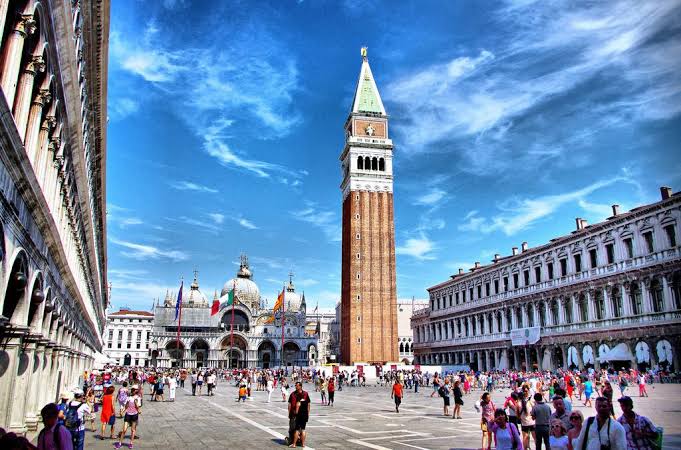
St Mark's Campanile
Find Accommodations Nearby
Recommended Tours & Activities
Visitor Reviews
There are no reviews yet. Be the first one to write one.
Share Your Experience
Have you visited Arsenale di Venezia? Help other travelers by leaving a review.