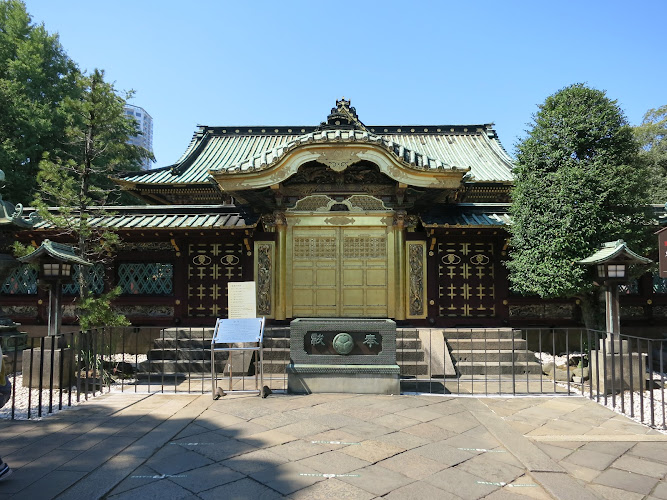
Set among the broad paths, museums and mature trees of Ueno Park, Ueno Toshogu Shrine presents a more enclosed and ceremonial side of this heavily visited Tokyo district. Its approach, stone lanterns and decorated structures create a marked shift from the open park outside. Even on a busy day, the precinct encourages visitors to slow down, notice the craftsmanship, and observe the customary rhythm of a working Shinto place of worship.
The shrine is associated with Tokugawa Ieyasu, the first shogun of the Tokugawa shogunate, and its 17th-century origins give it particular importance in a city where many historic buildings have been lost to fire, earthquake and war. Ueno Toshogu is admired not for monumental scale but for concentrated detail: richly carved surfaces, color, metalwork and gold-toned ornament evoke the visual confidence of the Edo period. It is an especially rewarding stop for travelers who want a historical counterpoint to Ueno Park’s major cultural institutions.
What to See & Experience
Begin with the approach rather than rushing straight to the main buildings. The lantern-lined grounds establish the shrine’s formal character, while the gate and decorative panels reward close looking. Shinto shrines are active religious spaces, so visitors may also see people making offerings, praying or purchasing devotional items. Keep voices low around worship areas, follow posted guidance, and allow time to look at architectural details from more than one angle.
- Stone lanterns: Rows of lanterns lend the approach a ceremonial, photographic character and frame views toward the shrine buildings.
- Ornate shrine architecture: Look for layered carvings, painted details and gilded accents that distinguish the complex from plainer shrine precincts.
- The decorated gate: The gate is a focal point for observing Edo-period ornament and the transition from park to sacred space.
- Tokugawa connections: The shrine offers a tangible introduction to the historical legacy of Tokugawa Ieyasu and the Edo era.
- Seasonal garden interest: Ueno Toshogu is known for peony displays, making flower season an added reason to visit.
- Park-side pause: The compact grounds work well as a reflective break between Ueno’s larger museums, gardens and attractions.
Practical Visitor Strategy
| Planning Factor | Visitor Advice |
|---|
| Best Time to Go | Visit earlier in the day for gentler light and a calmer feel; spring flowers and autumn foliage can make the park especially lively. |
| Suggested Duration | Allow about 30 to 60 minutes for the precinct, longer if you are photographing details or visiting seasonal garden displays. |
| Crowd & Pacing Tips | Ueno Park can be busy on weekends, holidays and during blossom season. Pause at the approach and gate before joining any concentrated viewing areas. |
| Getting Oriented | Use Ueno Park as your reference point, then combine the shrine with nearby cultural sites or a walk toward Shinobazuno Pond. |
The shrine is best approached as one element of a flexible Ueno Park day rather than a standalone full-day destination. Conditions and access arrangements can change with seasons, ceremonies or garden operations, so check current on-site information before making time-sensitive plans. Photography is generally most satisfying when it focuses on overall composition as well as close architectural texture; be mindful of signs and avoid interrupting worshippers.
Who Will Enjoy It Most (and Trade-Offs)
Ueno Toshogu Shrine suits architecture enthusiasts, Edo-period history readers, photographers, repeat visitors to Tokyo, and anyone seeking a compact cultural stop between larger attractions. It is also a good choice for travelers who appreciate shrines with unusually lavish decoration rather than expansive grounds. The experience involves walking on park paths and through a historic precinct, where surfaces may be uneven and crowd levels vary; visitors needing step-free or mobility-specific access should assess conditions on arrival. For a balanced outing, pair the shrine with Kiyomizu Kannon-dō Temple, Shinobazuno Pond or the Tokyo National Museum. Families may combine it with Ueno Zoo, though the shrine’s value lies more in quiet observation and historical detail than interactive entertainment.
 Real Journey Travels