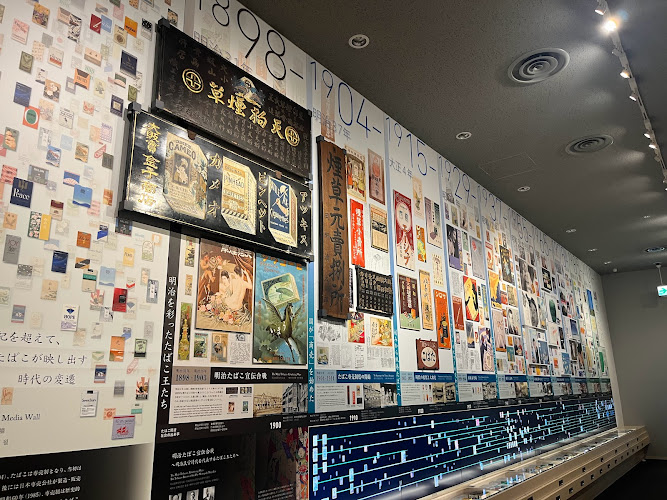
The Tobacco & Salt Museum in Sumida City examines two ordinary-seeming goods whose stories reach deeply into Japan’s economy, government, craft traditions, and everyday habits. Tobacco and salt were both subject to state monopoly systems for long periods, and the museum uses that shared history to connect cultivation, production, distribution, taxation, advertising, consumption, and social change. Rather than treating its subjects as curiosities, it gives visitors a focused introduction to how familiar commodities can shape national policy and private life alike.
Set in the eastern side of Tokyo, near the Skytree-area streetscape of Sumida, this is a rewarding alternative to the city’s larger art and history institutions. Its appeal lies in specificity: visitors encounter the material culture around smoking and seasoning, but also the images, tools, documents, packaging, and artistic responses that surrounded them. The museum’s scope is especially useful for travelers interested in modern Japanese society, design, economic history, or the less obvious stories behind objects encountered in daily life.
Standout Highlights & Experience
The permanent displays establish the historical relationship between tobacco, salt, and public administration, then broaden into the cultural worlds built around each product. Look beyond the headline subjects for the details that reveal changing taste, technology, and commerce. Special exhibitions may add a different lens, often making a repeat visit worthwhile for those already interested in Japanese visual culture or social history.
- Two linked commodity histories: Follow how tobacco and salt became economically significant goods and why they were connected through systems of control and taxation.
- Objects of everyday life: Examine the implements, containers, smoking-related articles, and production-related materials that make broad history tangible.
- Japanese design and visual culture: Notice labels, posters, prints, and other imagery that show how products were represented, marketed, and absorbed into popular culture.
- Salt beyond the table: The salt story opens onto production, preservation, trade, ritual associations, and the practical importance of a basic household necessity.
- Tobacco in context: Exhibits can illuminate cultivation, consumption, and changing attitudes without reducing a complicated subject to a single narrative.
- Temporary-exhibition potential: Check the current program before visiting, as rotating displays can provide an art, craft, or historical angle beyond the core galleries.
Practical Visitor Strategy
| Factor | What to Know |
|---|
| Best Time to Go | A weekday or a quieter part of the day generally suits visitors who want time to read labels and study smaller objects. |
| Suggested Duration | Allow roughly one to two hours for the permanent displays; add time if a temporary exhibition particularly interests you. |
| Crowd & Entry Tips | This is usually a more contemplative stop than a blockbuster attraction. Confirm the current exhibition schedule, admission arrangements, and closure information before setting out. |
| Getting Oriented | Start with the historical overview, then move through the tobacco and salt sections with an eye on the recurring themes of monopoly, trade, design, and daily use. |
Visitors who do not read Japanese fluently can still gain much from the objects, display design, and visual material, though the depth of interpretation available in other languages may vary by gallery and exhibition. A good approach is to identify one thread to follow—government monopoly, advertising, Japanese smoking culture, salt production, or print culture—rather than trying to absorb every detail at once. This makes the museum feel less like a niche survey and more like a concise case study in how policy and material culture meet.
Honest Fit: Who Will Love It (and Trade-Offs)
This museum is an excellent fit for curious adults, students of Japanese history, museum regulars, design-minded travelers, and visitors seeking a quieter counterpoint to Tokyo’s headline sights. It is also a strong choice for anyone who enjoys seeing how a specialized collection can explain wider themes of trade, regulation, work, and changing social customs. Families with older children who like object-based history may find plenty to discuss, while travelers expecting a large interactive science venue or a major spectacle may find the subject matter too focused. The visit is primarily an indoor, gallery-based experience rather than an outdoor attraction, but guests with mobility, sensory, or language-access needs should confirm current arrangements directly before arrival. Pair it naturally with a walk around the Tokyo Skytree area, other Sumida cultural stops, or a slower exploration of the neighborhood’s riverside and traditional-city atmosphere; together, those outings add scale and context to the museum’s detailed account of everyday Japanese life.
 Real Journey Travels