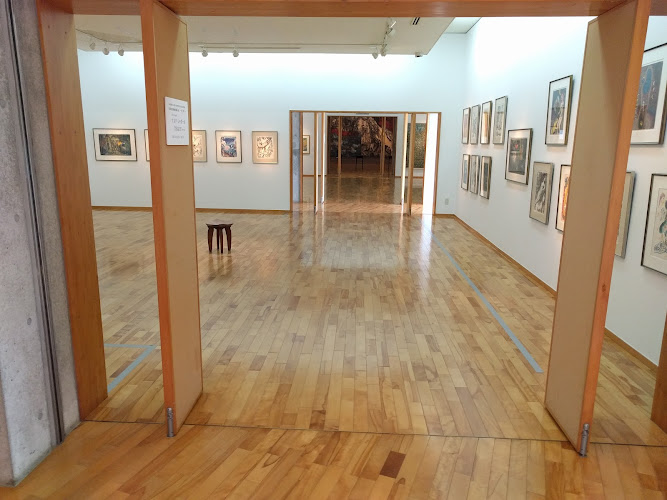
Opened in 1994, this private museum was built with a strong sense of purpose: to explore themes of war, peace, and the human condition through art. It isn’t your typical gallery filled with pretty landscapes and portraits. Instead, it dares to confront history head-on, especially the painful legacy of the Battle of Okinawa. The centerpiece is the monumental work “The Battle of Okinawa” by Iri and Toshi Maruki, a series of panels that are both haunting and deeply moving. You don’t just look at these paintings—you feel them.
What makes the museum even more special is how it blends architecture and meaning. The building itself is designed to echo the shape of a traditional Okinawan turtle-back tomb, symbolizing both continuity and remembrance. And then there’s the roof terrace, where a square opening frames the sunset in a way that feels almost spiritual. Standing up there, you can see the U.S. Marine Corps Air Station Futenma nearby, a reminder of Okinawa’s ongoing relationship with military presence. It’s a mix of art, history, and architecture that’s hard to find anywhere else.
Visitors often describe the place as thought-provoking rather than “fun,” and that’s exactly the point. It’s not a museum where you breeze through in 20 minutes. It asks you to slow down, reflect, and maybe even wrestle with uncomfortable truths. Still, it’s not all heavy. The collection also includes works by artists like Käthe Kollwitz, Georges Rouault, Yayoi Kusama, and others, so there’s a balance of perspectives and styles. Personally, I found myself unexpectedly moved by the quiet atmosphere—like the building itself encourages you to take a deep breath and listen to what the art has to say.
Best Time to Visit
The museum is open from 9:30 am to 5:00 pm, with Tuesdays as its regular closing day. If you can, plan your visit around June 23rd, known in Okinawa as Irei no Hi, or Memorial Day. On this day, the museum stays open until sunset, giving visitors the rare chance to experience the terrace view as the sun dips below the horizon. It’s not just beautiful—it’s symbolic, especially given the museum’s theme of remembrance.
That said, any quiet weekday morning is a good bet if you want to avoid crowds. The museum is not usually packed, but arriving early gives you time to linger in front of the larger works without feeling rushed. Summers in Okinawa can be brutally hot, so the air-conditioned galleries also make for a welcome break from the sun. Personally, I’d avoid weekends if you’re someone who likes a slower, more contemplative atmosphere.
How to Get There
The Sakima Art Museum is located in Ginowan, not far from the U.S. Marine Corps Air Station Futenma. If you’re staying in Naha, it’s roughly a 30-minute drive depending on traffic. Public transportation in Okinawa isn’t as extensive as in mainland Japan, so renting a car is usually the easiest option. Parking is available and wheelchair accessible, which is a big plus if you’re traveling with family or anyone with mobility concerns.
For those who prefer buses, there are routes that stop within walking distance, though it may take longer and require some transfers. I once tried the bus option, and while it was doable, I’ll be honest—it tested my patience a bit. If you’re short on time, definitely stick to a rental car or taxi.
Tips for Visiting
First off, don’t rush. This isn’t a museum you just tick off your list; it’s one you sit with. Give yourself at least 1–2 hours to really take in the exhibits. The Maruki panels alone deserve time and attention, and you’ll want a moment on the terrace to process what you’ve seen.
Bring a bottle of water, especially if you’re visiting in the hotter months. There’s no café or restaurant inside, so plan your meals before or after. If you’re traveling with kids, know that the museum does offer discounts for children and is surprisingly accommodating. While the subject matter is heavy, older kids might actually find it eye-opening.
Accessibility is thoughtfully handled here. The museum has wheelchair-friendly entrances, restrooms, and even rentals available. That’s not always the case in smaller private museums, so it’s worth noting.
One last tip: don’t skip the roof terrace. Even if you’re short on time, make sure you head up there. The view is striking, and the design of the opening to the sky is something you won’t forget. I remember standing there, feeling the warm Okinawan breeze, and it just clicked—this museum isn’t only about looking back at history, it’s also about looking forward, about finding peace in the present moment.
So if you’re planning a trip to Okinawa and want more than beaches and resorts, the Sakima Art Museum offers a different kind of experience—one that’s reflective, moving, and, in its own quiet way, unforgettable.
 Real Journey Travels