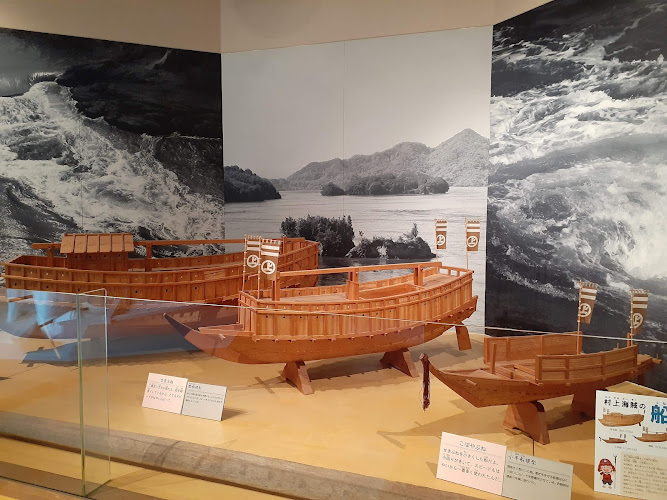
The Murakami clan, often called the “greatest pirates of Japan,” weren’t the swashbuckling treasure hunters you might picture from Hollywood films. They were more like guardians of the sea, skilled navigators and naval strategists who controlled vital waterways during the Sengoku period. This museum takes that fascinating slice of history and lays it out in a way that’s both scholarly and surprisingly fun.
Inside, you’ll find artifacts that belonged to the Noshima branch of the Murakami family—armor, weapons, and delicate crafts that somehow survived centuries of salt air and conflict. Ancient documents are on display too, telling stories of alliances, sea tolls, and the clan’s unique role in maritime politics. And then there are the excavated items from Noshima Castle, one of their strongholds, which really help you imagine what life must have been like in their island fortress. The museum doesn’t just throw dusty relics at you; it makes the past feel tangible, almost cinematic.
Now, to be fair, not every visitor is blown away. Some folks expect more flashy exhibits or English explanations on every panel, and I get that—it’s not a theme park. But for anyone curious about Japanese history beyond the usual samurai and ninja tales, this place is a gem. Personally, I found myself lingering longer than expected, especially at the sections explaining how “Kaizoku” in Japan weren’t just outlaws but also respected maritime authorities. That perspective alone makes the trip worthwhile.
Best Time to Visit
If you ask me, the best time to visit is spring or autumn. The museum itself is indoors, of course, but part of the experience is the surrounding scenery of Ōshima Island and the Seto Inland Sea. In spring, cherry blossoms dot the hillsides, giving the whole area a soft, almost dreamlike quality. Autumn, on the other hand, paints the landscape in warm reds and golds, and the sea looks crisp and clear. Summer can be hot and humid, which makes wandering around the castle ruins less comfortable, while winter, though quiet, can feel a little stark. Still, if you like fewer crowds, winter has its own charm—there’s something fitting about standing in front of centuries-old armor in the stillness of a cold day.
How to Get There
Reaching the Murakami Kaizoku Museum is part of the adventure. It’s located on Ōshima Island, connected by the Shimanami Kaidō, a famous expressway that links Honshu and Shikoku with a series of bridges. If you’re driving, the trip is straightforward, and free parking at the museum makes it easy. For those relying on public transport, you can catch a bus from Imabari Station that stops near the museum. And if you’re the cycling type, the Shimanami Kaidō is one of the most celebrated cycling routes in Japan—imagine pedaling across those sweeping bridges, sea stretching out in every direction, before diving into pirate history. I’ve done that ride once, and while my legs were screaming by the end, I still count it as one of my best travel days in Japan.
Tips for Visiting
Here’s the thing—if you want to get the most out of your visit, don’t rush. Give yourself at least two hours, maybe more if you’re the type who likes to read every caption. Bring a little patience too, because while there’s English support, it’s not always as detailed as you might wish. If you can, brush up on a bit of background about the Sengoku period beforehand—it’ll make the displays click in a deeper way.
Families will find it easy-going; kids love the armor try-on corner, and the staff are friendly and approachable. The café is small but handy for a quick break, especially if you’ve cycled there. And speaking of cycling, if you’re on the Shimanami Kaidō route, plan your timing so you’re not arriving exhausted—you’ll want enough energy to actually enjoy the exhibits.
One last thought: bring a curious mindset. This isn’t a blockbuster museum with flashy tech displays, but it has a quiet authenticity that grows on you the longer you stay. The Murakami Kaizoku Museum is less about spectacle and more about peeling back the layers of a fascinating, often misunderstood chapter of Japanese history. If you give it that space, you’ll walk away with a story worth telling. And honestly, isn’t that what travel is all about?
 Real Journey Travels