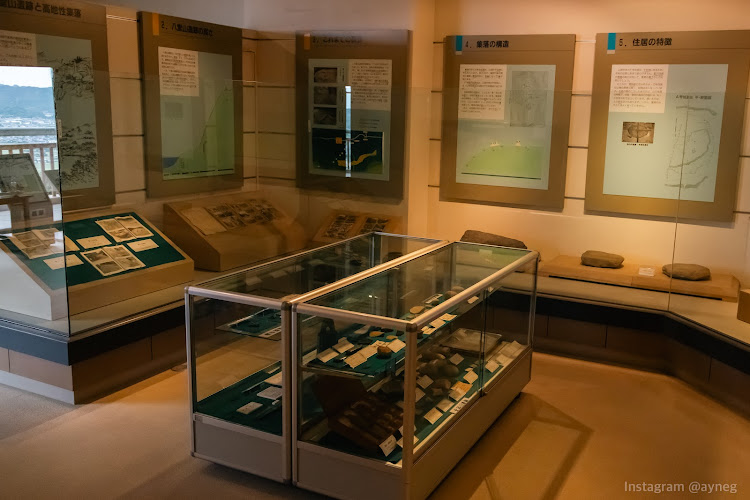
At first glance, it might look like just another small-town museum, but once you step inside, you realize it’s more like a time capsule. The building itself is designed with inspiration from Yayoi period dwellings, complete with cross-shaped roof decorations that give it a distinct character. It feels almost like you’re walking into a reconstructed piece of ancient life rather than a modern museum.
The museum focuses heavily on the Jomon and Yayoi periods, showcasing pottery, tools, and everyday objects that people thousands of years ago actually used. Some of the displays are simple, but that’s kind of the charm—it’s not trying to overwhelm you with flashy tech or gimmicks. Instead, it’s about authenticity. You get to see the raw, earthy textures of clay pots, the wear on stone tools, and even reliefs that depict how people lived back then. It’s the kind of detail that makes you pause and imagine what life must have been like without all the conveniences we take for granted.
Now, I’ll be honest: this isn’t the Louvre, and it doesn’t pretend to be. Some visitors might find it modest or even a little underwhelming if they’re expecting a massive collection. But if you’re curious about Japan’s deep history and like places that feel more personal and grounded, then this museum really delivers. It’s also family-friendly, with exhibits that kids can appreciate without getting bored after five minutes. And yes, it’s accessible, with wheelchair-friendly entrances, restrooms, and parking, which makes it welcoming to a wider range of travelers.
What I personally love is the atmosphere—it’s calm, uncrowded, and you actually have the time and space to linger at exhibits. There’s even an observation deck where you can step outside and take in the surrounding scenery, which adds another layer to the visit. It’s not just about looking at old artifacts; it’s about connecting the dots between ancient life and the landscape that shaped it.
Best Time to Visit
The museum is open year-round, so the best time really depends on what else you want to do in Saijō. Personally, I’d recommend autumn—October and November—because the weather is crisp, the skies are clear, and the colors on Mount Hachidō are just gorgeous. Spring is another good option if you’re into cherry blossoms, since the surrounding area comes alive with blooms. Summer can be hot and humid, which makes lingering outdoors less pleasant, though the museum itself offers a cool, shaded escape. Winter, while quieter, has its own charm if you like having places almost entirely to yourself.
If you’re planning to combine your visit with other attractions in Saijō, timing it with seasonal festivals or events can make the trip even more memorable. And since the museum doesn’t usually draw big crowds, you don’t have to worry much about peak hours—it’s pretty relaxed most of the time.
How to Get There
Reaching the Saijō Archaeological Museum is straightforward if you’re already in Ehime Prefecture. The city of Saijō is accessible by train on the JR Yosan Line, which connects to larger hubs like Matsuyama and Takamatsu. From Saijō Station, you can take a short taxi ride or local bus to reach the museum area. If you’re driving, there’s parking available, including spaces designed for accessible vehicles.
I’ve done both train and car travel in Shikoku, and honestly, if you’re comfortable driving in Japan, renting a car gives you more flexibility, especially if you want to explore other nearby cultural spots or natural sites. But if you’re sticking to public transport, the train plus taxi combo works just fine.
Tips for Visiting
First off, give yourself at least an hour to explore. It’s not a huge museum, but rushing through would make you miss the details that make it special. Bring a bit of imagination with you—some of the artifacts are simple, but when you think about the fact that they’ve survived thousands of years, they suddenly feel extraordinary.
If you’re traveling with kids, this is a good spot because the exhibits are straightforward and not overwhelming. Just don’t expect interactive digital displays—this museum is more old-school in its presentation. For accessibility, rest assured that the facilities are well thought out, which is not always the case in smaller regional museums.
One practical tip: there’s no restaurant on-site, so plan your meals accordingly. I usually grab something near Saijō Station before heading out. Also, check the weather if you want to enjoy the observation deck—clear days make the view so much better.
Lastly, approach the museum with curiosity rather than high expectations. It’s not about grandeur—it’s about authenticity, quiet reflection, and connecting with Japan’s ancient past in a very tangible way. And that, in my opinion, makes it worth the trip.
 Real Journey Travels