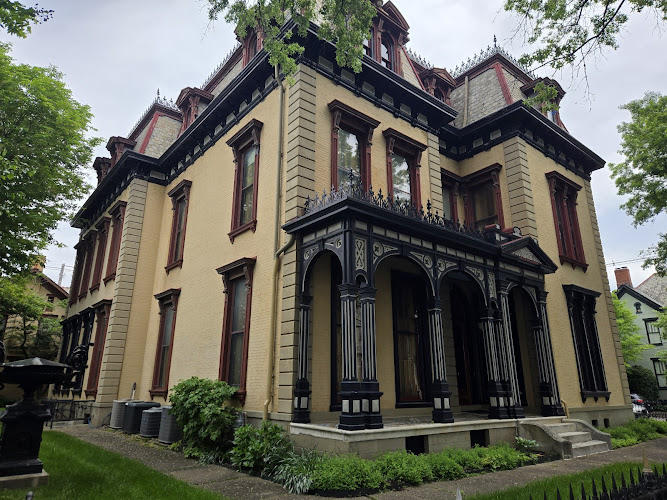
Designed in the French Second Empire style, the house greets visitors with ornate rooflines, a sense of vertical drama, and interior spaces that still whisper about the people who lived there. Furnishings and decorative details have been preserved and interpreted with care, so that the rooms read less like museum cases and more like the lingering atmosphere of a household where children played, guests were entertained, and business and community matters were discussed.
People who come expecting only pretty wallpaper often leave surprised by how much story is packed into a single home. The Reitz Home Museum does more than display objects; it connects them to the Reitz family and to the economic and social currents that shaped Evansville. For travelers who love architecture, the Second Empire elements—mansard roofs, bracketed cornices, and elegantly scaled windows—are notable. For those who love interiors, the period furnishings, original woodwork, decorative plaster, and layered textiles make each room feel lived-in and specific. And for folks who bring kids, the site manages to be engaging without turning into a theme park: approachable, thoughtful, and yes, sometimes even surprising.
This museum also reflects the long work of historic preservation. It is an example of how communities choose to keep certain buildings alive so future generations can learn from them. Visitors will see both original features and sensitive restorations; interpretation aims to explain not just what is on display but why those choices matter. Guided tours are offered, and docents—often volunteers who know the house inside out—bring personal enthusiasm and local color to the stories. A local docent once remarked that a single doorknob can tell a three-way story about technology, taste, and trade in the 1800s. That kind of detail is what makes a visit linger in memory.
Key Features
- No on-site restaurant, but a range of nearby dining options within a short walk
Best Time to Visit
Timing can change the whole feel of a visit. Spring and fall tend to be the most comfortable seasons for travelers who plan to combine a tour of the house with a stroll around the neighborhood. Temperatures are mild and the downtown area feels refreshed after winter or calm before the holidays—perfect for walking between attractions. Summer brings more tourists to Evansville generally, so if crowds bother you, weekdays in late spring or early fall work better.
But there are other timing tips that matter more than season. Mornings often provide quieter tours and the best chance to absorb details without a steady flow of people. Arriving for the first guided tour of the day gives you the best chance to ask questions and linger in rooms where certain items are fragile or on special display. And if the visitor happens to be in Evansville during a special event—holiday tours or historic home weeks—expect richer programming and sometimes longer lines. Those programs are fun, but if someone prefers a calm pace, the quieter months outside major holidays are ideal.
How to Get There
The Reitz Home Museum sits in Evansville’s historic core, making it straightforward to reach whether one arrives by car, bus, or on foot from a nearby hotel. Travelers staying downtown can usually walk to the museum, and that walk doubles as a chance to see turn-of-the-century buildings and small urban gardens. For drivers, on-street parking and nearby public lots are available, though spaces can fill during special events—so arriving early or planning for a little extra walking is wise.
Public transportation and rideshare services provide convenient alternatives for visitors who prefer not to drive. Local bus routes pass near the downtown historic district; riders should check schedules ahead of time because services may be less frequent on weekends or evenings. And while the historic house doesn’t have a dedicated drop-off lane like bigger attractions, a quick request to a rideshare driver to pause at a nearby corner usually works fine. For those combining museum visits with riverfront walks or other attractions in Evansville, parking once and exploring on foot makes for a relaxed, low-stress day.
Tips for Visiting
Practical tips make a visit smoother and more enjoyable. First, guided tours are the best way to experience the home. Docents tell stories that simply don’t come across from labels alone, and they often share little-known facts about family life and local history. If the visitor is especially interested in architecture or preservation, mention that when booking or upon arrival—many docents tailor remarks to the group’s interests.
And on logistics: the house has accessible restrooms and seating, which is great, but remember that historic homes sometimes have narrow doorways and thresholds that present challenges. Contacting the museum in advance with accessibility questions is recommended. Strollers and large bags may be awkward in smaller rooms; a compact stroller or carrier tends to work better. Comfortable shoes are a must—the floors are original in places and uneven in others, and people tend to do more standing and walking than they expect.
Photography policies vary by exhibition and by tour—so if the visitor plans to take photos, a polite question to the docent upon arrival clears things up. Often non-flash photography is allowed, but flash or tripods might be restricted to protect textures and fabrics. Respect for fragile furnishings is essential; these objects survived for well over a century, and small precautions—no touching, keeping a cautious distance—help ensure they last for visitors who come later.
Families will find the museum welcoming to children, but a little preparation helps. Short attention spans mean it’s better to pick a single guided tour rather than try to do everything in one visit. Turning the visit into a scavenger hunt (look for a carved newel post, spot a family portrait, find a patterned textile) keeps kids engaged and turns observation into play. The museum occasionally offers family-friendly programming—if that lines up with a trip, it’s a smart way to get more hands-on learning without sacrificing historical accuracy.
Lastly, combine the visit with other nearby attractions. The Reitz Home Museum sits within walking distance of other cultural stops, so plan for a half-day or full-day itinerary that includes a leisurely lunch and time to explore the riverfront. And because the museum does not have an on-site restaurant, a plan for snacks or a dining reservation nearby avoids the hangry scanning-for-food scramble later. Travelers who craft a simple plan—check hours, pick a tour time, arrive early, and be ready to listen—usually leave with the best experience.
To close on a human note: many visitors report that the house feels like a preserved conversation. Not loud or stagey, just layered—like a room where several generations left things behind that now speak for them. The Reitz Home Museum invites travelers to slow down and listen. Do that, and the place rewards you with details, stories, and a clearer sense of how a family and a city shaped one another over time.
 Real Journey Travels