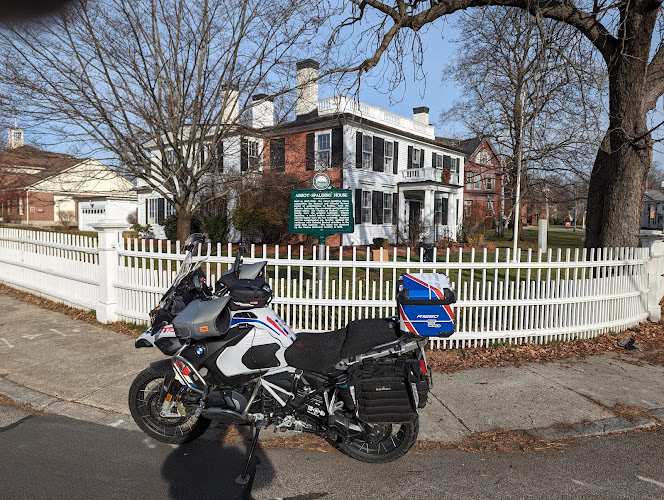
The building itself reads like a short architectural essay on the Federal period: balanced proportions, refined woodwork, and details that whisper rather than shout. Inside, rooms are arranged and furnished to reflect domestic life of the era, with period furnishings, decorative arts, and household objects that help tell the story of the family and the community that shaped this corner of New England. For travelers who prefer history served in manageable, intimate portions rather than in overwhelming timelines, the house offers a focused, human-scale look at local history.
Unlike bigger, glossy museums where artifacts can feel distant and behind glass, the Abbot-Spalding House rewards slow looking. Visitors often notice the small things first: the faint sun-fade on a floorboard where a favorite chair once stood, the hand-forged hinges on a pantry door, the little woolen sampler pinned behind glass that used to hang in a bedroom to teach a child both needlework and patience. Those details matter because they are the connective tissue between the people who once lived here and the travelers who walk these rooms today. Curators and volunteer docents tend to be local history buffs who like telling the stories that make Nashua feel lived-in rather than museum-polished.
The museum is primarily open for tours by appointment, which suits its scale and mission. Appointments allow small groups to move through the house without the bustle of a tour-bus crowd, and it encourages more personalized interactions with docents who can answer questions and point out architectural or social history features tailored to a visitor’s interest. If a traveler appreciates conversation over a cursory walkthrough, this format is ideal. It’s also a good fit for families who prefer quieter, slower-paced educational outings for kids.
Accessibility is a practical strength here: there is wheelchair accessible parking and an accessible restroom, so the historic setting is more welcoming to visitors with mobility needs than many comparably old properties. While the house retains its historic character, those thoughtful accessibility accommodations make it possible for a wider range of travelers to experience the place. It should be noted that the house, being historic, does still have thresholds and original flooring that require a careful step in places, but staff are used to helping guests navigate those little hurdles.
Another nice surprise is the small gift shop offering local history books, reproductions of period-style goods, and modest souvenirs. It’s not a sprawling commercial space but rather a curated nook for visitors who want something to remember the visit by or who are hunting a thoughtful, locally themed gift. Since there is no on-site restaurant, travelers typically plan a coffee stop or lunch at a nearby café in Nashua’s downtown after the tour; this keeps the house experience compact and undistracted by extended on-site dining.
Architecturally curious visitors will appreciate the Federal-style elements. The symmetrical façade, simple classical ornamentation, and interior woodwork reflect a post-Revolutionary aesthetic that favored restraint, order, and proportion. Docents often highlight how these stylistic choices were meant to convey refinement and civic virtue. For people who enjoy connecting architectural features to historical narratives—how national identity, economy, and taste intersected in the way homes were built—this house offers fertile ground.
Beyond architecture, the house is a microcosm of Nashua history and the families who helped define the town. The rooms are arranged to show how daily life, social rituals, and domestic labor were structured in the early 1800s. There are humble domestic artifacts next to more decorative objects, which together paint a balanced picture: life was a mix of practical work and carefully curated appearance. That blend is what many visitors find compelling, because it feels honest. The museum does not present an idealized reconstruction; it presents a lived-in history with all its texture.
For travelers who enjoy storytelling, the guided tours take on a narrative approach. Rather than reciting dry dates, docents connect events and objects to human stories—who would have sat in which chair on cold winter nights, how light was managed in rooms before electricity, how clothing and household textiles were dyed and mended. Those moments—small acts of survival and comfort—bring the era to life. Visitors leave with a sense of how ordinary people navigated the same anxieties and comforts that still feel familiar today.
Practical visitors will appreciate how easy it is to combine a visit here with other Nashua experiences. The house is close enough to downtown and local parks that a half-day itinerary including the museum, a walk along the river, and a meal in town is realistic. Yet it also rewards travelers who make it the main event of a quiet morning, who take their time on a solitary bench in the parlor or linger over the details of the kitchen implements. Both types of visits work; it just depends on whether a traveler wants a concentrated slice of history or a relaxed, contemplative stop.
One lesser-known aspect that often surprises travelers is the level of community involvement in preserving the house. Volunteer efforts, local donations, and neighborhood interest have kept the place active as a small museum. Visitors who are used to larger institutional settings often find this community-driven model charming—it feels like a cooperative memory project rather than an impersonal archive. That local stewardship often translates into warm volunteer docents who have family stories or neighborhood lore to share that you simply won’t find in a guidebook.
Because tours are by appointment, it’s worth planning ahead, especially during tourist season or around holidays when local programming may increase demand. Appointments also mean fewer surprises: a scheduled visit guarantees that there will be an informed person to guide the tour and perhaps pull out specific artifacts related to a visitor’s interests. For photographers, the controlled environment means better opportunities for careful interior shots—though flash and tripod rules vary to protect furnishings, and docents will explain what is permitted.
The visitor experience balances education and intimacy. It leans into the small scale of the museum rather than trying to emulate a larger historic site. That results in tours that feel conversational; visitors regularly report that they had thoughtful exchanges with docents and learned small but vivid historical facts they can easily remember—perfect for telling a story at dinner that evening. The tone of the place is calm and reflective, ideal for history lovers, architecture fans, and travelers who appreciate the slow, tactile pleasures of stepping into a preserved domestic setting.
Finally, while many travelers come for the architecture and antiques, others come for the atmosphere and the unexpected human connections. On more than one occasion, docents have shared a local anecdote that sheds light on a misinterpreted artifact or a renovation mystery, bringing a laugh or a collective gasp from the small group gathered in the parlor. Those moments of shared curiosity are the real draw: the house is a space where history is felt, not just observed.
In short, the Abbot-Spalding House Museum is a compact, carefully curated stop for travelers interested in early American domestic life, Federal architecture, and the patchwork story of Nashua. It rewards attentive visitors with tactile details, personable guides, and a sense of connection to local history. For those who plan their visit around the appointment-only format, the experience is often described as memorable precisely because it feels personal, unhurried, and rooted in community stewardship.
 Real Journey Travels