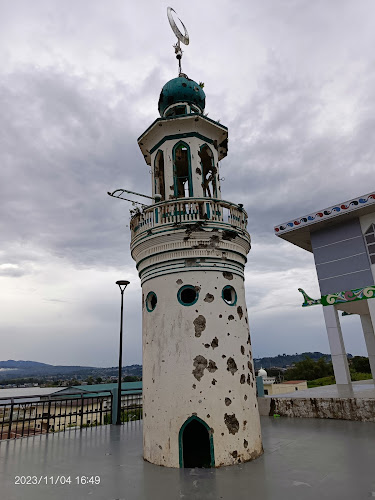
It is not a blockbuster museum with endless galleries and glossy exhibits; instead, it offers a quiet, honest look at Maranao history, artistry, and the resilience of a community that has weathered recent upheaval. Visitors will find a modest collection of traditional textiles, brassware, carved wood, and ceremonial objects that tell stories about everyday life, belief systems, and social structure among the Maranao people. Interspersed with these are photographic panels and written accounts that document more contemporary events—recovery, rebuilding, and the slow work of remembering.
Because the museum is compact, it invites a different kind of visit. People tend to linger over individual pieces rather than rush through rooms. A single sarimanok motif or a finely woven malong can hold a surprising amount of history when there is context provided by a knowledgeable guide or museum label. The museum’s tone is respectful and reflective rather than flashy; it wants visitors to learn, to sit with the complexity of local traditions, and to appreciate the craftsmanship that has been passed down for generations.
Accessibility is part of the museum’s atmosphere in a practical way. It has a wheelchair accessible restroom and basic amenities, which matter more than one might think for travelers who want straightforward, barrier-free access. Families do come, and the place is generally good for kids; the displays are tangible and visual, which helps younger visitors connect. That said, exhibits are presented with care and cultural sensitivity, so parents might need to do a little pre-visit explaining about context and appropriate behavior when looking at sacred or ceremonial items.
Much of the collection centers on Maranao artistic traditions. Expect to see examples of okir carving, metalworks, and textiles adorned with intricate motifs. These objects are not merely decorative—each pattern carries meaning, and each object had a role in social life, from weddings to governance to everyday dress. A visitor with even a passing interest in anthropology or Southeast Asian arts will leave with a clearer sense of how material culture functions as a living language in Marawi City and the surrounding area.
There is also a strong educational aspect. The museum prioritizes interpretation, so panels and captions attempt to explain not just what an object is but how it was used and what it meant. That effort to contextualize is particularly helpful when encountering items tied to Islamic practice and local customs. It helps bridge the gap for travelers who may be unfamiliar with the southern Philippines, and it fosters a respectful curiosity rather than a superficial gaze.
A traveler should be prepared for a museum that wears its history plainly. The space and the displays reflect Marawi’s recent past, including the 2017 conflict and its aftermath—the community’s process of recovery is visible in narratives, in recovered objects, and in the way the museum frames memory. This gives the visit an emotional gravity that surprises some visitors. It’s not all cheerful; there are sober, sometimes wrenching stories about displacement, loss, and reconstruction. Yet within that seriousness, there are also threads of creativity, humor, and deep-rooted cultural continuity. The museum makes room for all of that.
One odd little detail that the writer remembers: a small, hand-painted sign tucked near a case about traditional weapons, written in a straightforward, almost joking tone about safety and respect. It felt humanizing—like the museum staff knew their audience and wanted to keep things grounded. Small touches like this repeat throughout the visit: hand-scribbled notes about donors, a local volunteer on duty, a student project displayed with pride. These are the kinds of things that tell you the museum is woven into the community rather than being an imported institution.
For photographers and social media types: the museum is photogenic, but it also asks for care. Some items are delicate or sacred; flash may be discouraged; certain objects may be off-limits for close-up photography. The museum prefers that visitors ask. That request is fair. The artifacts are, after all, part of living cultures and families, not just props for a feed.
Practical visitors will appreciate that the museum is straightforward about visiting hours and donations, though those details can change and it’s wise to check locally. Entry is typically low-cost or donation-based—this is not an expensive destination—but the value it delivers is more cultural than commercial. For travelers who like to go deeper than surface sightseeing, the Marawi Museum rewards patience. Spend time reading labels, ask questions if staff are available, and take a moment to sit in the small courtyard or bench areas that many visitors overlook. Quiet observation here is not wasted; context and nuance are the real takeaways.
There is a larger narrative arc that the museum participates in: the preservation of Maranao identity amid change. That narrative is visible in the objects themselves, the stories attached to them, and the museum’s educational mission. It offers travelers a chance to see beyond headlines about conflict and to encounter the rich cultural practices that have endured. At the same time, the museum does not pretend that history is tidy. It presents both continuity and rupture; it acknowledges loss while also pointing to repair and regeneration.
Visiting the Marawi Museum is not a long stop on a packed itinerary. Most travelers spend an hour or two, but those who stay longer will be rewarded with small discoveries: a pattern on a ceremonial drum, the story behind a family heirloom, an offhand remark from a staff member about local customs. It’s a place to slow down. And yes, sometimes the museum feels under-resourced. There are areas where exhibit space could be improved and where interpretive signage could be expanded. But that also gives the experience a grassroots feel. You get the sense you are seeing something authentic in process, not a polished postcard version of culture.
In short, the Marawi Museum offers an intimate, thoughtful encounter with Maranao art, history, and resilience in Marawi City, Lanao del Sur, Philippines. It is useful for curious travelers, students of culture, and anyone wanting a grounded perspective on the southern Philippines. It is accessible to families and visitors with mobility needs, emphasizes respectful engagement, and rewards those who arrive willing to listen, learn, and take time. Bring patience. Bring questions. And leave with a better sense of a place that is both ancient in tradition and very much alive in the present.
 Real Journey Travels