
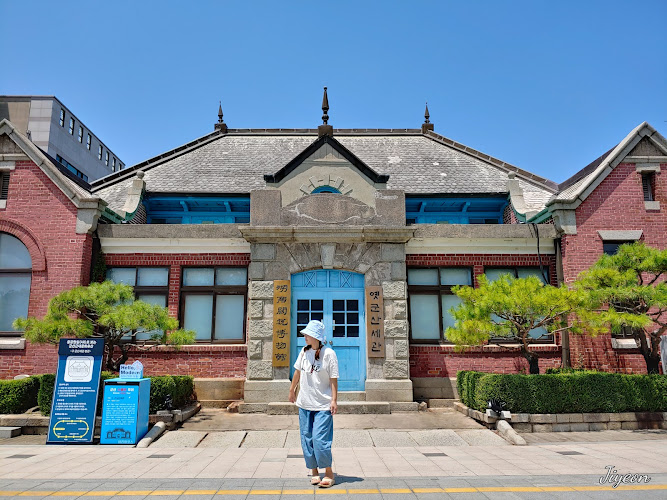
Gunsan Modern History Museum
About Gunsan Modern History Museum
Description
The Gunsan Modern History Museum offers a deep, tactile look at Gunsan's transformation from a sleepy coastal port into a bustling modern city, and it does so with a kind of theatrical attention to detail that's rare in local history museums. Visitors walk not just through facts and dates, but through reconstructed streets that evoke the 1930s Japanese colonial-era town—shopfronts, signage, period furniture—arranged so that the past feels like a space one can almost step into. The museum pairs documentary panels and archival photographs with life-sized sets, mannequins, and everyday objects, making it easier for people who hate dry history to connect with the era. It is, quite literally, history made walkable.
Curators here have leaned into storytelling. The permanent exhibits focus on trade, migration, maritime industry, and urban life in Gunsan during the modern period, while rotating galleries explore narrower themes—family life, architecture, transport—so there's something new on each visit if one pays attention. The narrative is predominantly chronological but smartly layered: one display will show an official document, the next will show a merchant's ledger or a child's schoolbook, and another will reconstruct the interior of a 1930s shop. For many visitors that arrangement provides emotional context to otherwise abstract political and economic changes. It helps people understand how big geopolitical forces played out in the lives of shopkeepers, sailors, and families.
Accessibility is clearly a priority. The museum provides a wheelchair-accessible entrance, parking, and restrooms, and pathways through the recreated streets are generally navigable for strollers and wheelchairs. For travelers with limited mobility, that practical attention to detail reduces stress and lets the exhibits do the work of engaging the imagination. Families also get thought-out value: the space is marked as good for kids, with hands-on corners and tactile displays that make history approachable for younger visitors. While there is no on-site restaurant, visitors will find restroom facilities and nearby cafés within a short walk outside the museum precinct.
One of the museum's best strengths is how it balances formal exhibition text with immersive experience. Visitors who prefer reading will find thorough captions and well-referenced timelines. Those who prefer immersion can linger in the reconstructed streets, peek into period storefronts, and imagine the clack of trolley tracks. The combination often sparks conversations among groups—older locals recalling family stories, younger travelers asking curious, pointed questions—so the museum frequently becomes a small social hub where personal memory and public history meet.
That said, the experience is not flawless. Some exhibits are denser than others; a visitor who skims could easily miss a nuanced interpretation or a quietly powerful artifact tucked into a lower display. And in high season the reconstructed street-scene can feel crowded, which slightly reduces the contemplative atmosphere the museum otherwise encourages. Still, these are minor caveats compared with the richness of content and the thoughtful way the museum frames local modern history.
For those intrigued by architecture and cultural layering, the Gunsan Modern History Museum rewards a slow walk. The reconstructed 1930s town does more than mimic style; it prompts questions about architecture, identity, and the lived experience of colonial-era urban life. Panels often probe both local developments and broader Korean and East Asian contexts, so the museum can be read as both a neighborhood story and part of a larger narrative about modernization, imperial influence, and postwar change.
Practical visitors will appreciate that the museum is set up for varied visiting styles. One can do a quick 30–45 minute circuit through the highlights—ideal if time is tight—yet those who linger with the audio guides, read the primary sources, or watch the short documentary screenings can easily spend two hours or more. Schools and tour groups make frequent use of the museum's educational framing; guided tours and interpretation boards are organized to help teachers and group leaders craft meaningful visits.
There is also a slightly surprising sensitivity to nuance in the exhibition text. Rather than offering single-line judgments, many displays juxtapose voices and documents so that visitors must weigh perspectives themselves. In other words, the museum encourages thinking rather than telling visitors exactly how to feel. Visitors who appreciate layered narratives and a bit of intellectual challenge will leave feeling rewarded. Those looking for a simple, picture-postcard version of the past might find the approach refreshingly honest but occasionally demanding.
Photography is generally tolerated in the public, reconstructed areas, and many visitors leave with memorable shots of period storefronts and narrow lanes. For historians and casual history-lovers alike, the artifact selection contains both headline items and small, evocative objects: shipping records, daily household items, school materials, and municipal documents. These smaller items are often the ones that stick with people—the ledger with a smudged signature, a child's chipped teacup—because they humanize broad historical forces.
Finally, the setting matters. The museum sits within a district shaped by maritime trade, and the exhibits frequently loop back to the sea: how ports drive economies, how cross-cultural exchanges reshape neighborhoods, and how a port city like Gunsan negotiated modernity. That maritime angle gives the museum a thematic backbone and helps differentiate it from other local history museums in the region. For travelers who like to connect a museum visit with walking a district afterward—poking into markets, checking out old banking houses, or watching harbor activity—this museum makes for a strategic and satisfying starting point.
Overall, the Gunsan Modern History Museum is the kind of place that rewards curiosity. It is carefully arranged, thoughtfully accessible, and—most importantly—committed to telling a local story in a way that resonates beyond local borders. People who come expecting dry panels will be pleasantly surprised; those who come wanting depth will find it. The museum does more than preserve artifacts; it invites visitors to imagine the rhythms of modern life in a coastal Korean city and to think about how the past lingers in the architecture, alleyways, and everyday objects people still pass by today.
Key Features
More Details
Updated August 29, 2025
Table of Contents
Description
The Gunsan Modern History Museum offers a deep, tactile look at Gunsan’s transformation from a sleepy coastal port into a bustling modern city, and it does so with a kind of theatrical attention to detail that’s rare in local history museums. Visitors walk not just through facts and dates, but through reconstructed streets that evoke the 1930s Japanese colonial-era town—shopfronts, signage, period furniture—arranged so that the past feels like a space one can almost step into. The museum pairs documentary panels and archival photographs with life-sized sets, mannequins, and everyday objects, making it easier for people who hate dry history to connect with the era. It is, quite literally, history made walkable.
Curators here have leaned into storytelling. The permanent exhibits focus on trade, migration, maritime industry, and urban life in Gunsan during the modern period, while rotating galleries explore narrower themes—family life, architecture, transport—so there’s something new on each visit if one pays attention. The narrative is predominantly chronological but smartly layered: one display will show an official document, the next will show a merchant’s ledger or a child’s schoolbook, and another will reconstruct the interior of a 1930s shop. For many visitors that arrangement provides emotional context to otherwise abstract political and economic changes. It helps people understand how big geopolitical forces played out in the lives of shopkeepers, sailors, and families.
Accessibility is clearly a priority. The museum provides a wheelchair-accessible entrance, parking, and restrooms, and pathways through the recreated streets are generally navigable for strollers and wheelchairs. For travelers with limited mobility, that practical attention to detail reduces stress and lets the exhibits do the work of engaging the imagination. Families also get thought-out value: the space is marked as good for kids, with hands-on corners and tactile displays that make history approachable for younger visitors. While there is no on-site restaurant, visitors will find restroom facilities and nearby cafés within a short walk outside the museum precinct.
One of the museum’s best strengths is how it balances formal exhibition text with immersive experience. Visitors who prefer reading will find thorough captions and well-referenced timelines. Those who prefer immersion can linger in the reconstructed streets, peek into period storefronts, and imagine the clack of trolley tracks. The combination often sparks conversations among groups—older locals recalling family stories, younger travelers asking curious, pointed questions—so the museum frequently becomes a small social hub where personal memory and public history meet.
That said, the experience is not flawless. Some exhibits are denser than others; a visitor who skims could easily miss a nuanced interpretation or a quietly powerful artifact tucked into a lower display. And in high season the reconstructed street-scene can feel crowded, which slightly reduces the contemplative atmosphere the museum otherwise encourages. Still, these are minor caveats compared with the richness of content and the thoughtful way the museum frames local modern history.
For those intrigued by architecture and cultural layering, the Gunsan Modern History Museum rewards a slow walk. The reconstructed 1930s town does more than mimic style; it prompts questions about architecture, identity, and the lived experience of colonial-era urban life. Panels often probe both local developments and broader Korean and East Asian contexts, so the museum can be read as both a neighborhood story and part of a larger narrative about modernization, imperial influence, and postwar change.
Practical visitors will appreciate that the museum is set up for varied visiting styles. One can do a quick 30–45 minute circuit through the highlights—ideal if time is tight—yet those who linger with the audio guides, read the primary sources, or watch the short documentary screenings can easily spend two hours or more. Schools and tour groups make frequent use of the museum’s educational framing; guided tours and interpretation boards are organized to help teachers and group leaders craft meaningful visits.
There is also a slightly surprising sensitivity to nuance in the exhibition text. Rather than offering single-line judgments, many displays juxtapose voices and documents so that visitors must weigh perspectives themselves. In other words, the museum encourages thinking rather than telling visitors exactly how to feel. Visitors who appreciate layered narratives and a bit of intellectual challenge will leave feeling rewarded. Those looking for a simple, picture-postcard version of the past might find the approach refreshingly honest but occasionally demanding.
Photography is generally tolerated in the public, reconstructed areas, and many visitors leave with memorable shots of period storefronts and narrow lanes. For historians and casual history-lovers alike, the artifact selection contains both headline items and small, evocative objects: shipping records, daily household items, school materials, and municipal documents. These smaller items are often the ones that stick with people—the ledger with a smudged signature, a child’s chipped teacup—because they humanize broad historical forces.
Finally, the setting matters. The museum sits within a district shaped by maritime trade, and the exhibits frequently loop back to the sea: how ports drive economies, how cross-cultural exchanges reshape neighborhoods, and how a port city like Gunsan negotiated modernity. That maritime angle gives the museum a thematic backbone and helps differentiate it from other local history museums in the region. For travelers who like to connect a museum visit with walking a district afterward—poking into markets, checking out old banking houses, or watching harbor activity—this museum makes for a strategic and satisfying starting point.
Overall, the Gunsan Modern History Museum is the kind of place that rewards curiosity. It is carefully arranged, thoughtfully accessible, and—most importantly—committed to telling a local story in a way that resonates beyond local borders. People who come expecting dry panels will be pleasantly surprised; those who come wanting depth will find it. The museum does more than preserve artifacts; it invites visitors to imagine the rhythms of modern life in a coastal Korean city and to think about how the past lingers in the architecture, alleyways, and everyday objects people still pass by today.
Key Highlights
Gunsan Modern History Museum
Location
Places to Stay Near Gunsan Modern History Museum
Find and Book a Tour
Explore More Travel Guides
No reviews found! Be the first to review!
Traveler Reviews for Gunsan Modern History Museum
There are no reviews yet. Be the first one to write one.
Have you visited Gunsan Modern History Museum? Help other travelers by sharing your review.
You Might Also Like
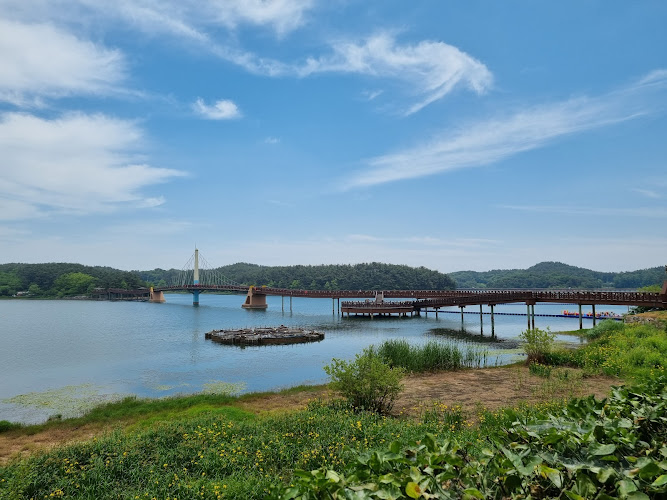
은파호수공원
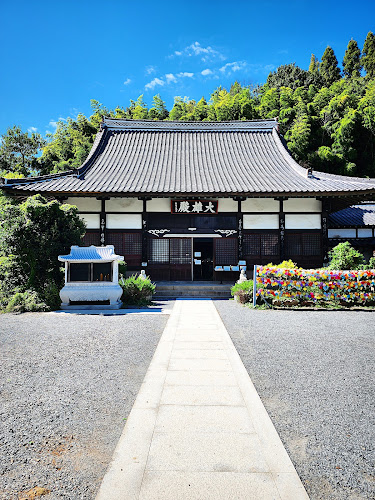
Dongguksa Temple
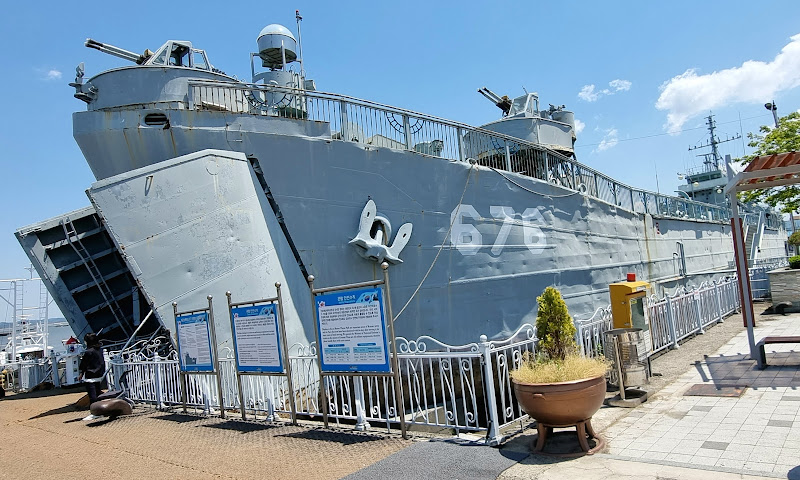
Jinpo Marine Theme Park
Find Accommodations Nearby
Recommended Tours & Activities
Visitor Reviews
There are no reviews yet. Be the first one to write one.
Share Your Experience
Have you visited Gunsan Modern History Museum? Help other travelers by leaving a review.