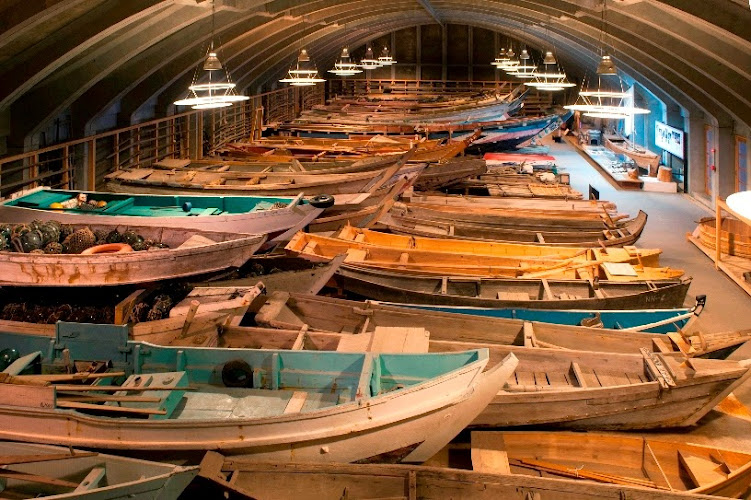
It’s not a flashy, high-tech museum with blinking screens everywhere; instead, it’s more like walking into a giant wooden barn filled with stories, tools, and boats that carry the weight of centuries. Over 90 traditional fishing vessels are on display, each with its own history. And honestly, seeing them lined up under the tall beams of the building is a little awe-inspiring. You don’t need to be a maritime buff to appreciate the craftsmanship and sheer scale of it all.
What really makes the museum stand out, though, is its dedication to the lives of the ama, the legendary women divers of Japan. These women have been free-diving for shellfish and pearls for generations, and the exhibits give a rare glimpse into their world. The diving suits, tools, and photographs capture a lifestyle that’s both rugged and graceful, and I found myself lingering longer than expected in that section. It’s not every day you see such a vivid portrayal of women’s role in maritime culture.
The museum has a calm, slightly rustic vibe. Some visitors might find it a bit old-school, and yes, parts of the layout feel dated. But that’s also part of its charm—it doesn’t try to overwhelm you with gimmicks. Instead, it trusts that the artifacts, from nets to navigational tools, can tell their own stories. Personally, I liked that slower pace. It gave me time to imagine the lives of fishermen setting out to sea, or families mending nets by lantern light.
It’s not perfect, of course. Some displays could use more English explanations, and if you’re the type who prefers interactive screens and modern design, you might walk away less impressed. But for travelers who enjoy authenticity and depth, this place has a quiet power. It’s a museum that rewards curiosity and patience, offering a rare window into the bond between people and the sea in Japan.
Best Time to Visit
If you’re planning a trip, the best time to visit is during spring or autumn. The weather in Mie Prefecture is pleasantly mild, making the journey more enjoyable. Summer can be hot and humid, and while the museum itself is indoors, you’ll probably want to explore the coastline nearby, so cooler months are more comfortable. Winter is quieter, which means fewer crowds, but it can feel a bit chilly if you’re not used to Japanese winters. Personally, I’d recommend late October—comfortable weather, fewer tourists, and a great time to enjoy seafood in the region after your museum visit.
One tip: weekdays are usually calmer than weekends. If you prefer to wander without bumping into large tour groups, try to go midweek. I once went on a Tuesday morning and practically had the place to myself, which made the experience feel even more personal.
How to Get There
Reaching the Toba Sea-Folk Museum is straightforward if you’re already in the Ise-Shima area. From Toba Station, it’s a short bus or taxi ride. The bus ride itself is part of the fun—you’ll pass through small fishing villages and get glimpses of the coastline that set the mood before you even arrive. If you’re driving, the museum offers free on-site parking, which is a relief in Japan where parking often comes at a premium.
For those coming from further afield, Ise is the nearest major hub, and from there it’s easy to connect by train to Toba. I’ve done the trip with luggage before, and while it’s manageable, I’d suggest traveling light if you plan to hop on the local buses. They’re not designed for big suitcases.
Tips for Visiting
First, give yourself at least two hours here. You might think you’ll breeze through, but the sheer variety of exhibits—boats, fishing tools, diving gear—pulls you in. I once lost track of time staring at the intricate knots fishermen used for nets; something about the craftsmanship really grabbed me.
Second, wear comfortable shoes. The museum is spacious, and you’ll be on your feet most of the time. There’s a café on-site, which is handy for a quick break, but don’t expect a full restaurant meal. If you’re planning to spend the day in Toba, consider eating at one of the seafood restaurants in town afterward. Nothing beats fresh local oysters after learning about the region’s fishing traditions.
Families will find the museum surprisingly kid-friendly. Discounts for children, changing tables, and wide spaces make it manageable even with little ones. Just keep in mind that while strollers are fine, some areas are easier to navigate without them.
Lastly, bring a curious mindset. This isn’t the kind of museum where you rush from one highlight to the next. It’s more rewarding if you slow down and imagine the lives behind the artifacts. And if you’re lucky enough to catch a special exhibition or workshop, don’t skip it—they often dive even deeper into local traditions.
In short, the Toba Sea-Folk Museum is a thoughtful stop for anyone curious about Japan’s maritime heritage. It’s not about glitz or glamour, but about real stories, real tools, and real people whose lives revolved around the sea. And honestly, that’s what makes it worth the trip.
 Real Journey Travels