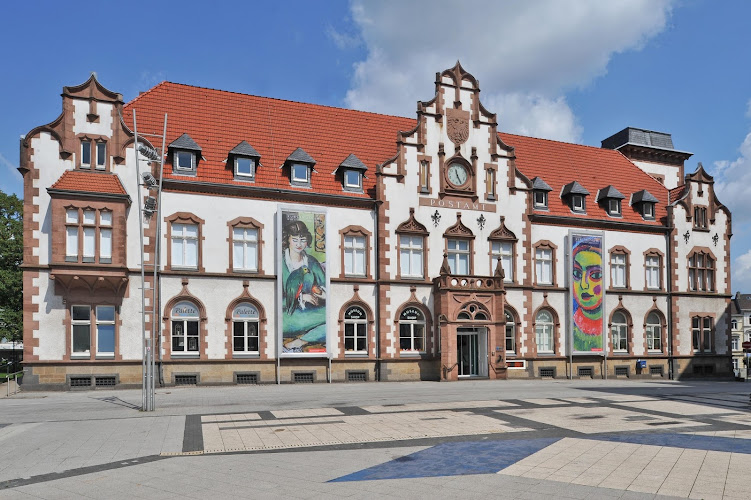
The Kunstmuseum Mülheim an der Ruhr is a compact, thoughtfully curated museum of 20th-century art housed in a repurposed post office building. The collection places a clear emphasis on German Expressionists alongside significant international artists, so visitors get a concentrated, coherent look at modern movements without the aimless wandering that larger institutions sometimes force upon you. The galleries are arranged to highlight contrasts: color versus restraint, figuration versus abstraction, local voices alongside global perspectives. That structural clarity makes the museum an excellent stop for travelers who want depth in a short amount of time.
The building itself is part of the appeal. Its former-post-office bones give the space a somewhat industrial calm—high ceilings, sensible circulation routes, and rooms that feel human-scaled rather than cavernous. Light is used deliberately; certain exhibition rooms capitalize on daylight in a way that enhances paintings and prints without overwhelming them. People who spend time here often comment on how the architecture and collection seem to talk to each other, which is, frankly, one of those small museum pleasures that lingers.
Exhibitions rotate regularly, alternating focused monographic shows with thematic displays that cross national boundaries. Because the museum specializes in 20th-century work, it tends to feature strong graphic work, prints, and paintings that capture the era’s tensions and experiments. Expect thoughtful labels, a relaxed pace, and an atmosphere that welcomes curiosity. Visitors with an interest in German Expressionism will especially appreciate the museum’s selection; it isn’t a blockbuster blockbuster place, but it rewards attention.
Practical note: the museum is accessible. There is a wheelchair-accessible entrance, parking, and restroom facilities. There is no on-site restaurant, so plan accordingly if hunger is a factor. Small museums like this often feel more personal — staff are typically keen to answer questions, and the security presence is unobtrusive, aimed at preserving art rather than policing visitors. In short, it’s an ideal spot for art lovers who prefer nuance over spectacle.
Key Features
- Dedicated collection of 20th-century art with a strong focus on German Expressionists and significant international artists
- Located in a converted post office building that offers intimate, well-lit galleries
- Regularly changing temporary exhibitions alongside a core collection
- Wheelchair accessible entrance, designated wheelchair accessible parking, and accessible restroom facilities
- Clear, visitor-friendly layout that makes for efficient visits—great for limited-time travelers
- Educational labels and interpretive materials that help contextualize movements and artists
- Friendly, often approachable staff who will answer questions and point to highlights
- No on-site restaurant; restroom available on premises
- Photo-friendly in many spaces (check specific exhibition rules at the desk)
Best Time to Visit
For most travelers, mid-morning on a weekday is the sweet spot. The museum opens calmly, so arriving shortly after opening allows visitors to enjoy the galleries with few other people around. Weekends and German school holidays attract larger local crowds, so if the preference is a quieter experience, avoid Saturday afternoons when families and groups tend to arrive.
Season affects the atmosphere more than the collection. In bright months, the museum’s daylight-filled rooms glow in an especially appealing way; winter light, by contrast, gives paintings a softly focused, introspective mood. If a temporary exhibition is advertised, aim for the first two weeks after opening—curators and staff are usually excited then, and there are often additional talks or guided tours scheduled. It’s a small thing, but catching a docent-led tour can transform an hour into a much richer encounter.
Those who like combining art with city exploring will find early spring and early autumn ideal: the weather is pleasant for walking between nearby cafes and other cultural sites, and crowds are thinner than peak summer. And if you’re budget-conscious, off-season visits sometimes mean fewer other tourists in nearby accommodations, making the whole trip easier on the wallet.
How to Get There
The Kunstmuseum Mülheim an der Ruhr is centrally positioned enough that it’s straightforward to reach by a number of modes of transport. Public transit is convenient: local buses and regional trains connect the city with neighboring towns and larger hubs. From the central transit points in Mülheim, a short bus ride or a brisk 10–20 minute walk will usually do it. Travelers who prefer cycling will find bike-friendly routes into the city, and the area around the museum is bike-compatible.
Driving works fine too. There is parking available, including wheelchair-accessible parking spaces, which is a real plus for those traveling by car. Street parking in the surrounding neighborhoods can vary, so allow a few extra minutes during busy periods. Rideshare and taxi services are common in the region and drop-off points near the museum’s entrance are convenient for quick visits or for visitors with limited mobility.
For visitors coming from airports or larger German cities: plan for a combination of regional train plus a local transfer. The museum is reachable in a day trip from nearby urban centers if one keeps an eye on transit schedules. Pro tip: check local transit apps or timetables before setting out; German public transit is efficient but precise, and you’ll want to avoid an unexpected long wait.
Tips for Visiting
Buy or reserve tickets ahead of time if the museum is hosting a major temporary exhibition. While the museum is not usually overwhelmed, certain special shows draw crowds and limited-capacity guided tours can sell out. Admission is often straightforward, but pre-booking removes the little stress of line-ups—especially on weekends.
Plan for 60 to 90 minutes. The collection is focused; that means visitors can have a very satisfying experience in a relatively short window. If someone wants to linger over particular pieces or take photos, two hours gives comfortable breathing room. Those in a hurry can still see meaningful highlights in 45 minutes, but it’ll feel rushed.
Bring a small notebook or phone to jot down artist names that spark curiosity. The museum’s labels are helpful, but it’s easy to forget mid-visit which artist made which piece. Many visitors like to note a few names to look up later—this is the kind of place that rewards follow-up research.
Because there is no onsite restaurant, plan food around the visit. There are cafes and dining options in the surrounding area, so a mid-morning coffee or a late lunch can be a pleasant follow-up. If mobility or dietary needs are a concern, pack light snacks—staff are usually understanding if a visitor needs a quick bite between galleries.
Accessibility matters here. The wheelchair-accessible entrance, parking, and restroom mean the museum does make practical accommodations for visitors with limited mobility. However, if a visitor relies on specific equipment or assistance, calling ahead to confirm details or to request assistance for a guided tour is recommended. Staff are generally helpful and can provide information about elevator access, seating, and restroom locations.
Mind the details: photography is permitted in many areas but can be restricted during certain exhibitions or for particular works. That’s standard museum practice. If a visitor intends to take photos, they should check at the front desk to avoid awkward moments in galleries. Also, large bags may need to be checked or stored—again, typical but worth mentioning because nobody likes being turned away at a gallery doorway.
Talk to staff. In a museum of this scale, staff and docents are usually more accessible than in larger institutions. Ask about less-advertised corners of the collection, recent acquisitions, or the story behind the building’s conversion from a post office. Those small conversations often unlock the most memorable details. A frequent visitor once mentioned how learning a single anecdote from a staff member about one painting completely changed their appreciation of an entire room—those little human exchanges matter.
Combine the visit with nearby cultural or outdoor stops. Mülheim has a handful of pleasant neighborhoods and parks close by; pairing an art visit with a walk or coffee makes the day feel fuller. If time is short, prioritize the museum in the morning and leave the afternoon for wandering. Also, keep an eye on the museum’s calendar—special talks, artist meet-and-greets, and temporary displays can elevate the experience from a pleasant stop to a highlight of the trip.
Finally, consider photography and social sharing as part of the visit. The museum lends itself well to sharing glimpses on social media—clean lines, striking works, and human-scale rooms photograph nicely. But please be respectful: flash and tripods are usually a no-go, and quiet contemplation is part of the point. Share what resonates, but leave room for others to enjoy the silence too.
All told, the Kunstmuseum Mülheim an der Ruhr is a compact treasure for travelers who appreciate focused collections, architectural character, and a museum experience that rewards attention rather than spectacle. It’s the sort of place where a single work can change how someone thinks about a whole movement. If that kind of slow, attentive looking appeals, this museum is well worth the visit.
 Real Journey Travels