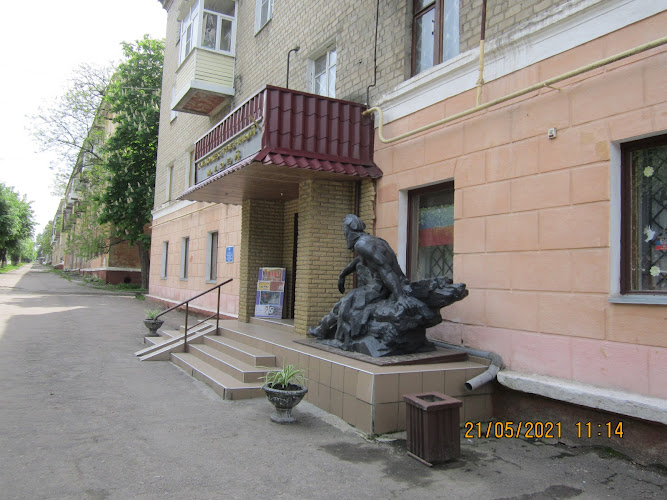
It is the sort of place that rewards slow walking and close looking: paintings hang in rooms that feel lived in rather than staged, and the museum’s collection threads together local stories, Ukrainian painting traditions, and a few surprising turns toward modern and decorative arts. Travelers who like to peel back layers — history, industry, artists shaped by place — will find this museum particularly satisfying.
Visitors will notice, right away, that this is not one of those national palaces with marble floors and a guard at every corner. The building itself has character rather than flash. Galleries are modest in scale, which actually works in favor of the collection: portraits, landscapes, and still lifes are often given room to breathe so light and brushstroke can be examined without needing to elbow past a crowd. The museum specializes in paintings, with holdings that document artistic life in Horlivka and the Donetsk region across the late 19th, 20th, and contemporary periods. A mix of academic art, Soviet-era works, folk decorative pieces, and more recent explorations into modern art gives the place a layered feel. One moment a visitor might be tracing the dignified lines of a classical portrait; the next, they could be puzzled or delighted by a bold, experimental canvas from the later 20th century.
There is an intimacy to the collection that often surprises travelers. The works are not exhibited to impress with quantity but to tell stories — about miners and local industry, about family life, about landscapes that shift from pastoral to post-industrial. Because Horlivka is a city shaped by coal and mining history, many artworks reflect the human side of labor, the resilience of communities, and the quiet dignity of everyday scenes. The museum also preserves an array of decorative and folk art that speaks to regional craft traditions; these items sit comfortably alongside oil paintings and sketches, adding texture and grounding the art in local cultural practice.
For those who study art history or who simply enjoy context, the museum offers chronological threads showing how local artists responded to broader movements. Soviet-era aesthetics appear alongside the persistence of Ukrainian folk motifs. Mid-century works reveal the tug between state-sanctioned styles and individual expression. Contemporary pieces, meanwhile, nudge visitors into conversations about identity, memory, and the role of art in communities that have faced upheaval. It is this dialogue across eras that makes the Gorlovka Art Museum more than a static archive.
The museum has a reputation among repeat visitors as unexpectedly family-friendly. Children are often quite engaged by the strong visual narratives in many paintings, and the scale of the galleries means families can move through without feeling rushed. Practical facilities include restrooms on the premises, which is always appreciated — yes, basic comfort matters when one is spending hours absorbing art. However, those who need accessible parking should be aware that there is no wheelchair accessible parking lot; mobility-minded travelers might need to plan ahead or arrange transport that can drop them closer to the entrance.
Atmospherically, the museum is gentle and unpretentious. Lighting is usually sufficient for viewing oil and tempera works, though, like many regional museums, the environment sometimes feels a little older—paintings with varnished glows, frames that wear history on their edges. That imperfection is part of the charm. There is no on-site restaurant, so visitors generally pair a museum visit with a walk through nearby streets or a stop at a local cafe. The absence of a café has its pros and cons: it keeps the museum quieter, which many art lovers appreciate, but it does mean you should plan your snack or meal breaks around the visit.
The curatorial approach leans toward education and preservation rather than spectacle. Exhibits often include placards and short bios, and while not every label reads like a university thesis, the information is accessible and geared toward curious travelers rather than specialists. For those who like to dive deeper, occasional temporary exhibitions and rotating displays offer fresh angles — sometimes a single-room show devoted to a local artist, sometimes an installation that brings contemporary voices into conversation with older works. These rotating exhibits are where the museum shows a lively side, surprising even visitors who come expecting a strictly historical overview.
People who enjoy museums for their human stories will find Gorlovka taut with them. The collection contains portraits that capture expressions and fashions from different historical moments; landscapes that document changes to the regional environment; and genre scenes that render ordinary activities with tenderness or sometimes stark realism. A few works stand out for their technique or unusual subject matter, and even if a visitor is not a painting scholar, those singular pieces tend to stay in memory. And yes, there are small moments of humor and tenderness in unexpected corners: a child peering at a pastoral scene and pointing out a dog, an older visitor lingering over a portrait and murmuring recognition of someone who might have been a relative. Those are the museum’s quiet rewards.
From a practical traveler’s perspective, the museum is easy to include in a day of exploring Horlivka. It pairs well with strolls around local cultural sites and gives a grounding glimpse of regional artistic life. Travelers who enjoy offbeat, less touristy cultural stops — the kind of place where a thoughtful local guide could offer fascinating background — will value the museum highly. There is a genuine sense that the staff care for these works, even if budget and space constraints mean the museum does not always have the polish of larger urban institutions.
In terms of visitor experience, several things stand out. First, the museum invites contemplation. It is not rushed, loud, or over-curated; visitors are allowed to form a personal relationship with the art. Second, context matters here: understanding Horlivka’s industrial and social history deepens appreciation for certain works, so a little background reading or a quick chat with staff can greatly enrich the visit. Third, because the museum is anchored in regional identity, it offers insights into Ukrainian art that many international travelers miss when they stick only to Kyiv or Lviv. For a traveler who wants to understand how national themes manifest locally, Gorlovka is a revealing stop.
The museum is also a reminder that art can persist in the quiet spaces between major cultural centers. It bears the marks of regional stewardship: thoughtful, earnest, occasionally improvised. That ever-so-slightly worn quality — frames with scuffs, signage that could use updating — should not be read as neglect. Instead, it signals a place doing the important work of keeping cultural memory alive against fiscal odds. Visitors often leave feeling both informed and oddly protective, as if they have witnessed something vulnerable and precious.
Finally, for photographers and those who like to collect memories, the museum encourages respectful documentation. The staff tend to be welcoming about photography for personal use, though regulations can vary, so checking at the desk is a small courtesy that pays off. Expect to spend between one and two hours depending on interest level; art lovers can easily linger for longer. And if the museum’s modest scale seems like a limit at first glance, it quickly becomes clear that this compactness is, in many ways, a strength: it concentrates attention, encourages curiosity, and makes the visit feel like an intimate conversation with the art and the city itself.
In short, the Gorlovka Art Museum in Horlivka is a rewarding stop for travelers who seek depth over dazzle, narrative over noise. It celebrates local artists, preserves cultural heritage, and quietly invites visitors to think about how art reflects industry, community, and change. Those who come with patience and curiosity will leave with images and impressions that linger — sometimes odd ones, sometimes unexpectedly moving, but always honest and rooted in place.
 Real Journey Travels