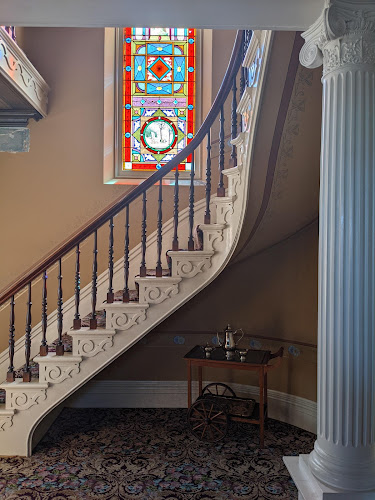
The Ethnic Heritage Museum occupies an 1850s house that quietly tells loud stories. Housed in an authentic historic structure, the museum interprets the lives of Rockford residents who arrived here from different parts of the world and built community, business and family life from scratch. Exhibits focus on several immigrant groups — with particularly thoughtful displays about African-American and Polish residents — and the place functions less like a cathedral of objects and more like a living scrapbook: photographs, household items, clothing and local tools placed where family life would have happened. Visitors often remark that it feels like stepping into someone’s memory, and that intimacy is the museum’s real strength.
For travelers who love history that feels human-scaled, this museum is a nice counterpoint to larger institutions. It’s small enough to be seen in a leisurely hour or two, but layered enough that a curious person will linger. The rooms are arranged to suggest family life across eras: a parlor that evokes 19th-century homemaking, kitchen artifacts that reveal daily routines, and panels that chronicle immigration waves and neighborhood shifts. The museum makes clear that Rockford’s story is not a single narrative but a patchwork — Polish bakeries rubbing shoulders with shops owned by Black entrepreneurs, churches and social clubs that anchored neighborhood life, and the constant churn of people adapting to new economies and customs.
Accessibility is not an afterthought here. The entrance, parking, and restroom are wheelchair accessible, which means travelers with mobility concerns can plan a visit without a lot of guesswork. That may not sound like a selling point to everyone, but for families with strollers or visitors who prefer barrier-free access, it matters — a lot. There are restrooms onsite and a small gift shop where visitors can pick up postcards, local publications, and occasionally reproductions or local crafts. The museum offers guided tours; on many days volunteers lead them, and those tours tend to bring out stories and personal recollections that don’t appear on printed labels.
There is a special kind of pleasure in visiting a heritage museum housed in an actual old home. The creak of a floorboard, the narrowness of a passageway, the way sunlight falls through a period window — these details root the exhibits. That said, the museum also balances artifacts with interpretation. Didactic panels give context: why Polish immigration grew at a certain time, what industrial jobs drew families to Rockford, how segregation and migration shaped African-American communities. For someone who wants facts and feeling — dates plus the human stories that give them meaning — this museum delivers both.
Families with kids will find it friendly. It’s good for children: the scale of the rooms makes history relatable and not overwhelming, and docents know how to adapt stories to younger listeners. However, it’s not an interactive children’s museum; it rewards curiosity rather than providing hands-on play areas. Parents who bring energetic little ones should expect a calm, reflective visit rather than a playground-style museum experience.
One lesser-known attribute that often surprises visitors is the depth of oral history preserved here. The museum has collected interviews and personal narratives from local residents — descendants of immigrants, longtime neighbors, and community leaders. Those first-person accounts add nuance: how holidays were observed, how recipes changed, how social clubs offered support. These are the kinds of details that don’t always make it into big history books but that make daily life vivid. Travelers who appreciate local color will find these stories irresistible. They make the old house feel like a living archive of conversations rather than a static display of objects.
Another point worth mentioning: exhibits rotate occasionally and special thematic displays appear that highlight different ethnic groups or community milestones. So a repeat visit can be rewarding. Often the museum pairs exhibitions with small events — talks, docent-led reflections, or neighborhood history nights — that draw local historians and family members who share memorabilia. Those evenings give visitors access to memories and items that aren’t always on public display. If the traveler gets lucky and times a visit for one of these events, the experience often becomes the highlight of a Rockford trip.
Curatorial choices here lean toward interpretation rather than pristine preservation. In plain language: some furniture shows wear, labels are straightforward and unpretentious, and volunteers speak with the casual confidence of people who love local history. That can be refreshing. This is not a high-polish, museum-of-everything; it’s focused, specific and, frankly, honest. The tradeoff is intimacy over spectacle, and for many travelers that’s a welcome exchange. The museum is especially good for people who want to understand how immigrant identities shaped neighborhoods, politics, and industry in Rockford over the past 150-plus years.
Practical features matter, and the Ethnic Heritage Museum gets the basics right. It offers tours, so a visitor who wants a guided introduction can ask about times and group availability. The small gift shop provides a convenient place to take home something small and local; think booklets, postcards, and cultural items with a local story attached. There’s no onsite restaurant, so plan dining before or after a visit — and yes, Rockford has cafes and diners within a short ride if someone wants to make a day of exploring area history and food. The museum’s footprint is modest, so visitors who relish deep dives can complement the visit with nearby historic sites and museums in the city.
For travelers who worry about crowds: this museum tends to attract steady, moderate traffic rather than overwhelming lines. Weekends can be busier, especially when special events happen, but it rarely feels packed. That said, times when local schools bring students can be lively and informative; seeing a class engage with local history is often uplifting. Travelers who prefer quieter experiences might aim for weekday visits or early afternoon on less busy days.
There’s a certain charm in the museum’s approach to telling immigrant stories. Rather than presenting immigration as a distant phenomenon, displays emphasize continuity: foods that persisted, languages that changed, institutions that adapted. The Polish community is shown through religious artifacts, folk costumes and trade-related items that suggest how cultural identity persisted in daily life. African-American exhibits focus on community building, church life, and the political and social struggles that shaped rights and opportunities in the city. The narratives are balanced, not sugar-coated; they signal both hardship and resilience, often through the voices of those who lived it.
One anecdote that circulates among regulars: a volunteer once brought in a shoebox of family photographs found in an attic, and the museum used them to reconstruct a neighborhood timeline. That kind of grassroots provenance is emblematic of the place. It explains why people sometimes stay longer than planned: they find a face they recognize, a street name that triggers childhood memories, or a recipe they want to try at home. Personal connection is the museum’s currency.
For photographers and writers who collect super-local material, the museum is a compact treasure trove. The architecture of the 1850s house itself offers material for sketches and photos; the domestic scenes provide textured detail, and the display panels often spark essay-length reflections about migration and community. But be mindful: flash photography may be discouraged depending on exhibitions, and respectful behavior is expected inside small historic rooms.
From a logistical standpoint, visitors should know that the museum balances accessibility with historic preservation, so a few tight corners or steps may remain in parts of the building. Staff and volunteers are usually happy to accommodate and explain any constraints. Tour times and special programming can change seasonally, so it’s a good idea to check schedules if someone plans a trip around a specific event — though that’s true for most small museums. Travelers who love serendipitous discoveries should also allow for unplanned wandering in nearby neighborhoods; Rockford’s history is not confined to a single house.
Finally, the Ethnic Heritage Museum rewards attention. Go in with curiosity and a modest chunk of time. Read the panels, ask a volunteer about a photograph or object, and take a moment to imagine daily life in a different century. Visitors who do this typically come away with a clearer sense of how individual families and ethnic communities shaped the city. And often — this happens more than one might think — a short stop here turns into a meaningful chapter of a larger road trip through the Midwest.
 Real Journey Travels