History and Significance

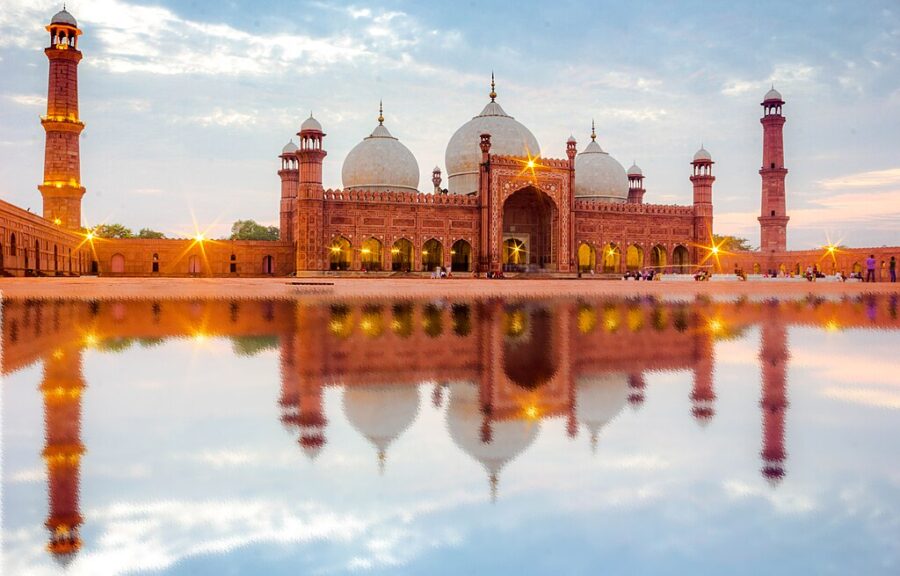
When Emperor Aurangzeb commissioned the Badshahi Mosque in 1671, he wasn’t just building a place of worship – he was making an imperial statement. Constructed in just two years under the supervision of his foster brother Muzaffar Hussain, this marvel in red sandstone became the world’s largest mosque until 1986, capable of accommodating 100,000 worshippers in its vast courtyard. More than just a religious site, Badshahi represented the zenith of Mughal power, built opposite Lahore Fort to symbolize the inseparable union of spiritual and temporal authority.
The mosque’s historical journey mirrors Pakistan’s own:
Sikh Rule: Used as a military garrison by Ranjit Singh’s forces
British Era: Served as an army depot, with minarets used for target practice
Post-Independence: Meticulously restored to its original splendor
Today, it stands not just as an architectural masterpiece but as a living symbol of resilience, having survived wars, desecration, and the ravages of time to remain Lahore’s most iconic landmark.
Main Attractions and Activities
Architectural Wonders
The Grand Courtyard: A 276,000 square foot marble-paved expanse that seems to stretch endlessly
Four Minarets: Each 176 feet tall with spiral staircases offering panoramic views (when accessible)
Main Prayer Hall: Featuring three massive marble domes and seven arched portals
Intricate Frescoes: Delicate floral patterns and Quranic calligraphy in gold leaf
Spiritual Experiences
Friday Congregations: Witness over 50,000 faithful gather for Jummah prayers
Ramadan Nights: The mosque illuminated with 10,000 oil lamps during iftar
Quran Recitation: Daily readings echoing through the vaulted chambers
Cultural Activities
Sound & Light Show: Evening performances recounting Mughal history
Calligraphy Workshops: Learn traditional Islamic script styles
Photography Walks: Golden hour sessions with expert guides
Visitor Experience
Approaching through the Alamgiri Gate, your first glimpse of Badshahi’s soaring minarets against Lahore’s skyline steals your breath. The scent of rose petals crushed underfoot and sandalwood incense from nearby stalls fills the air. As you remove your shoes, cool marble soothes your feet – a stark contrast to the sun-baked courtyard.
The space inspires awe and intimacy simultaneously:
Worshippers prostrating beneath the grand dome’s perfect acoustics
Tourists craning their necks to admire the intricate tilework
Local guides pointing out where Princess Zebunissa once secretly attended prayers
Art students sketching the perfect proportions of Mughal geometry
The mosque’s caretakers – many descendants of original craftsmen – move with quiet pride, polishing marble that has welcomed feet for three centuries. Their stories bring the stones to life, like how the central mihrab’s floral patterns contain exactly 99 petals to symbolize Allah’s names.
Tips for Visitors
Timing is Key: Visit at dawn for solitude or sunset for magical lighting
Dress Modestly: Cover shoulders/knees; scarves and shawls available for rent
Footwear: Remove shoes (carry bags provided)
Guided Tours: Worth the small fee for hidden insights
Photography: Allowed outside prayer times (no flash inside)
Combine with: Lahore Fort next door for a full Mughal experience
Local Treat: Try the doodh soda from the courtyard vendors afterward
Accessibility and Facilities
For a 350-year-old structure, accessibility is surprisingly good:
Ramp access to the main courtyard
Wheelchair-friendly paths around the perimeter
Tactile models for visually impaired visitors
Designated resting areas with seating
Amenities include:
Shoe custody (secure storage with tokens)
Ablution stations with modern facilities
Small museum showcasing Mughal artifacts
Souvenir shops selling quality replicas
Unique Features
What makes Badshahi extraordinary:
Acoustic Perfection: A whisper at one end of the prayer hall can be heard clearly at the other
Hidden Staircases: Spiral steps inside minarets (occasionally opened to the public)
Original Pigments: The red sandstone’s hue comes from crushed semiprecious stones
Laser Alignment: Minarets lean slightly outward to prevent collapse if toppled
Royal Gallery: Where Mughal emperors once prayed in private
Overall Impressions
Badshahi Mosque transcends being merely a building – it’s a physical manifestation of divine geometry. The perfect symmetry of its arches, the rhythmic repetition of its domes, and the sacred proportions governing every detail create an atmosphere where beauty and devotion intertwine seamlessly.
You’ll leave with your senses imprinted:
The visual splendor of marble inlays glowing at dusk
The echo of the azan reverberating through your bones
The texture of centuries-old stone beneath your fingertips
The lingering scent of roses in your clothes
This is more than architecture – it’s a portal to Mughal Lahore’s golden age, preserved with astonishing fidelity. As the caretakers say: “Jis ne Badshahi nahi dekha, us ne Lahore nahi dekha” (Who hasn’t seen Badshahi, hasn’t seen Lahore).
Pros and Cons
Pros
World-class Mughal architecture in original condition
Active place of worship with incredible spiritual energy
Central location in Lahore’s historic heart
Affordable entry (about PKR 500 for foreigners)
Photography paradise from every angle
Cons
Limited interior access during prayers
Summer heat in courtyard can be intense
Persistent hawkers outside the gates
No food/drink allowed inside
Minarets rarely open to climb
The Badshahi Mosque is essential viewing for anyone seeking to understand Pakistan’s cultural soul. Whether you’re an architecture enthusiast, spiritual seeker, or history buff, this Mughal masterpiece offers one of South Asia’s most profound heritage experiences.
Standing in its shadow at sunset, watching the sandstone glow like embers against the darkening sky, you’ll understand why emperors and commoners alike have fallen under its spell for centuries. Just remember to pause, breathe, and let the place work its magic – true appreciation of Badshahi can’t be rushed. As the Sufis say: “Dil se dekh, aankhon se nahi” (See with your heart, not just your eyes).