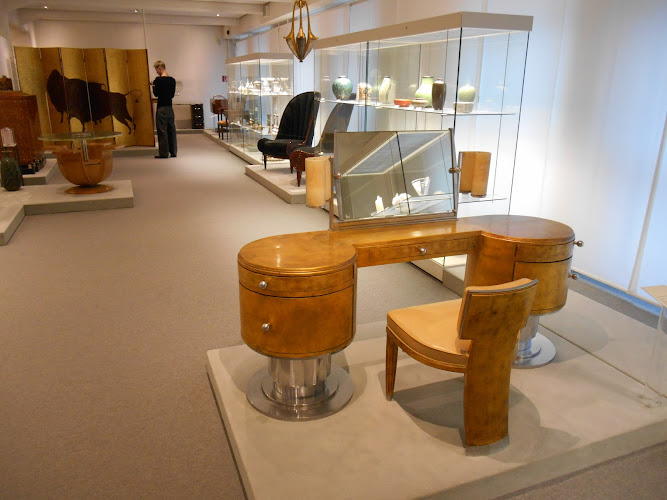
From the outside, it sits right on the market square in Karlsruhe, easy to find and hard to miss if you’re wandering the city center. Inside, though, it’s a different story: a surprisingly cozy, deeply curated world of applied arts that traces design from the turn of the 20th century (think Jugendstil) through Art déco, Bauhaus, and into contemporary design. It’s the kind of museum that rewards slow walking and the occasional squint; pieces talk to each other across decades and styles, and if you like objects with stories, you’ll linger.
Since 1900 the collection has focused on applied art, which is a fancy way of saying the everyday made beautiful — furniture, ceramics, glass, textiles, lighting, and objects that were designed to be used and admired. The ground floor has a particularly strong display of artist ceramics and modern stained glass that genuinely stopped me in my tracks one rainy afternoon. I remember standing in front of a piece of modern stained glass and thinking: how can light make something so new feel so intimate? That’s the magic here.
Visitors will notice that the museum doesn’t present history as a linear textbook. Instead, it offers an overlapping conversation between movements: Jugendstil’s floral elegance morphs into Art déco’s sharper geometry, which then translates into the functional clarity of Bauhaus and contemporary experimentation. If you’re into design history, this is one of those rare local museums that shows how ideas traveled across Europe and reappeared in furniture legs, lamp shades, and tea sets. And if you’re not a design nerd (yet), you’ll still find eye-catching objects and clear labels that gently explain why things look the way they do.
One of the parts that stands out and that visitors often miss in quick guides is the museum x space. It’s an open, freely accessible room meant for creative exchange between the museum and its visitors. That means you can sit, sketch, chat, test a digital concept, or join a small research group. I once stumbled into a weekend workshop there — they were prototyping digital labels that let you explore the provenance of an object on a tablet. It felt less formal than a typical museum program and more like a friendly lab. If you’re traveling with curious teenagers or creative adults, museum x is the place where your questions can turn into mini experiments.
Accessibility is taken seriously. There is a wheelchair-accessible entrance and restroom, which matters more than you might think when you’re planning a day out. There are restrooms but no restaurant on site, so plan to grab a coffee before or after — the market around the museum has excellent options, from bakeries to small cafés. The museum is also welcoming to families; the displays are arranged so kids can see things up close without feeling overwhelmed. There are child-friendly moments and spaces, and the hands-off-but-inviting vibe encourages curiosity rather than fear of breaking something.
What makes this museum distinct is not a single blockbuster object but the way a fairly compact collection tells a big story about taste, technology, and daily life. It’s a museum of transitions: how manufacturing innovations, changing social habits, and artistic ideas reshaped what people surrounded themselves with. That historical thread makes the place feel alive. You’ll see how a sausage-shaped armchair or a particular glass technique reflects broader shifts — like the move from handcraft to industrial production, or the search for utility without losing aesthetic quality.
Expect well-labeled exhibits and a pleasant rhythm between permanent displays and rotating features. Special exhibitions occasionally spotlight particular designers or themes, and they tend to be thoughtfully executed. The museum’s curators strike a good balance between deep scholarship and accessible storytelling, so you can choose to skim or to sink in. Personally, I appreciate displays that include small context cards that describe where an object came from and how it was used — those little notes are my favorite kind of treasure map.
One slightly quirky aside: the lighting in certain galleries is almost cinematic. Not in a museum-trick way, but in a way that makes glass and glazed ceramics sing. On a sunny day, light filters through the market square windows and interacts with stained glass pieces in ways that vary minute-by-minute. I’ve come back at different times just to watch how the colors shift. So, if you’re into photography or simply love watching material respond to natural light, bring a camera (and maybe a patient partner to hold the coat).
On the practical side, the museum’s layout is friendly for a relaxed visit. You can comfortably do the main galleries in 60–90 minutes without feeling rushed. But if you’re a slow reader or like to sketch, plan for two hours. There’s a good flow that encourages exploration without sensory overload. And the museum’s location at the market means you can combine a visit with other local experiences: street food, a walk through nearby squares, or pop into local shops for design souvenirs that echo what you just saw.
For travelers who like to plan, it’s useful to know the mood here is quietly sophisticated rather than spectacularly showy. The museum attracts a mix: design students, local families, curious tourists, and older visitors who grew up with some of the objects now framed as historical. That mix gives the place a lived-in quality — not museum as shrine, but museum as community resource. That sense is emphasized by the open nature of museum x and by occasional public programming that invites participation rather than passive viewing.
If you’re the sort of person who loves connecting objects to stories — who enjoys finding the thread between a vase and the world that birthed it — you’ll find the Baden State Museum’s applied arts collection rewarding. If you’re traveling with kids, the museum is forgiving and engaging; if you’re a design pro, there are enough nuggets of technical innovation to keep you interested. And if you just need a calm cultural stop between train schedules or city sightseeing, it’s a smart, short detour that leaves you oddly inspired. I always come away thinking about how design shapes daily life, and then I end up noticing those details in shops and cafés around Karlsruhe for days.
Finally, a quick personal tip: try to visit on a weekday morning or late afternoon if you can. The market is livelier around midday, and that’s lovely, but quieter times at the museum let the objects breathe and the light do its work. Also, don’t be shy about spending time in museum x even if you don’t plan to join a workshop; it’s a nice spot to recharge, jot down travel notes, or chat with staff and locals about the exhibitions. Museums can feel formal and heavy sometimes, but this one invites a different rhythm — conversational, curious, and practical.
So yeah, bring curiosity, comfortable shoes, maybe a sketchbook, and an appetite for small revelations. The Baden State Museum – Museum at Market isn’t about a single wow moment; it’s about the cumulative pleasure of good design, historical insight, and a place that quietly champions the beauty of useful things.
 Real Journey Travels