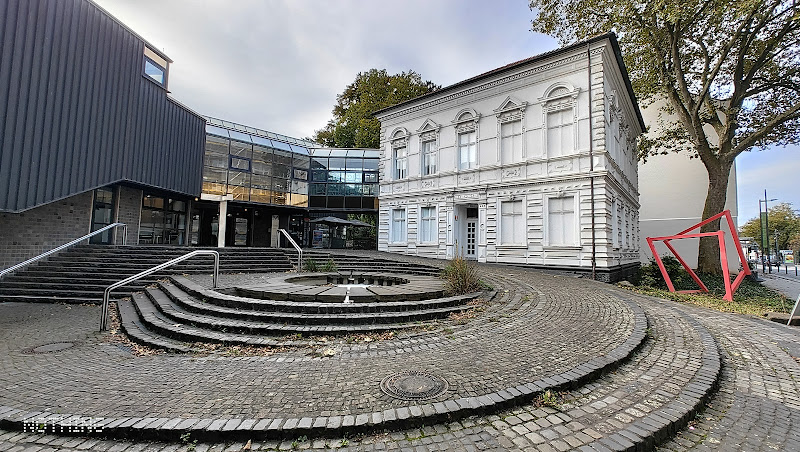
It sits in Gelsenkirchen’s cultural landscape as a place that takes modern and contemporary art seriously, but with a modest, almost friendly attitude. The collection leans into 20th- and 21st-century work, with a particular strength in kinetic art and pieces that play with light and movement. In other words, expect things that change while you watch them — not just paintings that sit politely on the wall. That makes it a refreshing detour if you’ve been to the big, more formal institutions in nearby cities.
Walking through the museum, many people comment on how the display balances international and German artists, with surprising emphasis on experiments in motion and perception. And yes, there are classics of modern art alongside experimental installations. The museum organizes rotating exhibitions, so even if you come back a year later, you’ll likely see a different arrangement, a new thematic show or a focused monograph on an intriguing artist. That sense of change keeps the place lively — not in an over-the-top way, but in the kind of way that makes you want to check the program before planning your trip.
Visitors often find the building approachable: it’s not intimidatingly big, but it’s not small either. That means you can do a thoughtful circuit in 60–90 minutes if you’re efficient, or linger for half a day if you like to sit and watch kinetic pieces cycle through their motions. Practical amenities include a museum restaurant and accessible restrooms, and the entrance areas and parking are wheelchair-friendly, which is good to know if you travel with older family members or mobility aids. The environment tends to be family-friendly; children react especially well to moving sculptures and light-based works — they’ll point and laugh and ask the questions you hope they’ll ask. My own niece once declared a slow-rotating sculpture a robot and insisted on waving at it for a good five minutes. Those are the moments that make visiting feel less like ticking boxes and more like sharing a tiny discovery.
Curators at the Kunstmuseum Gelsenkirchen frequently program shows that reflect the Ruhr region’s industrial past while pushing into contemporary dialogues. You might find an exhibition that references coal, machines, or post-war reconstruction alongside more abstract explorations of form and perception. This regional tie-in gives the museum a particular character: it feels rooted in place without being provincial. For travelers who have a soft spot for cultural context, that layering — art plus local history — is satisfying. It’s the sort of subtle storytelling that rewards the curious.
But the place isn’t perfect. Sometimes temporary shows are niche in a way that won’t click with every visitor. On busier weekend afternoons, galleries with kinetic installations can get crowded because people naturally pause and watch. If you dislike waiting around to view a piece, try an early weekday visit. Also, if you expect an encyclopedic museum of German art, you’ll be surprised: the Kunstmuseum Gelsenkirchen favors focused, contemporary narratives rather than exhaustive timelines. For me, that’s a plus, but for some folks it’s a drawback. So, know what you want before you go: a concentrated, thoughtful dose of modern and kinetic art, or a massive sweep through national art history.
One nice detail that often flies under the radar is how the museum stages light art and kinetic works. The lighting, wall colors, and placement are chosen to let moving parts breathe; you’ll find that the architecture and the art play off each other. On a rainy day, the contrast between the museum’s cool interiors and wet streets outside can make light installations feel cinematic. On sunnier days, big windows and well-timed shadows add another dimension. That means photography fans and casual Instagrammers alike will find interesting angles here. But be aware: some works prohibit flash or close approach, so always read the signs and ask staff if unsure.
Accessibility and family amenities are practical strengths. Wheelchair-accessible entrance, parking, and restroom facilities make the visit easier for many. The museum restaurant is a solid place to decompress after a gallery loop; it’s not Michelin-starred (obviously), but it serves dependable meals and coffee, making it a convenient pit stop before exploring more of the Ruhr region. There are also programs for children and families from time to time, so if you’re traveling with kids, it’s worth checking the schedule. And for solo travelers who like audio or docent experiences, the museum usually offers informative materials that make the exhibitions more approachable.
Beyond the permanent collection and special exhibitions, the museum frequently hosts talks, guided tours, and workshops. Those events are the secret sauce for a more memorable visit. On one of my visits, a public talk about kinetic art transformed a routine afternoon into a small epiphany — suddenly the jerky movement of a sculpture made sense as choreography, not just engineering. Small museums like this can offer these intimate, human-scale experiences that big institutions sometimes can’t. So, if you have the chance, take a tour or attend a curator talk — you might walk away with a couple of fresh ideas and, honestly, a better story to tell friends.
Location-wise, the museum is part of the cultural fabric of the Ruhr region and the Gelsenkirchen area. Many visitors combine a museum stop with a walk around the neighborhood, a coffee in a local cafe, or a short trip to other nearby cultural sites. That makes it easy to fold into a day of exploring rather than being a destination that demands an entire itinerary on its own. For travelers on a time budget, a focused 90-minute visit is realistic and rewarding; for curious types who like to soak, linger, and talk to staff or fellow visitors, plan for a longer stay.
In short: the Kunstmuseum Gelsenkirchen is a smart pick if you like contemporary and modern art that moves — literally and figuratively. It’s accessible, friendly to families, and rooted in its regional context. Expect high-quality exhibitions with a tilt toward kinetic and light art, good practical amenities, and a museum experience that rewards curiosity. And if you’re like me and have a habit of sitting for longer than you planned in front of a moving sculpture, bring an extra coffee or two. You’ll probably need it.
 Real Journey Travels