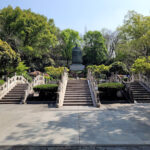
Quzhou is a mountain-fringed city in western Zhejiang, where the Qiantang River’s upper reaches meet a landscape of wooded ridges, river valleys and county towns near the borders of Anhui, Jiangxi and Fujian. It is an important regional transport and service center rather than a polished megacity, and its appeal lies in the combination of an atmospheric old quarter, deep Confucian history and easy access to rural scenery.
This is a strong choice for travelers who want a quieter Zhejiang stop after Hangzhou or Shanghai, especially history-minded visitors, hikers and food-focused explorers. Quzhou is often called the Southern Confucianism Communication Center because the Kong family’s southern branch settled here after the Northern Song court’s southward retreat. The city is also well placed for journeys between Hangzhou and Wenzhou, although its best excursions spread west and south into the surrounding counties.
Quick Planning Snapshot
Planning detailWhat to knowBest seasonsMarch to May and September to November, with mild temperatures and greener or clearer mountain views.Typical trip lengthTwo days for the city and one major excursion; add one or two nights for Jiangshan, Longyou or Kaihua.Main transport hubQuzhou railway station, served by high-speed rail; Quzhou Airport handles domestic flights.Local currencyChinese yuan renminbi (CNY).Primary languageMandarin is widely used; local Wu dialects are common in daily life.Walkability and transitThe old city is walkable, but taxis, ride-hailing and buses are more practical for outer sights and county trips.
Getting There & Getting Around
High-speed rail is usually the simplest arrival method. Quzhou sits on the Shanghai–Kunming high-speed rail corridor, with direct or one-change connections from Hangzhou, Shanghai, Nanjing and other eastern Chinese cities. Check which station is shown on your ticket and allow extra time around holiday peaks. By road, expressways link the city with Hangzhou, Jinhua, Wenzhou, Jiangxi and Fujian, making a rental car useful only if you plan several rural stops.
Quzhou Airport is convenient for domestic itineraries. For international arrivals, Hangzhou Xiaoshan International Airport is the most practical major gateway, followed by Shanghai’s airports for travelers combining several cities; continue by rail after arrival. Within central Kecheng, walk between Shuitingmen, the Confucian sites and riverfront areas. Use a taxi or ride-hailing for Lanke Mountain, the railway station, and evening returns from sites outside the core. Keep your destination written in Chinese, as English signage and spoken English are limited beyond principal attractions.
Best Areas to Stay & Neighborhood Character
Kecheng’s old-city side, around Shuitingmen and the historic riverfront, suits first-time visitors who want evening walks, traditional architecture and straightforward access to the Southern Confucian Temple.Central Kecheng near commercial streets and the main urban transport routes offers the broadest choice of business-style hotels, restaurants and services. It is the most practical base for train travelers and short stays.Jiangshan is a better overnight base for hikers tackling Jianglang Mountain or exploring the Xianxia Mountain area and Nianbadu. Staying there avoids a rushed round trip from Quzhou city.Longyou works well for travelers prioritizing the grottoes and a slower county-town visit. In more remote scenic areas, choose accommodation for location and confirm transport before arrival.
Top Things to Do, Local Culture & Day Trips
Begin at the Southern Confucian Temple, also called the Quzhou Confucian Family Temple. Its significance is historical as much as architectural: it became the home of the southern branch of Confucius’s descendants in the 12th century. Pair it with the nearby old-city lanes and Shuitingmen, where restored traditional-style buildings, waterways and evening lighting make an easy first-day circuit. The Quzhou Museum adds useful context on regional history and material culture, while Lanke Mountain offers a close-to-town nature break tied to the famous legend of a woodcutter watching immortals play weiqi.
For the signature excursion, travel southeast to Longyou Grottoes, a remarkable group of hand-carved underground chambers whose original purpose remains uncertain. Give yourself time to appreciate the scale and tool-marked walls rather than treating it as a brief photo stop. Southwest in Jiangshan, Jianglang Mountain is a China Danxia World Heritage landscape known for its dramatic three peaks and marked hiking routes. Nearby Nianbadu Ancient Town, close to the Fujian border, preserves a borderland character shaped by historic trade routes. Nature travelers with more time can head north to Kaihua and the Qianjiangyuan area for forest landscapes, though this requires more careful transport planning.
Practical Planning Tips, Food Specialties & a 2-Day Flow
Quzhou has a subtropical monsoon climate: summers are hot, humid and rainy, while winters are comparatively mild but can feel damp and raw. Bring a rain layer in every season, grippy shoes for stone paths and mountain trails, and insect protection for warm-weather countryside visits. National holidays, particularly early May and early October, bring heavy rail demand and crowded scenic sites. China is generally very safe for ordinary visitors, but use normal precautions around stations, wet hiking paths and late-night transport.
Food is more assertive and chili-friendly than many travelers expect from Zhejiang. Try Quzhou duck head, a braised spicy snack; local roasted flatbreads; Longyou rice cakes; and seasonal river fish or bamboo-shoot dishes. The local phrase “three heads and one palm” refers to a group of intensely flavored snack dishes centered on duck, rabbit and fish heads and duck feet; order selectively if you prefer less spice. Restaurants do not expect tipping. Mobile payment dominates, so set up an accepted payment option before arrival and carry some cash as backup, especially in smaller towns.
Day 1: Explore the Southern Confucian Temple and Quzhou Museum, wander Shuitingmen and the old-city lanes, then have a relaxed dinner focused on local snacks and river dishes.Day 2: Choose Longyou Grottoes for archaeology and unusual underground architecture, or Jianglang Mountain for a more active day. Return to the city in the evening, or continue onward to Jiangshan for an overnight before visiting Nianbadu.
 Real Journey Travels