
Diocletian’s Palace
About Diocletian’s Palace
Diocletian’s Palace (Dioklecijanova 1) in Split: what it is, what you’re seeing, and why it matters
Diocletian’s Palace is an ancient Roman palace-and-fortress complex that forms a major part of Split’s historic core. It was built as the retirement residence of the Roman Emperor Diocletian in the late 3rd to early 4th century AD. World Heritage Centre
Location (as provided): Dioklecijanova 1, 21000 Split, Croatia (Split) Tickets
Coordinates (as provided): 43.5082646, 16.4401754
Type: Historical landmark
Rating (as provided): 4.7
What makes the site unusual—compared with many Roman-era monuments—is that it isn’t “next to” a city. It’s inside the city: streets, homes, shops, and public squares occupy and weave through the original fabric. UNESCO describes the “ruins… found throughout the city,” and the World Heritage inscription covers the Historical Complex of Split with the Palace of Diocletian (inscribed in 1979). World Heritage Centre
---
A quick historical frame you can rely on
Diocletian’s Palace was constructed circa 295–305 CE as Diocletian’s place of retirement. Diocletian renounced (abdicated) in 305 and later lived at Split until his death in 316. Britannica
UNESCO’s description also highlights a key “afterlife” detail that helps you interpret what you’re seeing today: the palace’s ancient imperial spaces were later adapted into medieval and later buildings, including a cathedral created by re-using the ancient mausoleum. World Heritage Centre
---
How to read the palace on the ground (even without a guided tour)
Diocletian’s Palace is often explained as both:
- a luxury imperial residence, and
- a fortified complex with defensive features.
That hybrid design is why the experience can feel like walking through multiple layers at once: Roman stonework, medieval religious conversions, and later civic life stacked into one compact area.
The Peristyle: the palace’s central public stage
One of the most recognizable spaces inside the complex is the Peristyle, the central square within the palace, often presented as a focal point for understanding the palace’s internal organization.
If you’re trying to orient yourself, the Peristyle is a practical mental anchor: many of the headline interiors and transitions between “imperial” and “later city” are explained in relation to it.
The cathedral and the reused mausoleum
UNESCO explicitly notes that the cathedral was built in the Middle Ages, reusing materials from the ancient mausoleum. That statement is useful because it tells you the conversion is structural—not just symbolic. You are looking at repurposed imperial architecture functioning as a medieval (and later) religious space. World Heritage Centre
The substructures (basements / “cellars”)
Many visitors prioritize the palace’s lower levels—often described as substructures or cellars—because they preserve the spatial logic beneath the imperial quarters and help you understand how the above-ground rooms were supported. (These areas are commonly treated as a distinct visitable component, sometimes ticketed separately.) Walking Tour
Gates and defensive logic
A recurring way the palace is described is as a complex that functioned in part like a defended enclosure, with multiple entrances and an urban-facing perimeter. (Some sources summarize this with named gates and towers; however, those details vary by guide and are not consistently presented in the most authoritative references I used above, so I’m not treating specific gate names/counts as “certain” here.)
---
What “visiting the palace” actually means in practice
A practical—and easy-to-miss—fact is that the palace complex forms part of the city fabric, so there isn’t a single controlled entrance the way there would be at a fenced archaeological park. Tickets
At the same time, individual components commonly treated as “sites” within the complex (for example, interior religious spaces or specific ancient rooms) may require their own admission and may observe their own opening hours. This is a normal operational model for living heritage districts, but it’s exactly where details go stale quickly. Walking Tour
Outdated-data flag (important for accuracy)
I did not find a single official, centralized source in the materials above that publishes a definitive, always-current list of all opening hours and all ticket prices for every palace component. Because operators change schedules seasonally and pricing can change, any static “price list” you see in third-party guides risks becoming outdated. Walking Tour
---
Why UNESCO status changes how you should think about the site
The UNESCO inscription matters for more than bragging rights. It clarifies what is protected: not just a standalone Roman palace, but a historical complex that includes Roman remains integrated into later medieval fortifications, Romanesque churches, Gothic palaces, and Renaissance/Baroque architecture within the protected area. World Heritage Centre
This is the key interpretive move: you’re not only visiting a Roman monument—you’re moving through a continuity of urban history where later eras built directly onto Roman infrastructure.
---
Key Features
Diocletian’s Palace
You Might Also Like

Archaeological Museum in Split
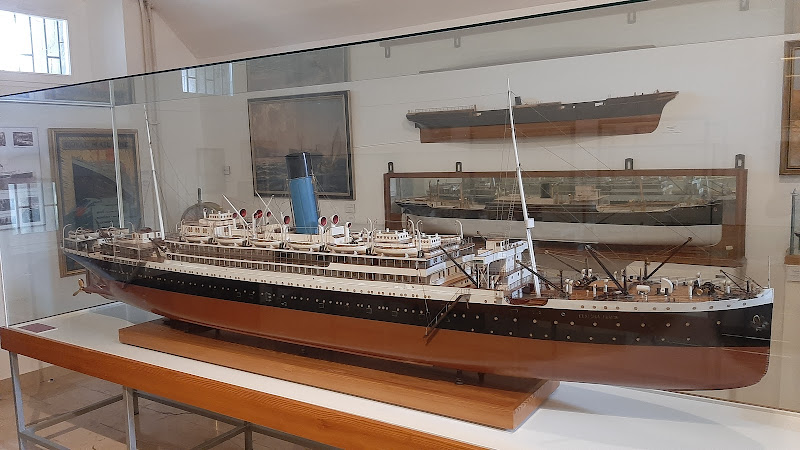
Croatian Maritime Museum
Diocletian’s Cellars
Tours & Activities
GetYourGuide provides this tour inventory. We may earn a commission if you book through it; verify current availability, prices, and terms with the provider.
Visitor Reviews
There are no reviews yet. Be the first one to write one.
Share Your Experience
Have you visited Diocletian’s Palace? Help other travelers by leaving a review.