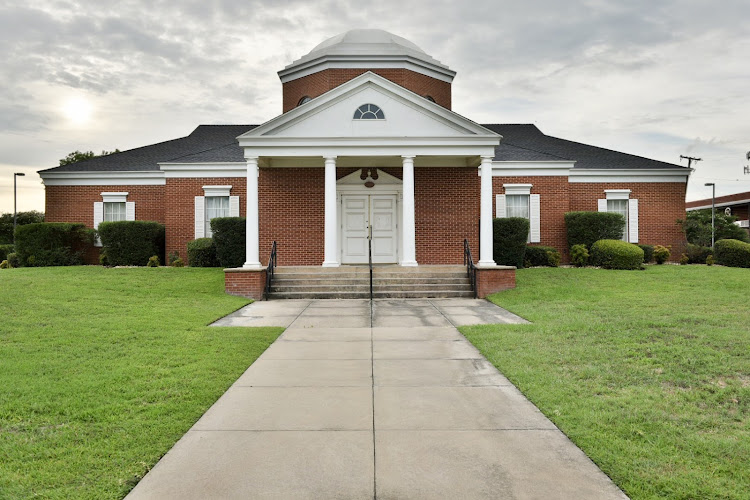
It functions both as a reference library and a museum, housing records, books, regalia, photographs, and memorabilia that tell a story about civic ritual, community networks, and the ways Americans created social institutions outside of government. For travelers who like context as much as exhibits, this place offers a different kind of historical pace: slower, detail-rich, and the kind of museum where one lingers because small things reward attention.
Unlike sprawling institutions that try to do everything, the Red Men Museum and Library specializes. Its stacks and display cases emphasize the written record and wearable objects of a fraternal tradition: minutes and charters, membership ledgers, ceremonial attire, meeting paraphernalia, and ephemera that are surprisingly human. The reading room atmosphere means researchers and casual visitors both find value. Someone doing genealogical work will appreciate the meticulous indexing; a history buff will get a clear view of how private societies shaped civic rituals and local leadership in the United States.
Physically, the museum occupies a compact footprint but uses it well. Exhibits are arranged to let individual items breathe, which allows for close inspection. Lighting is soft but adequate; the cases are labeled with concise captions that assume a curious but not specialist audience. There is an emphasis on preservation, so visitors should expect archival practices that protect fragile documents. That can mean restrictions — no flash photography in some areas, occasional items only viewable in microfilm or digital facsimile — but these tradeoffs protect the collection for future generations.
Accessibility and practical details are straightforward here. The building provides a wheelchair-accessible entrance, parking, and restrooms, and on-site parking makes it easy to arrive by car without last-minute circling. Families with children are welcomed; the museum presents materials in ways that can engage younger minds, particularly those who respond to tactile stories — though actual touching of artifacts is, understandably, rare. There is no onsite restaurant; visitors should plan snacks or nearby dining. Restroom facilities are available and maintained, so the visit can be comfortable even if it turns into a three-hour deep dive.
What sets the Red Men Museum and Library apart is its archival focus coupled with a clear community connection. It still functions as an event space on occasion, where local groups host lectures or commemorations that bring primary sources to life. That dual role as library and event hall means the collection is not sealed off in some ivory tower; it gets used, discussed, and occasionally staged as part of living memory. Travelers who time their visit around a scheduled lecture or meeting can leave with more than passive impression — they might walk away with a story told by someone who grew up in the lodge system, or a researcher presenting new findings about a local heroic figure.
There is also a curatorial honesty to the place. The museum does not gloss over complexities. It preserves artifacts that speak to patriotic fervor, but it also preserves documents that invite critical questions about exclusivity, identity, and the evolution of civic life. Visitors expecting a simplistic patriotic showcase will find a more textured account. That nuance is valuable for anyone trying to understand how voluntary associations shaped neighborhoods, town politics, and social welfare in earlier eras.
For a traveler, the experience is intimate. Guided tours are sometimes offered by volunteers or staff who are clearly invested in the subject matter; these guides mix factual knowledge with small, human touches — the kind of anecdote that makes a ledger entry into a lived life. On one rainy day, for example, a docent described how a single membership card tucked into a book unlocked an entire family history for a researcher sitting in the reading room. Stories like that stick with people because the collection is not just objects. It is a network of lives and local histories that, when pieced together, make a surprising portrait of civic engagement in America.
Practical research needs are well-supported. The reference library contains indexed materials and a staff that understands how to retrieve documents and suggest related resources. Academics and local historians will find microfilm readers, cataloged lists, and a patient archive ethos. The space encourages questions; novice researchers should not be shy. Staff members tend to be helpful, and their institutional memory often short-circuits what would otherwise be a long search.
One quiet pleasure of visiting is the unpredictability of discovery. Unlike major museums where blockbuster exhibits dominate, the Red Men Museum and Library rewards curiosity. A visitor might come for a single object mentioned in guidebooks, and wind up reading a member’s handwritten diary that reveals the day-to-day social obligations of lodge life. Those serendipitous moments happen because the collection is arranged for study rather than spectacle.
Of course there are limits. The museum’s subject matter can feel esoteric to those unfamiliar with fraternal organizations. Some displays require a willingness to follow procedural descriptions and ritual language. And because the institution balances archival care with local programming, visitors should check ahead about special closures or event schedules that might limit access to certain rooms. But these are small bumps in an otherwise rewarding visit.
Location-wise, the museum sits within a city that itself is a mix of historical layers and modern revival. That makes it easy to combine a visit with other nearby cultural stops, local dining, and riverfront walks. For planners who like to build an afternoon of varied activities, this is convenient. The museum’s modest size means visitors can pair it with a museum or two and still have time for coffee and conversation.
In short, the Red Men Museum and Library offers a thoughtful, archival-driven museum experience best suited to travelers who appreciate depth over spectacle. It is a place for people who like to read labels, connect dots, and leave with not just photos but a sense of a civic tradition that helped shape local communities. Visitors who enjoy small museums where the staff chats with guests and the artifacts feel accessible will likely leave feeling that their time was well spent. And even those who arrive with little prior interest in fraternal orders often find themselves drawn in by the human stories woven throughout the collection.
To sum up without sounding overly precious: this is a quiet gem for focused history travelers. The combination of reference holdings, preserved artifacts, and occasional event programming makes it both a research resource and a lived cultural site. Travelers who give it an hour or three may find that a single minute detail — a stamped ledger, a worn sash, a typed speech — becomes the memory they bring home, long after the rest of the trip fades from immediate recall.
 Real Journey Travels