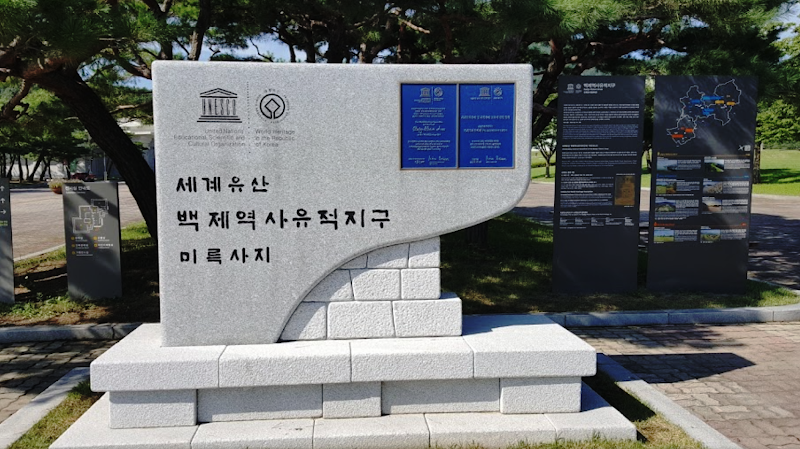
Focused on artifacts excavated from the Mireuksaji temple site and other local historical locations, the museum presents a clear, well-researched narrative of the Baekje Kingdom and the wider three kingdoms era. Exhibits range from delicate jewelry and ritual implements to the heftier remains of stone pagoda fragments, and together they form a layered story about religion, craft, and daily life in ancient Korea. Visitors who come for history leave with a sense of place — why Iksan mattered back then, and how those ancient choices still echo through the landscape today.
The permanent galleries are organized thematically, which helps first-time guests and repeat visitors alike. One area focuses on daily life and small finds: pottery shards, tools, and ornaments that show ordinary life in an extraordinary past. Another zone centers on the Mireuksaji temple and its stone pagoda, including large-scale reconstructions, excavation photographs, and conservation case studies. The museum blends artifact display with context: maps, timeline panels, and short videos that place Iksan within the larger Baekje network and South Korea’s early history. For travelers trying to get oriented, this is a welcome approach; it doesn’t assume prior knowledge but still offers depth for those who want it.
While official descriptions can sound dry, the Iksan National Museum keeps things accessible. Labels are concise yet informative, and many of the key displays include bilingual descriptions. There is an approachable rhythm to the visitor experience: a mix of close-up artifacts in glass cases, large-scale illustrations, and multimedia stations that bring archaeological methods to life. One especially memorable display walks visitors through the painstaking process of unearthing a pagoda stone — from trench to lab. Those sections give a surprising appreciation for the patience and craft that go into archaeology, and they elevate the artifacts from objects to stories.
Accessibility is a practical strength of the museum. The buildings and major exhibition areas are wheelchair friendly, with accessible entrances and restroom facilities, and there is accessible parking nearby. Families with young children will find the site accommodating: restrooms include changing tables, and exhibition flows are straightforward so strollers are manageable. However, it is worth noting that the museum does not operate an on-site restaurant, so visitors should plan snacks or short stops elsewhere. Restroom facilities are available, which is always something travelers quietly appreciate.
The museum balances its role as a research institute and a public attraction. Beyond the permanent halls, rotating special exhibitions and educational programs offer fresh reasons to return. Special exhibitions typically highlight a narrow topic — a single artisan’s work, a recent excavation, or comparative displays drawing in materials from other regions. Those rotating exhibits are where the curators tend to show their more playful side, experimenting with layout, lighting, or narrative hooks. For anyone with more than a passing interest in Baekje culture, checking the museum’s schedule before a visit can add valuable context.
For travelers who plan museum days as part of a larger Iksan itinerary, the location serves as a logical hub. The museum is often paired with visits to the Mireuksaji temple site itself, where the place-based archaeology began and where the stone pagoda remains still stand in the landscape. The museum provides the interpretive framing that deepens a site visit: after seeing an original relic behind glass, a walk across the field to the temple ruins feels unexpectedly intimate. That joined experience — artifacts inside, site outside — is one of the museum’s strongest selling points.
Practical signage helps visitors make the most of a one- to two-hour visit, although history buffs could easily spend longer poring over details and reading excavation reports posted in the research corners. The exhibition design favors clarity and conservation: lighting is controlled to protect fragile objects, and magnified displays allow close study of small items like gold earrings or bronze fittings. Photography for personal use is commonly tolerated in open areas, though flash or tripods are understandably restricted near light-sensitive materials. Those small rules are typical, but worth remembering; they keep the artifacts intact for future visitors.
One thing that pleasantly surprised some visitors is how the museum makes technical subjects readable. Archaeological terms are explained, and timelines thread together disparate finds into a coherent narrative. For example, the story of the Mireuksaji stone pagoda is told not only through its physical fragments but also through carved motifs, construction techniques, and comparative examples from other Baekje sites. That approach turns the museum into a mini-classroom on conservation and architectural history, and it often sparks curiosity about techniques like stone dressing and mortar use, which aren’t topics most people encounter every day.
A fair note: visitor impressions vary. Some people wish for more interactive elements for younger audiences or a small café to linger over. Others praise the calm, contemplative atmosphere and the depth of scholarship visible in the displays. The overall tone tends toward careful curation rather than flashy presentation, which suits the subject matter but may not appeal to travelers seeking bright, Instagram-ready moments. Yet for those after authenticity and context — and who want to learn about the Baekje legacy in a focused, professional setting — the museum is a highly rewarding stop.
Insider tips that the museum quietly offers: look for conserved fragments that still show traces of pigment, which hint at a time when stone and wood were bright with color; read the conservation notes beside reconstructed pieces, they’re little stories about problem-solving; and if a special exhibition is on, allow extra time, because some of those shows include loaned treasures that appear nowhere else in Jeollabuk-do. The museum is both a local cultural center and part of the national network of museums in Korea, so it sometimes participates in traveling exhibitions that widen its scope beyond strictly regional artifacts.
From an educational perspective, the Iksan National Museum is strong. Schools often arrange field trips here, and the museum supports those visits with tailored programs and printed guides. Adults on their own will find the research materials and documentary displays informative, while casual visitors benefit from clear, approachable narratives. The museum attracts archaeologists and historians, yes, but it also attracts curious travelers who simply want to understand why this corner of South Korea has such a dense historical footprint.
Finally, the atmosphere deserves a mention. The architecture and layout emphasize calm circulation and contemplative viewing. The lighting is subdued in galleries with delicate materials, which creates a slightly hushed, respectful mood that actually helps stories land. There’s an understated dignity in seeing a small gilt ornament, once worn by someone a millennium ago, displayed alongside the tools used to make it. That sense of continuity — a human line stretching from past to present — is what the museum hangs its hat on, and it works. Visitors who come with curiosity and a bit of patience typically leave with a richer sense of Baekje history and why Iksan played an important role in early Korean culture.
In short, the Iksan National Museum offers a thoughtful, research-driven look at the Baekje era and the Mireuksaji temple site artifacts. It is accessible, family-friendly, and oriented toward education and preservation. While it chooses depth over dazzle, that choice makes it a meaningful stop for travelers in North Jeolla Province who want to dig into ancient Korea in a serious, well-curated way.
 Real Journey Travels