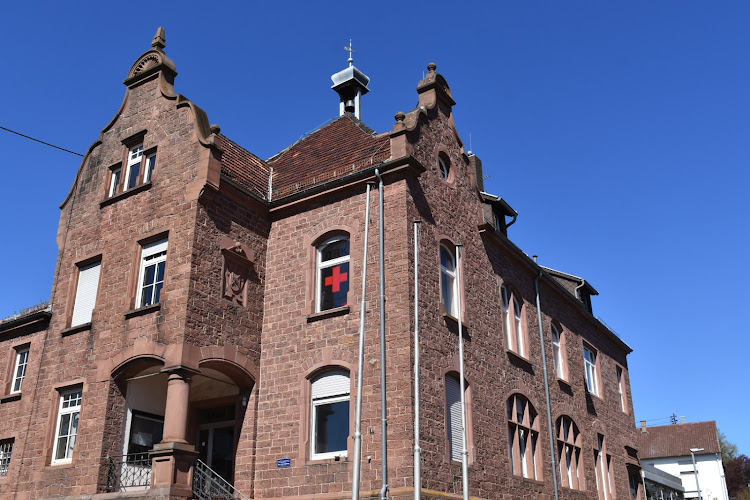
Housed in a modest, unpretentious space in Karlsruhe, this local history museum specializes in school culture and teaching tools from the 19th and 20th centuries. Visitors will encounter slates, primers, metal nibs and inkwells, handwritten copybooks, wall charts, and other teaching aids that once sat on the desks of pupils in Baden-Württemberg and beyond. The collection begins in 1803 and gathers pieces from around the world, offering both regional depth and surprising breadth.
This description aims to give a traveler a real sense of what to expect. The Badisches School Museum Karlsruhe is not a blockbuster institution; it is the kind of place that rewards curiosity. People who are fascinated by material culture, social history, or education policy will find themselves lingering. And families with children often discover that the exhibits invite questions and hands-on investigation more successfully than many glossy, modern museums.
At its heart the museum preserves the look and feel of older classrooms. Several recreated learning spaces and display cabinets show how lighting, furniture, and pedagogical materials shaped what it meant to be a student in different eras. A slate board with chalk smudges, a needlework sampler, or an arithmetic exercise written in a shaky hand can communicate the rhythms of daily school life more effectively than a textbook passage ever could. The contrast between those tactile objects and contemporary devices like laptops or smartphones makes the former seem almost relic-like, and that contrast is part of the exhibit’s charm and purpose.
While the main storyline is historical, the presentation leans friendly and informal rather than academic and forbidding. Labels are readable and generally concise. Visitors frequently report enjoying the opportunity to compare a 19th-century primer with later textbooks and to try holding an old-fashioned pen and inkwell—many items are either designed to be touched or are under supervised handling sessions. That tactile element helps transform the visit from a simple look-and-see into an active, sensory experience.
Accessibility and family-friendliness are taken seriously for a museum of this scale. There is a wheelchair-accessible restroom on site and the layout aims to be navigable for visitors with mobility needs. Restrooms are available, but there is no on-site restaurant, so plan accordingly for snacks or a nearby café stop. The exhibitions are intentionally approachable for kids; small visitors often enjoy spotting differences between their own schoolbags and the satchels on display, or laughing at the idea of practicing penmanship with a metal nib. The museum makes a quiet, effective effort to connect intergenerational audiences—grandparents, parents and children—through objects they can relate to in different ways.
One underappreciated strength of the Badisches School Museum Karlsruhe is its emphasis on the everyday. Big institutions often prioritize famous names or dramatic objects; this museum collects the workaday items that actually made schooling possible. That means there are stacks of old school notebooks, examples of student handwork, wire-bound exercise books, and wall pictures used to teach geography and natural history. Some of these items were donated by local families; others came from farther afield, reflecting how teaching materials circulated across regions even in earlier centuries. The global provenance of certain pieces is a neat surprise: a primer printed outside Germany, a classroom poster from another European country, or a mechanical teaching aid that hints at industrial-age pedagogy.
For the historically minded traveler, the collection opens doors into several broader stories. The exhibits touch on literacy campaigns and the spread of public education in 19th-century Baden, shifts in teacher training, the evolution of discipline and classroom management, and how material scarcity affected learning outcomes. Visitors who like context will appreciate small displays that explain school calendars, examination culture, and the role of religion and state in curriculum design. It does all this in a compact format, which means a focused visitor can get a lot of insight in a single visit.
Practical notes matter, and the museum tends to be quietly pragmatic. It is well-suited to a shorter stop within a Karlsruhe itinerary rather than an all-day commitment. Many visitors pair a visit with other nearby cultural sites or a stroll through a local neighborhood, turning the museum into a satisfying 60–90 minute detour. That said, if the topic of school history speaks to you—maybe you teach, maybe you have an unusual curiosity about 19th-century ink blotters—then there is enough depth to make a longer, more contemplative visit worthwhile.
The mood inside is intimate rather than theatrical. Lighting is soft in display areas where fragile paper items are preserved, and the layout invites slow movement rather than hurried passing. The staff and volunteers tend to be knowledgeable and patient; they can point out small curiosities that non-specialists might miss, like marginalia in a student’s copybook or an unusual tool used for teaching arithmetic. Visitors occasionally stumble on small, personal stories: a photograph of a classroom group with names and dates penciled on the back, an inscription from a child who wrote a proud title page, or a teacher’s guide annotated in the margins. These human traces are where the museum’s emotional power lies. A simple exercise book can become a time machine when one notices a child’s neat cursive or a scrawled doodle in the corner.
It is worth noting that the museum deliberately avoids overwhelming technology. No flashy multimedia shows here—rather, the emphasis is on object-based learning. For travelers who prefer quieter, analog experiences, this is a relief. If, however, one expects interactive screens and cinematic installations, the Badisches School Museum Karlsruhe may feel modest. That modesty is a virtue for those who want to slow down, read labels carefully, and let physical objects tell their stories.
For educators and researchers, the museum can be a small goldmine. Its collection of teaching materials and school furniture is especially useful for anyone studying the history of pedagogy, social history, or material culture. Exhibits sometimes rotate or are recontextualized for special small-scale displays, so a repeat visit can reveal new angles or objects. For casual travelers, the museum offers an accessible narrative about how schooling shaped everyday life across time—an angle that often resonates because nearly everyone carries some personal memories of school.
A visitor’s personal takeaway often depends more on their curiosity than on the museum’s size. Those who love detail will find pleasure in minutiae: the texture of old paper, the smell of bindings, the awkward shapes of early desk ink wells. Others will enjoy the museum as a way to spark conversation with companions—ask someone about their earliest school memory or compare handwriting styles across generations. In a small but thoughtful way, the Badisches School Museum Karlsruhe encourages that kind of cross-generational dialogue.
Finally, the museum acts as a quiet reminder of educational change. Seeing a teacher’s pointer next to a modern whiteboard substitute, or an old slavery of rote recitation beside present-day emphasis on creativity, invites reflection about what schooling values and how those values shift over time. For travelers who like history that connects past and present, this museum offers exactly that: a series of small windows into how ordinary people learned, taught, and lived with education in Germany and beyond. And for someone who enjoys museums where each object has a modest story, this place is likely to linger in memory long after the trip ends.
 Real Journey Travels