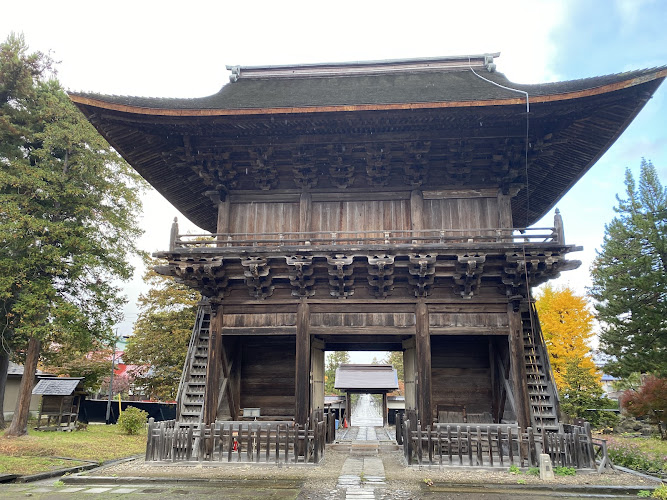
Tucked away in Hirosaki, this serene district is unlike any other in Japan. Imagine a street lined with 33 Sōtō Zen temples, each with its own story, its own rhythm of bells and whispers of incense. It’s not flashy or crowded—far from it. Instead, there’s a calm here that seems to hum beneath the surface, the kind that makes you unconsciously slow your steps and breathe a little deeper.
The origins of Zenringai go back to the early 17th century, when Tsugaru Nobuhira, the second lord of the Tsugaru domain, envisioned a spiritual shield to protect Hirosaki Castle. He ordered the construction of dozens of Zen temples along a single avenue, creating what became known as the “forest of Zen temples.” The concept was both practical and spiritual—temples served as guardians of the city, but also as places of meditation and community. Over time, this alignment of temples evolved into one of Japan’s most unique temple districts.
Walking through Zenringai today feels like stepping into a living museum of Japanese spirituality. Some temples have been rebuilt or restored, but many still retain their centuries-old atmosphere. The air smells faintly of cedar and incense. Wooden gates creak as you pass. And at the far end of the street stands Chōshō-ji, the grand temple that anchors the entire district. It’s the kind of place that quietly commands your respect—not through grandeur, but through presence. I remember standing there one chilly morning, the mist curling around the temple roofs, thinking that this was the kind of silence you don’t find in cities anymore.
While Zenringai might not have the fame of Kyoto’s temple districts, that’s exactly what makes it special. There’s no rush of tour buses or souvenir stalls. Just you, the gravel path beneath your feet, and the occasional monk sweeping leaves with a bamboo broom. It’s an authentic slice of old Japan that rewards patience and curiosity. Some travelers might find it a bit too quiet or “samey,” but if you’re the kind of person who enjoys subtle beauty—the kind that reveals itself slowly—then Zenringai will speak to you.
Best Time to Visit
Zenringai changes dramatically with the seasons, and each one casts its own kind of magic. Spring, of course, is spectacular—especially when the nearby cherry blossoms around Hirosaki Castle begin to bloom. The petals often drift down the temple street like pink snow, creating a surreal, almost cinematic scene. Summer brings lush greenery and the hum of cicadas, while autumn transforms the avenue into a corridor of fiery reds and golds. Personally, I love visiting in late October when the air turns crisp and the leaves crunch underfoot. It feels like walking through a painting.
Winter, though, has its own quiet charm. The temples dusted in snow, the muffled sound of your boots on the path—it’s hauntingly beautiful. But it can be cold, and some smaller temples may be closed or minimally staffed. If you’re looking for a balance of comfort and beauty, spring and autumn are your best bets. Early morning visits are particularly rewarding; the light is soft, the air is still, and you’ll likely have the entire street to yourself.
How to Get There
Reaching Zenringai is quite straightforward if you’re already in Hirosaki. From Hirosaki Station, you can take a local bus or taxi toward the temple district—it’s only a short ride away. Some travelers prefer to walk from Hirosaki Castle, which takes about 20 minutes at a leisurely pace. The walk itself is worth it, passing through quiet residential streets that give you a glimpse of everyday life in northern Japan. If you’re driving, parking is available nearby, though spaces can be limited during local festivals or weekends.
Public transportation is reliable, but schedules can be sparse outside of peak hours, especially in winter. I once missed the last bus back and ended up walking the whole way under a soft snowfall—it turned out to be one of the most peaceful walks of my life. So, maybe check the return times before you go, unless you’re up for a little adventure.
Tips for Visiting
Visiting Zenringai isn’t about rushing from one temple to another—it’s about slowing down and letting the atmosphere sink in. Here are a few things to keep in mind to make the most of your experience:
- Take your time: Don’t try to see all 33 temples in one go. Instead, pick a few that catch your eye and linger there. The beauty is in the details—the sound of the wind through the pines, the carvings on a gate, the way sunlight filters through old paper screens.
- Respect the quiet: This is an active religious area, not just a tourist attraction. Keep your voice low, avoid taking intrusive photos, and be mindful of monks or locals in prayer.
- Bring comfortable shoes: The path is long and mostly gravel, so you’ll be walking quite a bit. Trust me, your feet will thank you later.
- Check weather conditions: Northern Japan can be unpredictable, especially in winter. Dress in layers and bring an umbrella or hat depending on the season.
- Stay hydrated and plan breaks: There aren’t many cafés or vending machines in the immediate area, so it’s smart to bring a bottle of water or a thermos of tea.
- Visit Chōshō-ji last: It’s the largest and most historically significant temple, and reaching it feels like a natural conclusion to the walk.
- Photography etiquette: While you can take photos outside, avoid snapping pictures inside temple halls unless explicitly allowed. Some of the best shots come from the subtle interplay of light and shadow outdoors anyway.
- Go early or late: The midday hours can bring small tour groups, but mornings and late afternoons are blissfully quiet. The lighting at those times also gives the temples a warm, golden glow that’s perfect for photos.
If you’re someone who enjoys places that whisper rather than shout, Zenringai might just become one of your favorite memories of Japan. It’s not about spectacle—it’s about stillness. About walking where samurai once prayed, where monks still meditate, and where time seems to slow down just enough for you to catch your breath.
And honestly, that’s what makes Zenringai so special. It doesn’t try to impress you—it just is. Simple, sacred, and profoundly human. Whether you’re a history buff, a spiritual seeker, or just someone looking for a quiet corner of Japan to get lost in, this temple street is worth every step.
 Real Journey Travels