
Wales Millennium Centre
About Wales Millennium Centre
Description
The Wales Millennium Centre stands as one of those buildings that travelers remember long after the curtain falls. It’s a modern cultural landmark devoted to theatre, opera, ballet, contemporary dance, and live music, but calling it just a theatre feels underselling it a bit. This place hums with purpose. From the moment visitors step inside, there’s a sense that something important is always about to happen, even on a quiet afternoon when rehearsals echo faintly through the corridors.
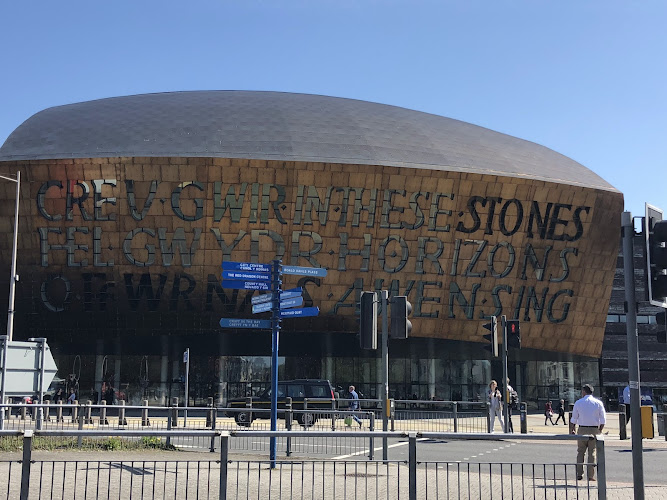
Located in Cardiff Bay, the Centre was built to be more than a performance venue. It was designed as a home for Welsh culture in all its forms, from world-class opera productions to bold new writing and experimental music. And you feel that ambition in the architecture. The copper-toned exterior, etched with poetic text in both Welsh and English, catches the light differently depending on the weather. On a grey day, it looks thoughtful and grounded. When the sun breaks through, it glows, almost defiant. I remember standing outside once, coffee in hand, thinking it looked like a ship ready to sail, which felt right given its waterfront setting.
Inside, the atmosphere is welcoming rather than stuffy. This isn’t a venue where you feel underdressed or out of place if you wander in during the day. There are bars, casual dining spots, and open public spaces where people meet, work, or just sit and watch the world go by. Performances range from major touring productions to homegrown Welsh work, and that mix keeps things interesting. One night you might see a grand opera, and the next, a contemporary dance piece that leaves you slightly baffled but oddly moved. And that’s part of the charm.
For travelers, the Wales Millennium Centre doubles as both an attraction and an experience. Even if you don’t attend a show, walking through the building gives you a feel for modern Wales: confident, inclusive, and creative. But honestly, skipping a performance would be missing the point. This place was built for the stage, and it comes alive when the lights dim and the audience settles in.
Key Features
- Multiple performance spaces that host theatre, opera, ballet, live music, and experimental productions throughout the year.
- Striking architecture with bilingual inscriptions that reflect Welsh identity and cultural pride.
- Onsite bars and dining options that make it easy to turn a show into a full evening out.
- Wheelchair-accessible facilities including entrances, seating, restrooms, and parking, thoughtfully integrated rather than tacked on.
- LGBTQ+ friendly environment with a clear commitment to inclusivity and safety, noticeable in both programming and atmosphere.
- Family-friendly amenities such as changing tables, making it easier for parents traveling with young children.
- Central role in Welsh performing arts, serving as a base for major national companies as well as emerging talent.
Best Time to Visit
The Wales Millennium Centre runs year-round, so technically there’s no bad time to visit. But the experience shifts with the seasons, and that’s worth thinking about when planning a trip. Autumn and spring tend to be particularly rewarding. The performance calendar is usually packed, and the weather makes strolling around Cardiff Bay before a show pleasant rather than a test of endurance. And yes, Welsh weather has opinions of its own.
Summer brings a different vibe. There’s often a buzz around the Bay, with outdoor events and longer evenings that pair nicely with late performances. It’s a great time if you like combining culture with casual wandering and people-watching. Winter, on the other hand, feels more intimate. There’s something comforting about ducking inside on a cold evening, grabbing a drink, and settling in for a powerful piece of theatre while the wind does its thing outside. I once saw a ballet here in December, and the contrast between the warm glow inside and the dark, chilly waterfront outside made the whole night feel cinematic.
If the goal is to see a specific show or company, timing matters less than booking ahead. Popular productions do sell out, sometimes quickly. Midweek performances can be a smart choice for travelers with flexible schedules, as they’re often less crowded and occasionally easier on the wallet.
How to Get There
Getting to the Wales Millennium Centre is refreshingly straightforward, even for visitors unfamiliar with Cardiff. The building sits in Cardiff Bay, a lively area that’s well connected to the city centre. Many travelers choose to walk, especially if the weather cooperates. The route offers a gradual shift from the bustle of the city to the open feel of the waterfront, which builds anticipation nicely.
Public transport is reliable and easy to navigate. Trains and buses run frequently to Cardiff Bay, and the journey itself is short. For those driving, there are paid parking garages nearby, which removes the usual stress of circling endlessly for a space. Accessibility has clearly been considered in the planning here. Step-free routes, clear signage, and helpful staff make arrival smooth for visitors with mobility needs.
And if you’re like me and tend to arrive earlier than necessary, that’s not a problem. The surrounding area offers plenty to do. You can grab a bite, wander along the water, or simply sit inside the Centre with a drink and soak up the atmosphere. Arriving early doesn’t feel like wasted time here; it feels like part of the experience.
Tips for Visiting
First and foremost, book tickets in advance whenever possible. While last-minute availability does happen, relying on it can be risky, especially during peak seasons. Planning ahead also gives you more choice in seating, which matters because different seats genuinely offer different experiences depending on the production.
Dress codes are relaxed. You’ll see everything from jeans and trainers to sharp jackets and dresses, often in the same row. Wear what makes you comfortable, but maybe bring a light layer. Large performance spaces can feel cool once you’re seated for a while, and it’s a small thing that can make a big difference.
Take time to explore the building itself. There are quiet corners, balconies, and open areas that many visitors rush past. I’ve had some of my best moments here not during a show, but in those in-between spaces, overhearing snippets of excited conversations or watching performers slip quietly through side corridors. It reminds you that this is a working arts hub, not just a tourist stop.
If traveling with children, check the programme carefully. While the Centre is family-friendly, not every production is aimed at younger audiences. That said, when there is a show designed for kids or families, it’s usually done with care and imagination rather than talking down to its audience.
Accessibility services are strong, but it’s still wise to mention specific needs when booking tickets. Staff are generally proactive and genuinely helpful, but advance notice ensures everything runs smoothly on the day. The same goes for anyone attending with a large group or celebrating a special occasion. A quick heads-up can make the experience feel more personal.
Finally, don’t rush off the moment the applause ends. Stay for a drink, take a slow walk outside, or just linger in the foyer. Some of the best conversations and reflections happen in that post-show glow, when everyone is processing what they’ve just seen. The Wales Millennium Centre rewards those who give it time. And honestly, isn’t that what travel is about anyway?
Key Features
- Key Features
- Best Time to Visit
- How to Get There
- Tips for Visiting
More Details
Updated December 31, 2025
Table of Contents
Description
The Wales Millennium Centre stands as one of those buildings that travelers remember long after the curtain falls. It’s a modern cultural landmark devoted to theatre, opera, ballet, contemporary dance, and live music, but calling it just a theatre feels underselling it a bit. This place hums with purpose. From the moment visitors step inside, there’s a sense that something important is always about to happen, even on a quiet afternoon when rehearsals echo faintly through the corridors.
Located in Cardiff Bay, the Centre was built to be more than a performance venue. It was designed as a home for Welsh culture in all its forms, from world-class opera productions to bold new writing and experimental music. And you feel that ambition in the architecture. The copper-toned exterior, etched with poetic text in both Welsh and English, catches the light differently depending on the weather. On a grey day, it looks thoughtful and grounded. When the sun breaks through, it glows, almost defiant. I remember standing outside once, coffee in hand, thinking it looked like a ship ready to sail, which felt right given its waterfront setting.
Inside, the atmosphere is welcoming rather than stuffy. This isn’t a venue where you feel underdressed or out of place if you wander in during the day. There are bars, casual dining spots, and open public spaces where people meet, work, or just sit and watch the world go by. Performances range from major touring productions to homegrown Welsh work, and that mix keeps things interesting. One night you might see a grand opera, and the next, a contemporary dance piece that leaves you slightly baffled but oddly moved. And that’s part of the charm.
For travelers, the Wales Millennium Centre doubles as both an attraction and an experience. Even if you don’t attend a show, walking through the building gives you a feel for modern Wales: confident, inclusive, and creative. But honestly, skipping a performance would be missing the point. This place was built for the stage, and it comes alive when the lights dim and the audience settles in.
Key Features
- Multiple performance spaces that host theatre, opera, ballet, live music, and experimental productions throughout the year.
- Striking architecture with bilingual inscriptions that reflect Welsh identity and cultural pride.
- Onsite bars and dining options that make it easy to turn a show into a full evening out.
- Wheelchair-accessible facilities including entrances, seating, restrooms, and parking, thoughtfully integrated rather than tacked on.
- LGBTQ+ friendly environment with a clear commitment to inclusivity and safety, noticeable in both programming and atmosphere.
- Family-friendly amenities such as changing tables, making it easier for parents traveling with young children.
- Central role in Welsh performing arts, serving as a base for major national companies as well as emerging talent.
Best Time to Visit
The Wales Millennium Centre runs year-round, so technically there’s no bad time to visit. But the experience shifts with the seasons, and that’s worth thinking about when planning a trip. Autumn and spring tend to be particularly rewarding. The performance calendar is usually packed, and the weather makes strolling around Cardiff Bay before a show pleasant rather than a test of endurance. And yes, Welsh weather has opinions of its own.
Summer brings a different vibe. There’s often a buzz around the Bay, with outdoor events and longer evenings that pair nicely with late performances. It’s a great time if you like combining culture with casual wandering and people-watching. Winter, on the other hand, feels more intimate. There’s something comforting about ducking inside on a cold evening, grabbing a drink, and settling in for a powerful piece of theatre while the wind does its thing outside. I once saw a ballet here in December, and the contrast between the warm glow inside and the dark, chilly waterfront outside made the whole night feel cinematic.
If the goal is to see a specific show or company, timing matters less than booking ahead. Popular productions do sell out, sometimes quickly. Midweek performances can be a smart choice for travelers with flexible schedules, as they’re often less crowded and occasionally easier on the wallet.
How to Get There
Getting to the Wales Millennium Centre is refreshingly straightforward, even for visitors unfamiliar with Cardiff. The building sits in Cardiff Bay, a lively area that’s well connected to the city centre. Many travelers choose to walk, especially if the weather cooperates. The route offers a gradual shift from the bustle of the city to the open feel of the waterfront, which builds anticipation nicely.
Public transport is reliable and easy to navigate. Trains and buses run frequently to Cardiff Bay, and the journey itself is short. For those driving, there are paid parking garages nearby, which removes the usual stress of circling endlessly for a space. Accessibility has clearly been considered in the planning here. Step-free routes, clear signage, and helpful staff make arrival smooth for visitors with mobility needs.
And if you’re like me and tend to arrive earlier than necessary, that’s not a problem. The surrounding area offers plenty to do. You can grab a bite, wander along the water, or simply sit inside the Centre with a drink and soak up the atmosphere. Arriving early doesn’t feel like wasted time here; it feels like part of the experience.
Tips for Visiting
First and foremost, book tickets in advance whenever possible. While last-minute availability does happen, relying on it can be risky, especially during peak seasons. Planning ahead also gives you more choice in seating, which matters because different seats genuinely offer different experiences depending on the production.
Dress codes are relaxed. You’ll see everything from jeans and trainers to sharp jackets and dresses, often in the same row. Wear what makes you comfortable, but maybe bring a light layer. Large performance spaces can feel cool once you’re seated for a while, and it’s a small thing that can make a big difference.
Take time to explore the building itself. There are quiet corners, balconies, and open areas that many visitors rush past. I’ve had some of my best moments here not during a show, but in those in-between spaces, overhearing snippets of excited conversations or watching performers slip quietly through side corridors. It reminds you that this is a working arts hub, not just a tourist stop.
If traveling with children, check the programme carefully. While the Centre is family-friendly, not every production is aimed at younger audiences. That said, when there is a show designed for kids or families, it’s usually done with care and imagination rather than talking down to its audience.
Accessibility services are strong, but it’s still wise to mention specific needs when booking tickets. Staff are generally proactive and genuinely helpful, but advance notice ensures everything runs smoothly on the day. The same goes for anyone attending with a large group or celebrating a special occasion. A quick heads-up can make the experience feel more personal.
Finally, don’t rush off the moment the applause ends. Stay for a drink, take a slow walk outside, or just linger in the foyer. Some of the best conversations and reflections happen in that post-show glow, when everyone is processing what they’ve just seen. The Wales Millennium Centre rewards those who give it time. And honestly, isn’t that what travel is about anyway?
Key Highlights
- Key Features
- Best Time to Visit
- How to Get There
- Tips for Visiting
Location
Places to Stay Near Wales Millennium Centre
Find and Book a Tour
Explore More Travel Guides
No reviews found! Be the first to review!
Traveler Reviews for Wales Millennium Centre
There are no reviews yet. Be the first one to write one.
Have you visited Wales Millennium Centre? Help other travelers by sharing your review.
You Might Also Like

Gorsedd Gardens

Cardiff Castle
Creigiau
Find Accommodations Nearby
Recommended Tours & Activities
Visitor Reviews
There are no reviews yet. Be the first one to write one.
Share Your Experience
Have you visited Wales Millennium Centre? Help other travelers by leaving a review.