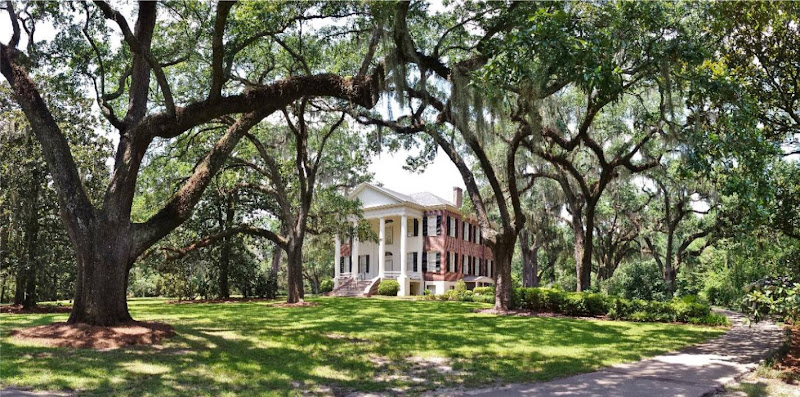
Its centerpiece, the Call-Collins House, dates to about 1840 and was built by enslaved craftspeople — a fact the site confronts directly. The museum’s mission is clear and, honestly, rare: preserve and interpret the house, the surrounding acreage, and its collections to spark public dialogue about slavery, civil rights, and American history. That frankness shapes the visitor experience from the very first step onto the grounds.
As a historic house museum and designated historical landmark, The Grove is both a place to see period rooms and artifacts and a place to sit with difficult questions. The house served as the private home for several generations of the Call and Collins families, including LeRoy and Mary Call Collins, and the interpretation carefully weaves those family stories with the lives of the people who built and maintained the house. The narrative doesn’t shy away from uncomfortable truths — it leans into them. And visitors tend to leave thinking, not just having skimmed a surface.
Operationally, the house and grounds welcome guests Wednesday through Saturday, 10:00 a.m. to 4:00 p.m., with free guided tours on the hour during open hours; the last tour starts at 3:00 p.m. Those tours are a pillar of the site’s educational work — concise, thoughtful, and intentionally aimed at placing the local in the wider sweep of American history. On a practical note, six hourly tours a day means a steady rhythm: arrive a little before an hour and there’s a solid chance to join a guided interpretation without a long wait.
Visitors who are particularly interested in civil rights scholarship will find the Grove’s focus rewarding. The museum connects the dots between antebellum labor, Reconstruction and Jim Crow-era shifts, and the mid-20th-century civic actions that reshaped Florida. The way the guides link personal family letters, household goods, and architectural details back to larger political and social changes is the kind of interpretation that makes history feel alive rather than museum-dry. It’s interpretive work that matters — and yes, the curators do a good job at balancing nuance and accessibility.
Beyond the house itself, The Grove sits on grounds that invite slower moments: a place to pause after a tour and let questions settle. The acreage is not just background scenery; it’s part of the story. Grounds preserves the sense of place that helps visitors imagine the rhythms of daily life in the 19th and 20th centuries. For those who love photography, the exterior lines of the house, period outbuildings, mature trees, and the quiet paths offer excellent framing. And for families, there’s room to move around so kids can be curious without being strictly museum-quiet.
Accessibility and visitor comfort were clearly considered in how the site presents itself. The Grove provides a wheelchair-accessible entrance, accessible parking, and a wheelchair-accessible restroom. There’s also a gender-neutral restroom available. Those practicalities make a difference, especially for travelers who rely on accessible facilities. On-site parking is available, which is a convenience many travelers appreciate in a city center context — no circling the block hunting for a space.
What many travelers don’t realize at first glance is the dual nature of the site: it’s both intimate and civic. On the one hand, it’s a preserved home with personal artifacts and family stories. On the other, it’s a public institution that stages programs, school visits, and community conversations about civil rights and historical memory. That means a single visit can be a quiet personal encounter with history or part of a larger community event if one times the trip right. If there’s an exhibit, lecture, or anniversary program happening, it can shift the vibe from contemplative to communal in a heartbeat.
One subtle but important thing: the Grove’s interpretation acknowledges how enslaved craftsmen shaped the physical house. Architectural details, joinery, and the building’s layout are used as tangible entry points into conversations about labor, skill, and agency. That detail-oriented approach makes the experience richer; it’s not just a house with period furniture — it’s a building that bears the fingerprints of the people whose names rarely appear in the official record. That focus elevates The Grove from being merely a preserved mansion to being a site of restorative storytelling.
For history buffs who like timelines and context, The Grove does a nice job tying local chapters to national trends: Florida politics, the governorship of LeRoy Collins, shifting labor systems, and the long civil rights movement. The Collins family’s role in the mid-20th century — and LeRoy Collins’ prominence in Florida history — provides a useful hinge for discussions that move from family biography to state and national policy. But the museum avoids turning the house into a shrine; instead, it treats the family history as material to be interrogated alongside broader social questions.
Families travel here and generally find the site surprisingly kid-friendly. The museum doesn’t dumb things down; it frames questions in ways children can understand and offers tours that are short enough to hold attention while still substantive. Parents who worry about kids at historic houses will like that there’s space to move and staff who are used to guiding multi-generational groups. And because admission to the guided tours is free, it’s an easy addition to a day in Tallahassee without breaking a travel budget.
Practical visitors’ notes often appreciated by savvy travelers: plan to spend about 45 minutes to 90 minutes for a solid visit — long enough to take a guided tour, wander the immediate grounds, and read a couple of exhibits or interpretive panels. Those who want a deeper dive — researchers, students, or local history nerds — can arrange for longer visits or look for special programs. The museum’s collections include household objects, archival materials, and photographs that researchers sometimes request for study, so it’s worth enquiring if you have a particular research interest.
There are also quieter, less advertised moments that make a visit memorable. On weekday afternoons when the site is less busy, the house can feel almost theatrical — sunlight slanting through sash windows, a docent pointing to a seam in a floorboard where a craftsman left a mark decades ago. Those small, tactile details matter. They transform a static house into a conversation across time. That’s exactly the kind of experience the curators aim for: small moments that nudge visitors toward bigger questions.
If someone pressed for a short list of reasons to visit, it would probably go something like this: The Grove offers candid interpretation about slavery and civil rights, it’s anchored by an authentic antebellum house built by enslaved hands, guided tours are free and regularly scheduled, the site connects local family history to statewide and national narratives, and practical accessibility features are in place — inclusive design matters. Those aren’t marketing lines; they’re plain facts that, taken together, make The Grove a meaningful stop in Tallahassee’s museum landscape.
One last point often overlooked in promotional copy: the emotional labor of the place. Interpretive staff and docents carry the heavy task of explaining painful histories while keeping tours respectful and informative. The atmosphere is intentionally reflective rather than performative. For visitors who want to be moved but also to think rigorously, The Grove can be one of the more unexpectedly impactful stops in Tallahassee. It doesn’t provide easy answers, but it gives you the context and the artifacts to form better questions.
For anyone mapping out a history-focused itinerary in Florida, The Grove Museum pairs especially well with other institutional sites in Tallahassee: the state capitol museums, civil rights landmarks, and nearby historic districts. Taken together they show the layered history of a Southern capital — politics, power, and people — but the Grove’s particular strength is its foregrounding of both the Call-Collins family and the enslaved craftsmen whose work underwrote the household. That balance of personal and structural history is where the museum earns its keep.
So yes, plan a stop. Bring curiosity and a little time. Expect to leave with an expanded view of how houses can be archives, and how personal things — letters, furniture, floorboards — can become tools for reckoning. The Grove isn’t flashy. It’s purposeful. And for those who travel for understanding rather than just sightseeing, it’s the kind of place that lingers after the trip ends.
 Real Journey Travels