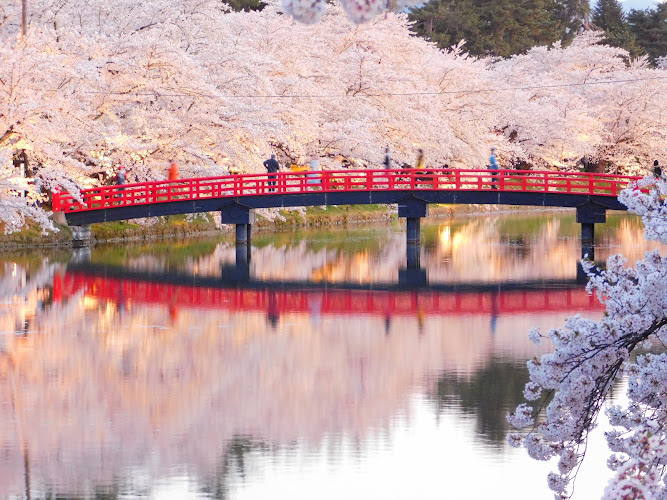
It’s not one of those massive, steel-and-concrete giants that scream for attention. Instead, it whispers. It invites you in gently, with its soft red hue reflecting on the calm waters of the west moat surrounding Hirosaki Castle. Locals and travelers alike find themselves lingering here longer than expected, often just standing still, watching the petals drift by in spring or the snow settle in winter. It’s a place that feels alive, yet timeless.
The bridge itself is part of Hirosaki Park, one of Japan’s most beloved cherry blossom destinations. During the sakura season, Shunyō-bashi becomes the star of countless photographs. The way the cherry trees arch over the red bridge, creating a tunnel of pink blossoms, is something that almost feels too perfect to be real. And yet, it is. I remember the first time I saw it — I was caught off guard by how cinematic it looked. It felt like walking through a painting, one where every detail had been brushed with care and intention.
But this bridge isn’t just about beauty. It’s a piece of history, part of the landscape surrounding Hirosaki Castle, which dates back to the early 1600s. You can almost sense the centuries of footsteps that have crossed it — samurai, travelers, poets, and now, visitors from all over the world. There’s a certain serenity here that’s hard to find elsewhere, maybe because it’s not trying too hard to impress. It just is — graceful, enduring, and quietly captivating.
Even outside the cherry blossom season, Shunyō-bashi holds its charm. In autumn, the fiery maples frame the bridge in rich reds and golds. Come winter, a blanket of snow transforms it into a serene monochrome landscape, while in summer, the greenery around the moat makes it feel like a hidden oasis. It’s one of those rare spots that never looks the same twice, and that’s part of its magic.
Key Features
What I love most here is the way the bridge interacts with its environment. It’s not dominating the scene; it’s part of it. The reflection of the red arch on the water, the gentle rustle of the trees, the occasional sound of a camera shutter — it’s all part of the rhythm of the place. If you’re the kind of traveler who appreciates quiet beauty over crowds and chaos, this spot will speak to you deeply.
Best Time to Visit
If you’re chasing that postcard-perfect view, spring — late April to early May — is the golden window. That’s when the cherry blossoms burst into full bloom, and the entire park transforms into a sea of pink. The evenings are especially magical when the trees and bridge are illuminated, creating reflections on the water that look almost surreal. It’s crowded, yes, but the energy is contagious. Everyone’s smiling, cameras clicking, children laughing — it’s a celebration of fleeting beauty.
But honestly, I’d argue that autumn might be even more underrated. The crowds thin out, the air turns crisp, and the maples around the moat ignite in shades of crimson and amber. It’s quieter, more contemplative. I once visited in late October, and the way the fallen leaves floated down the moat was mesmerizing — like nature’s confetti bidding farewell to the season.
Winter, too, has its own charm. The bridge covered in snow feels like a scene from an old Japanese print. You’ll find fewer tourists, just the sound of your footsteps crunching on snow and the occasional crow calling in the distance. It’s peaceful, almost meditative. Summer, while lush and green, can be humid, but if you love vibrant foliage and warm evenings, it’s still worth it.
How to Get There
Getting to Shunyō-bashi Bridge is fairly straightforward, especially if you’re already planning a visit to Hirosaki Castle. The city itself is in Aomori Prefecture, and the easiest way to reach it is by taking the Shinkansen (bullet train) to Shin-Aomori Station, then transferring to a local train to Hirosaki Station. From there, Hirosaki Park is about a 15 to 20-minute walk or a short taxi ride away. If you’re traveling light, walking is the best option — the streets leading to the park are lined with charming shops and cafés that make the stroll more than worthwhile.
For those driving, parking is available near Hirosaki Park, though it can fill up quickly during cherry blossom season. I’d recommend arriving early in the morning, especially if you want to catch that soft morning light for photos. Public transportation is reliable, though, and the local buses also stop near the park’s entrances.
If you’re coming from Tokyo, the whole trip takes about four to five hours, depending on connections. It’s a bit of a journey, but the reward is immense. Northern Japan’s slower pace and natural beauty make it feel worlds away from the bustle of the capital. And once you’re standing on Shunyō-bashi, watching the reflection of Hirosaki Castle shimmer in the water, you’ll know the trip was worth every minute.
Tips for Visiting
Here’s the thing — Shunyō-bashi Bridge isn’t just a place to rush through for a photo. It’s one of those spots that rewards patience and presence. So, take your time. Sit by the moat. Watch the light change. You’ll notice details others might miss — the way the bridge’s red paint subtly darkens after rain, or how the petals gather in quiet corners of the water.
- Arrive early: Especially during cherry blossom season, mornings are your best bet for fewer crowds and softer light.
- Bring a camera or smartphone: You’ll want to capture the reflections and the play of colors — but don’t forget to put it down and just look, too.
- Wear comfortable shoes: The park is large, and you’ll likely end up exploring more than you planned.
- Visit the bridge at night: The illumination during sakura season is breathtaking — the red bridge glowing under a canopy of blossoms feels almost otherworldly.
- Pack a snack or drink: There are vendors nearby, but having something small lets you linger longer by the moat.
- Respect the space: It’s a place of quiet beauty, so keep noise low and avoid stepping into restricted areas for photos.
And one more thing — don’t rush off after seeing the bridge. Wander a bit. Explore the nearby gardens, the castle tower, or the small teahouses tucked away in the park. I once stumbled upon a local musician playing shamisen near the moat, and it turned an already beautiful afternoon into something unforgettable. That’s the kind of magic that happens here when you give yourself time to just be.
In the end, Shunyō-bashi Bridge isn’t just a structure. It’s an experience — a blend of history, art, and nature that feels deeply Japanese yet universally human. Whether you’re a photographer chasing the perfect shot, a history buff tracing the steps of the Edo era, or simply someone looking for a moment of quiet beauty, this bridge delivers. It doesn’t demand your attention; it earns it, gently, in the way only truly timeless places can.
 Real Journey Travels