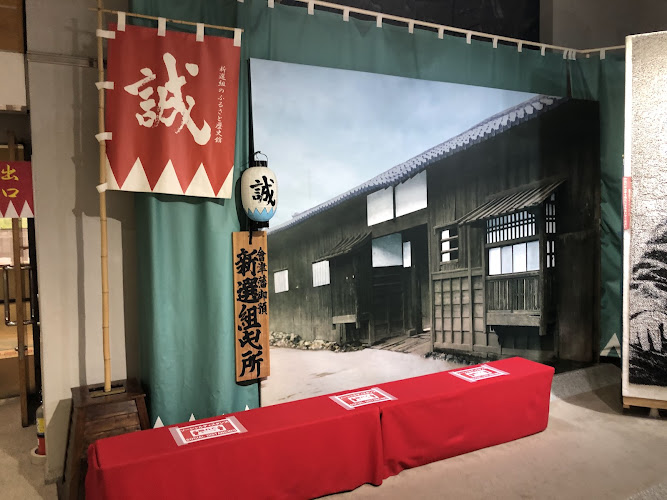
The Shinsengumi Hometown History Museum in Hino offers a concentrated introduction to the people, places, and political upheaval surrounding the Shinsengumi, the late-Edo policing force whose story has become one of Japan’s most enduring historical narratives. This is not a grand, object-heavy national institution; its appeal lies in the close local focus. Displays connect the group’s better-known Kyoto and Bakumatsu-era history with Hino, the western Tokyo city associated with several of its leading figures, especially Hijikata Toshizō.
For visitors interested in the Bakumatsu period, the museum is a useful corrective to the romantic image built by novels, television dramas, and popular culture. Its presentation places the Shinsengumi within the instability of the final Tokugawa years, when questions of imperial authority, foreign influence, and political allegiance reshaped Japan. Expect a calm, self-guided museum experience with interpretive material, historical documents and reproductions, and exhibits that encourage visitors to consider both the organization’s legend and its local roots.
Standout Highlights & Experience
The museum’s strongest quality is its sense of specificity. Rather than treating the Shinsengumi as distant icons, it uses Hino’s connection to the group to make the late-Edo story more tangible. Give yourself time to read the contextual panels; the value here is in following how individual lives, local networks, and national events intersected.
- Hijikata Toshizō context: Look for materials that explain the Hino-born vice commander’s role, leadership, and lasting place in Shinsengumi memory.
- Bakumatsu political background: Exhibits frame the group against the volatile final decades of the Tokugawa shogunate, adding essential context beyond heroic legend.
- Historical objects and documents: Period-related items, letters, official records, and reproductions help show how the organization was documented and remembered.
- Uniform and weapon-related details: Examine displays of clothing, sword fittings, and visual material that illuminate the practical image of the force.
- Maps and recreated settings: Reproduced battle maps and interior scenes help visitors picture movement, training, and everyday circumstances.
- Local-history perspective: The museum links Hino’s social and geographic setting to a story often told mainly through Kyoto and national politics.
Practical Visitor Strategy
| Factor | What to Know |
|---|
| Best Time to Go | A weekday or a quieter morning is a sensible choice for reading exhibits at an unhurried pace. Check the current sidebar information before setting out, as museum schedules can change. |
| Suggested Duration | Allow about 60 to 90 minutes for the main displays; history enthusiasts may want longer to study documents, maps, and explanatory material. |
| Crowd & Entry Tips | The museum is especially relevant to Shinsengumi fans, so plan patiently around weekends, school breaks, or commemorative interest. Confirm current admission arrangements and any temporary-display details before visiting. |
| Getting Oriented | Begin with the chronological background, then follow the Hino and Hijikata material. This sequence makes the artifacts and reconstructions easier to place in the wider Bakumatsu story. |
This is a museum best approached as a reading-and-looking experience, not a rapid photo stop. If you are unfamiliar with the period, first identify the broad arc: the decline of shogunal rule, the Shinsengumi’s policing role, and the transition into the Meiji era. Visitors already familiar with the names and battles will still benefit from the regional perspective, which gives Hino more than a supporting role in the narrative.
Honest Fit: Who Will Love It (and Trade-Offs)
The museum is a strong fit for Shinsengumi devotees, Japanese-history readers, repeat visitors to Tokyo seeking a destination beyond central districts, and travelers building a Bakumatsu-themed day around Hino’s related historical landscape. It also works well for families with older children who can engage with political context and document-based displays. Those expecting immersive theatrical staging, a vast collection of nationally famous masterpieces, or a high-energy attraction may find the scale modest; its rewards are concentration, interpretation, and atmosphere rather than spectacle. The visit is primarily indoors, but travelers with mobility needs, strollers, or particular access requirements should confirm current conditions directly before arrival. Pair it with time in Hino to appreciate the local setting, or fold it into a wider Tokyo itinerary focused on the transition from Edo to modern Japan.
 Real Journey Travels