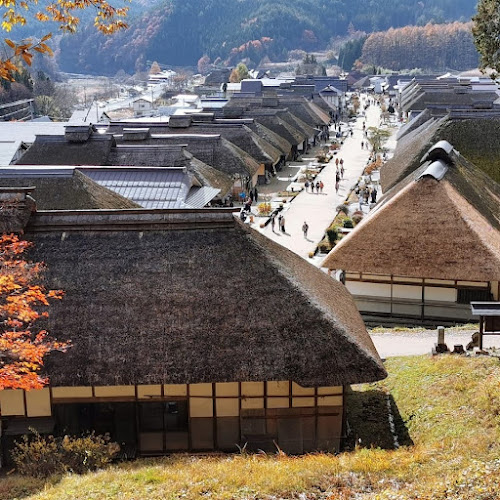
It’s a preserved Edo-period post town that once served weary travelers journeying between Aizu and Nikko. Today, it still looks remarkably similar to how it did hundreds of years ago—long rows of thatched-roof houses line a dirt street, smoke rising lazily from hearths, and the faint scent of soba noodles drifting through the air. You can walk through the main street and almost hear the footsteps of merchants and samurai who once passed through.
What makes Ouchi-juku so special isn’t just its postcard-perfect beauty (though, yes, it’s incredibly photogenic). It’s the feeling of authenticity that hangs in the air. The locals still live and work in these traditional buildings, selling handmade crafts, grilled river fish, and the famous negi soba—buckwheat noodles eaten with a long green onion instead of chopsticks. I tried it once, and let’s just say it’s trickier than it looks, but worth every bite. It’s not a tourist trap pretending to be old; it’s a living, breathing piece of Edo Japan.
Walking through the village, you’ll notice the absence of power lines and modern signage. It’s deliberate. The community has gone to great lengths to preserve the original look and feel. The result is a kind of quiet magic that’s hard to find in our fast-paced world. And while it can get busy on weekends, especially during festivals, there’s still a sense of calmness that lingers between the old wooden beams and thatched rooftops.
Best Time to Visit
Every season gives Ouchi-juku a different personality. Winter is pure magic—snow blankets the thatched roofs, and the entire village glows under soft lantern light during the Snow Festival. It’s cold, yes, but the kind of cold that makes you crave a bowl of steaming soba and a walk through the crisp air. Spring brings cherry blossoms along the hillsides, while summer is lush and green, with festivals adding a lively spark. Autumn, though, might be my favorite. The surrounding mountains turn fiery red and gold, and the air smells faintly of wood smoke and fallen leaves. If you love photography, late October to early November is unbeatable.
That said, weekdays are generally quieter. If you prefer to wander without the crowds, plan your trip midweek. And don’t worry too much about the weather—each season has its charm. Even a rainy day here feels poetic, with droplets sliding off the thick thatch and the sound of water trickling through the old gutters.
How to Get There
Getting to Ouchi-juku feels like part of the adventure. Most travelers start from Aizu-Wakamatsu or Tokyo. From Aizu-Wakamatsu Station, take the Aizu Railway to Yunokami Onsen Station—the closest stop. From there, it’s a short taxi or bus ride (about 15 minutes) to the village. If you’re driving, the roads are scenic and well-maintained, winding through mountain valleys and small towns that seem untouched by time. Free parking is available near the entrance, which is a nice bonus since many rural attractions in Japan charge for it.
For those who love road trips, I’d recommend renting a car and making Ouchi-juku part of a larger Fukushima itinerary. The drive itself is breathtaking, especially in autumn when the mountain roads are lined with crimson maples. Just remember to fill up on gas before you head into the countryside—stations can be sparse once you’re off the main highways.
Tips for Visiting
First off, come hungry. The food here is simple but soulful. Negi soba is a must-try, but don’t overlook the grilled ayu (sweetfish) or the handmade konjac snacks. Many shops also offer free samples, and the owners are usually happy to chat, even if your Japanese is a bit rusty. I once spent twenty minutes talking (well, gesturing mostly) with an elderly shopkeeper about how she still makes her miso the same way her grandmother did. Moments like that stick with you.
Bring cash—most shops and eateries don’t accept credit cards or mobile payments. It’s part of the charm, really, but also something you’ll want to plan for. There’s no ATM in the village, so withdraw yen before you arrive. Comfortable shoes are another must; the main street is unpaved, and while it’s not a tough walk, you’ll be happier without heels or slippery soles.
Photography lovers should visit early in the morning or late afternoon for the best light. The thatched roofs catch the sun beautifully, and the soft shadows add depth to your shots. Drones aren’t allowed, so keep your photography ground-level. And if you’re visiting in winter, dress warmly—the wind can be biting, especially in the evenings.
Respect the residents. Ouchi-juku isn’t a museum—it’s a living village. People still call these houses home. Avoid peeking into private spaces, and be mindful when taking photos. A friendly wave or bow goes a long way here.
Lastly, take your time. Don’t rush through. Sit by the stream, sip a cup of hot amazake, and watch the world slow down for a bit. That’s what Ouchi-juku is really about—reminding you that beauty doesn’t always need to be loud or modern. Sometimes, it’s just a quiet street, a bowl of noodles, and the whisper of history in the air.
Ouchi-juku might not have the flashiest attractions or the most luxurious amenities, but that’s exactly why it’s unforgettable. It’s a place that feels real, humble, and deeply human. Whether you’re a history buff, a photographer, or just someone looking to experience a different side of Japan, this little Edo-era gem will leave an impression that lingers long after you’ve left its dusty road behind.
 Real Journey Travels