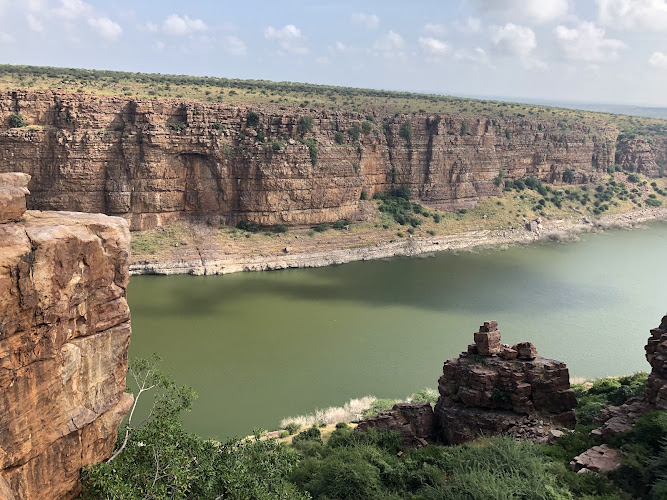
It’s not grand in the way of palaces or temples, but there’s something about its solid, timeworn structure that speaks volumes about the life that once pulsed through this ancient fort. Standing inside the massive stone walls, you can almost hear the echoes of centuries-old trade, the rustle of grain sacks, and the chatter of merchants who once made this place their hub. It’s humbling, really, to think that what we see as ruins today was once a heartbeat of survival and strategy.
Built during the reign of the Pemmasani Nayaks, the Granary was essentially the fort’s lifeline. Massive, rounded, and built entirely out of stone, it was designed to store grains that could feed soldiers and residents during long sieges. And when you stand before it, you can’t help but admire the sheer practicality of its design — thick walls to keep the interior cool, a dome-like roof that prevents moisture buildup, and small ventilation openings that still do their job centuries later. The architecture is a reminder that ancient builders were not just artists but engineers in their own right.
What I personally find fascinating is how simple it looks from the outside. You might walk past it thinking it’s just another stone structure — until you realize its purpose and how vital it was to Gandikota’s survival. There’s a quiet strength about it. It doesn’t boast or shine; it endures. And that’s what makes it beautiful. Families often wander around here, kids darting in and out of the shadows, their laughter bouncing off the stone walls — a cheerful contrast to the stillness of the place. It’s a spot where history feels alive, not locked away behind glass.
Key Features
What’s really cool is how the Granary blends into the landscape — it’s almost camouflaged against the rocky terrain. You might not notice it right away, but once you do, it’s impossible not to be drawn in. The structure doesn’t scream for attention, yet it holds a quiet magnetism. I remember standing there, hand brushing against the coarse stone, thinking about how many people must’ve done the same over the centuries. It’s the kind of place that makes you pause and imagine rather than just look.
Best Time to Visit
If you’re thinking of visiting, the best time is between October and February. The weather is mild, and the breeze that flows through the canyon nearby makes walking around the fort a lot more pleasant. Summers can be brutally hot — and trust me, exploring stone ruins under a blazing sun isn’t as romantic as it sounds. Early mornings or late afternoons are perfect if you want to avoid the heat and catch that golden light photographers dream about.
Winter mornings, especially, have a certain magic here. The mist hangs low over the fort, and the Granary looks almost mysterious against the backdrop of the canyon. It’s quiet, peaceful, and you can hear the sound of your footsteps echoing softly as you walk. Honestly, that’s the best time to just sit for a while and soak it all in.
How to Get There
Reaching Gandikota is fairly straightforward, though it takes a bit of planning. The nearest major town is Kadapa, which has good road and rail connectivity. From there, you can hire a cab or take a local bus to Gandikota. The drive itself is scenic — winding roads, rocky hills, and glimpses of rural Andhra life. If you’re driving from Bengaluru or Hyderabad, expect a road trip of about 5–6 hours, depending on your start point and stops along the way. It’s one of those drives where you’ll want to pull over occasionally just to take in the view.
Once you reach the fort area, the Granary is easy to find inside the complex. Signboards guide you through, but half the fun is wandering around and discovering things on your own. The fort isn’t overly commercialized yet, which gives it a raw, authentic charm. Just make sure to wear comfortable shoes — the terrain can be uneven, and you’ll be doing a fair bit of walking.
Tips for Visiting
Here’s the thing — Gandikota is not your typical touristy spot with fancy cafés and souvenir shops at every corner. It’s more of an explorer’s paradise. So, a little preparation goes a long way:
- Carry water and snacks: There are limited options inside the fort area, and you’ll definitely get thirsty walking around.
- Wear comfortable footwear: The stone paths can be uneven, and you’ll want to climb around a bit to get the best views.
- Start early: The morning light makes the fort and the Granary look stunning, plus it’s cooler and less crowded.
- Bring a camera: The textures, shadows, and play of light on stone are a photographer’s dream.
- Respect the site: It’s a historical monument, so avoid touching or climbing on delicate parts of the structure.
- Stay nearby: If you can, spend a night in Gandikota. Watching the sunset over the gorge and the fort bathed in twilight is an experience you won’t forget.
And here’s a personal tip — take a moment to just stand inside the Granary and listen. It’s quiet, sure, but there’s a kind of hum in the air, a low resonance that feels like the past breathing through the stones. Maybe it’s just the wind, or maybe it’s something more. Either way, it’s worth pausing for.
Travelers often focus on the canyon view (and it’s spectacular, no doubt), but the Granary offers a different kind of awe. It’s not about the view; it’s about the feeling. The sense of continuity, of human hands shaping something meant to last. You realize that history isn’t just grand battles or royal stories — it’s also storage rooms, grain sacks, and the quiet determination to survive.
So if you ever find yourself wandering through Gandikota Fort, don’t rush past the Granary. Step inside, breathe in the cool air, and imagine the hum of a fort alive with purpose. It’s a simple structure, but it holds the weight of centuries — and that’s something worth experiencing for yourself.
 Real Journey Travels