
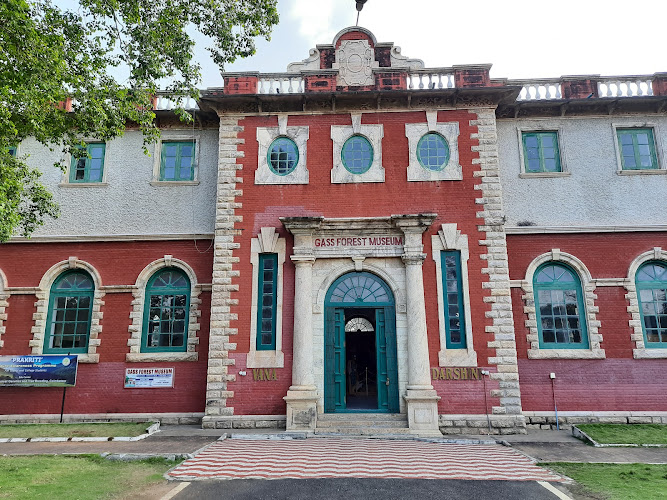
Gass Forest Museum
About Gass Forest Museum
Description
The Gass Forest Museum in Coimbatore is one of those places that quietly surprises you. It doesn’t shout for attention like some of the bigger attractions in Tamil Nadu, but once you walk through its doors, you realize it’s a real treasure chest of India’s forest heritage. Established way back in 1902, this natural history museum has been around for more than a century, and it still manages to feel relevant, fascinating, and oddly personal. The museum sits under the wings of the Institute of Forest Genetics and Tree Breeding, which already tells you it’s not just about pretty displays—it’s about science, conservation, and stories of the land.
Inside, there are over 4,000 exhibits ranging from wildlife specimens to timber samples, old forestry tools, and even geological finds. It’s the kind of place where you can stand in front of a massive stuffed bison one moment and then be marveling at delicate butterflies the next. I remember thinking it felt like stepping into a time capsule, where past forest officers and naturalists left behind their passion for nature in the form of preserved artifacts. And yes, some of the taxidermy might feel a little old-school, but that’s part of its charm—it’s raw, it’s real, and it tells stories in a way slick digital screens never quite can.
Of course, not everyone loves it equally. Some visitors might find the exhibits a bit dated or the building less flashy compared to modern museums. But honestly, if you’re the sort who enjoys authenticity and a slightly quirky vibe, this place will win you over. Families often bring their kids here, and you can see little ones gazing wide-eyed at skeletons of wild animals or the cross-sections of towering trees. It’s educational without being dry, and that’s a rare thing.
Key Features
- Over 4,000 exhibits covering wildlife, forestry, geology, and botany
- Rare taxidermy specimens including tigers, elephants, and bison
- Detailed timber and wood collections showcasing India’s forest wealth
- Fossils, skeletons, and geological samples that tell stories of the Earth’s history
- Historic forestry tools and artifacts from colonial times
- Spacious galleries perfect for slow exploration
- Good for kids with plenty of engaging, visual displays
- Free parking available for visitors
- Restrooms on-site, though no restaurant facilities
Best Time to Visit
If you’re wondering when to plan your trip, the cooler months from November to February make wandering around Coimbatore in general a lot more pleasant. The museum itself is indoors, so technically you can visit any time of the year without worrying about the weather. But here’s the thing—pairing your museum visit with a stroll around the leafy neighborhoods nearby is much nicer when the sun isn’t blazing down on you. Weekdays are quieter, and you’ll get more space to yourself to really linger at the exhibits. Weekends, especially afternoons, can get a bit busier with families and school groups. Personally, I like mornings—it feels calmer, and the natural light streaming in makes the displays look even more striking.
How to Get There
Reaching the Gass Forest Museum is pretty straightforward if you’re already in Coimbatore. The city is well-connected by road, rail, and air. From the airport, it’s about a 30-minute drive, give or take traffic. If you’re coming by train, Coimbatore Junction is the closest major station, and from there, you can grab a cab or even an auto-rickshaw to the museum. Public buses also pass through the area, but honestly, if you’re traveling with family or don’t know the routes well, a taxi or ride-hailing app will save you some hassle. Parking isn’t a problem here, which is a relief in a busy city like Coimbatore.
One thing I noticed when I first visited is how easy it is to miss the entrance if you’re not paying attention—the signage isn’t huge. So, keep an eye out as you approach, especially if you’re driving yourself. And if you’re the type who enjoys walking, the museum is in a part of town that’s leafy and pleasant enough to explore on foot.
Tips for Visiting
A few practical things can make your visit smoother and more enjoyable. First, don’t rush it. Give yourself at least an hour or two to wander around—there’s more to see than you might expect at first glance. If you’re traveling with kids, prepare them beforehand by telling them they’ll see animal skeletons and preserved specimens. It helps set the right mood so they don’t get spooked.
Photography is usually allowed, but it’s always best to double-check the rules once you’re inside. And while there’s no café or restaurant on-site, you’ll find plenty of eating options nearby in Coimbatore, so plan your meals accordingly. Carry a bottle of water, especially if you’re visiting during warmer months. The museum is well-maintained, but it’s not air-conditioned everywhere, so light clothing is your friend.
One small piece of advice from my own experience—don’t just focus on the big animals. Take your time with the smaller exhibits like the insect collections or the wood samples. They’re surprisingly fascinating once you slow down and really look. And if you’re a history buff, the old forestry tools and colonial-era artifacts are worth a closer glance—they offer a glimpse into how forest management was done more than a hundred years ago.
Finally, remember this isn’t a flashy, modern museum with interactive screens and high-tech displays. It’s more old-school, more grounded. Go in with that mindset, and you’ll walk away appreciating it for what it truly is—a living archive of India’s forests and the people who worked to preserve them.
Key Features
- Over 4,000 exhibits covering wildlife, forestry, geology, and botany
- Rare taxidermy specimens including tigers, elephants, and bison
- Detailed timber and wood collections showcasing India’s forest wealth
- Fossils, skeletons, and geological samples that tell stories of the Earth’s history
- Historic forestry tools and artifacts from colonial times
- Spacious galleries perfect for slow exploration
- Good for kids with plenty of engaging, visual displays
- Free parking available for visitors
More Details
Updated October 1, 2025
Table of Contents
Description
The Gass Forest Museum in Coimbatore is one of those places that quietly surprises you. It doesn’t shout for attention like some of the bigger attractions in Tamil Nadu, but once you walk through its doors, you realize it’s a real treasure chest of India’s forest heritage. Established way back in 1902, this natural history museum has been around for more than a century, and it still manages to feel relevant, fascinating, and oddly personal. The museum sits under the wings of the Institute of Forest Genetics and Tree Breeding, which already tells you it’s not just about pretty displays—it’s about science, conservation, and stories of the land.
Inside, there are over 4,000 exhibits ranging from wildlife specimens to timber samples, old forestry tools, and even geological finds. It’s the kind of place where you can stand in front of a massive stuffed bison one moment and then be marveling at delicate butterflies the next. I remember thinking it felt like stepping into a time capsule, where past forest officers and naturalists left behind their passion for nature in the form of preserved artifacts. And yes, some of the taxidermy might feel a little old-school, but that’s part of its charm—it’s raw, it’s real, and it tells stories in a way slick digital screens never quite can.
Of course, not everyone loves it equally. Some visitors might find the exhibits a bit dated or the building less flashy compared to modern museums. But honestly, if you’re the sort who enjoys authenticity and a slightly quirky vibe, this place will win you over. Families often bring their kids here, and you can see little ones gazing wide-eyed at skeletons of wild animals or the cross-sections of towering trees. It’s educational without being dry, and that’s a rare thing.
Key Features
- Over 4,000 exhibits covering wildlife, forestry, geology, and botany
- Rare taxidermy specimens including tigers, elephants, and bison
- Detailed timber and wood collections showcasing India’s forest wealth
- Fossils, skeletons, and geological samples that tell stories of the Earth’s history
- Historic forestry tools and artifacts from colonial times
- Spacious galleries perfect for slow exploration
- Good for kids with plenty of engaging, visual displays
- Free parking available for visitors
- Restrooms on-site, though no restaurant facilities
Best Time to Visit
If you’re wondering when to plan your trip, the cooler months from November to February make wandering around Coimbatore in general a lot more pleasant. The museum itself is indoors, so technically you can visit any time of the year without worrying about the weather. But here’s the thing—pairing your museum visit with a stroll around the leafy neighborhoods nearby is much nicer when the sun isn’t blazing down on you. Weekdays are quieter, and you’ll get more space to yourself to really linger at the exhibits. Weekends, especially afternoons, can get a bit busier with families and school groups. Personally, I like mornings—it feels calmer, and the natural light streaming in makes the displays look even more striking.
How to Get There
Reaching the Gass Forest Museum is pretty straightforward if you’re already in Coimbatore. The city is well-connected by road, rail, and air. From the airport, it’s about a 30-minute drive, give or take traffic. If you’re coming by train, Coimbatore Junction is the closest major station, and from there, you can grab a cab or even an auto-rickshaw to the museum. Public buses also pass through the area, but honestly, if you’re traveling with family or don’t know the routes well, a taxi or ride-hailing app will save you some hassle. Parking isn’t a problem here, which is a relief in a busy city like Coimbatore.
One thing I noticed when I first visited is how easy it is to miss the entrance if you’re not paying attention—the signage isn’t huge. So, keep an eye out as you approach, especially if you’re driving yourself. And if you’re the type who enjoys walking, the museum is in a part of town that’s leafy and pleasant enough to explore on foot.
Tips for Visiting
A few practical things can make your visit smoother and more enjoyable. First, don’t rush it. Give yourself at least an hour or two to wander around—there’s more to see than you might expect at first glance. If you’re traveling with kids, prepare them beforehand by telling them they’ll see animal skeletons and preserved specimens. It helps set the right mood so they don’t get spooked.
Photography is usually allowed, but it’s always best to double-check the rules once you’re inside. And while there’s no café or restaurant on-site, you’ll find plenty of eating options nearby in Coimbatore, so plan your meals accordingly. Carry a bottle of water, especially if you’re visiting during warmer months. The museum is well-maintained, but it’s not air-conditioned everywhere, so light clothing is your friend.
One small piece of advice from my own experience—don’t just focus on the big animals. Take your time with the smaller exhibits like the insect collections or the wood samples. They’re surprisingly fascinating once you slow down and really look. And if you’re a history buff, the old forestry tools and colonial-era artifacts are worth a closer glance—they offer a glimpse into how forest management was done more than a hundred years ago.
Finally, remember this isn’t a flashy, modern museum with interactive screens and high-tech displays. It’s more old-school, more grounded. Go in with that mindset, and you’ll walk away appreciating it for what it truly is—a living archive of India’s forests and the people who worked to preserve them.
Key Highlights
- Over 4,000 exhibits covering wildlife, forestry, geology, and botany
- Rare taxidermy specimens including tigers, elephants, and bison
- Detailed timber and wood collections showcasing India’s forest wealth
- Fossils, skeletons, and geological samples that tell stories of the Earth’s history
- Historic forestry tools and artifacts from colonial times
- Spacious galleries perfect for slow exploration
- Good for kids with plenty of engaging, visual displays
- Free parking available for visitors
Location
Places to Stay Near Gass Forest Museum
Find and Book a Tour
Explore More Travel Guides
No reviews found! Be the first to review!
Traveler Reviews for Gass Forest Museum
There are no reviews yet. Be the first one to write one.
Have you visited Gass Forest Museum? Help other travelers by sharing your review.
You Might Also Like

Coimbatore

VOC Park
The Orb
Find Accommodations Nearby
Recommended Tours & Activities
Visitor Reviews
There are no reviews yet. Be the first one to write one.
Share Your Experience
Have you visited Gass Forest Museum? Help other travelers by leaving a review.