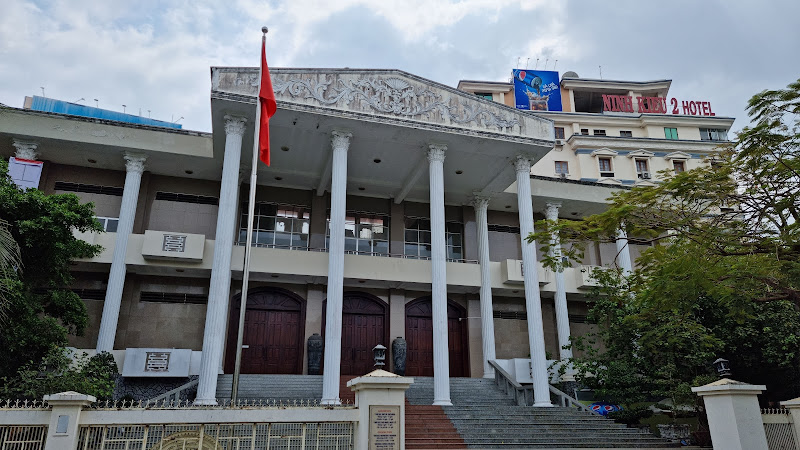
More than a building full of objects, it reads like a neighborhood memory bank—panels, artifacts, dioramas and photos that try to explain how people in the delta lived, fought, traded and celebrated across generations. It emphasizes the Cần Thơ resistance and regional history, but it also widens the lens to include ethnic diversity, river life, agricultural practices, and daily routines that shaped this corner of southern Vietnam.
On entering, visitors encounter a sequence of displays arranged roughly by theme rather than a strict chronological museum textbook. That layout suits the museum’s purpose: it invites exploration rather than robotic consumption. One section focuses on the resistance movements and conflicts that affected the delta—framed not as slogans but through letters, uniforms, maps and oral-history snippets that make the past feel tangible. Another area documents the trade and transport economies of the Mekong, with models of junks and sampans and explanatory panels about rice, fishing, and markets that still pulse in people’s lives today.
The Can Tho Museum does a solid job of balancing national history and intimate local stories. The exhibits include Khmer and Chinese influences on the region, showing how multiple communities lived side by side along waterways and markets. There are artifacts—tools, household items, religious paraphernalia—that may seem simple at first glance but actually open small windows onto how time, climate and commerce shaped the delta way of life. This is not a museum of dramatic objects so much as a museum of context: understanding why certain items mattered to families, to villages, to trade networks.
For intellectually curious travelers who like their museum visits to do a bit of the heavy lifting, the venue is quietly satisfying. The labels are informative, and the curatorial voice often adopts an educational tone that privileges explanation over spectacle. Visitors should not expect interactive multimedia extravaganzas; instead the museum offers solid, readable content and carefully preserved artifacts that reward a slower pace. That said, some signage is in Vietnamese first, with partial English translations—so those wanting deeper detail may benefit from a guide or a local friend to point out nuances that the translations compress.
Accessibility is handled thoughtfully for a provincial museum: there is a wheelchair accessible parking lot and restroom facilities, which matters more than one might assume when touring historical sites in a humid delta climate. There is no onsite restaurant, so the practical traveler would do well to plan a nearby meal either before or after the visit. Onsite services are available, and families will find the museum to be kid-friendly: displays are tangible enough for children to grasp basic ideas about river economies and traditional crafts, while the darker, more complex historical exhibits provide older kids with material worth discussing.
A fair take on the museum is this: it is earnest and educational, sometimes reflective of a state-curated historical perspective, but still rich in local color and documents. The tone of the exhibits tends toward respectful commemoration, especially in sections covering resistance and wartime experiences. That perspective might not answer every outsider’s questions about contested histories, but it makes the museum a valuable starting point for anyone hoping to understand how Cần Thơ and the wider Mekong Delta were shaped by both global forces and small, local decisions.
Practical details subtly embedded into the museum’s design make visits comfortable. The building is arranged with wide corridors and well-lit galleries, and the display areas offer places to pause and read—handy for the slower, contemplative visitor. Photography is usually allowed for personal use; however, the lighting and exhibit glass mean professional photographers will have to negotiate reflections. The collections are not vast in the blockbuster-museum sense, but they are curated with intention: ethnographic items, historical documents, agricultural tools, and visual displays that explain seasonal cycles of rice planting and the crucial role of waterways across livelihoods.
For travelers trying to plan their day, the museum pairs nicely with a gentle walk along riverfront areas or a stop at the nearby markets where the delta still conducts a living form of the commerce described inside. That pairing is one of the museum’s subtle strengths: it doesn’t exist in isolation. The exhibits make more sense when followed by a visit to the water, the boats and the floating markets that put the museum’s labels into motion. Personal anecdote: one visitor—this writer, mixing curiosity with jet-lag—remembered reading about the daily rituals of a boat family, then stepping outside and spotting a similar family mending nets by the quay. The moment made the museum feel less like a classroom and more like a guidebook come to life.
There are displays that tend to surprise even repeat visitors: a surprisingly detailed section on Khmer-influenced religious practices, for example, or local accounts of trade routes that crisscrossed the delta well before modern roads. These are the kinds of finds that enrich a traveler’s understanding beyond the clichés—yes, the Mekong Delta is known for rice and floating markets, but the museum shows how those facts are entangled with migrations, colonial-era policies, and 20th-century conflicts. It challenges simple narratives and invites a more nuanced appreciation.
Many travelers will find the museum especially rewarding if approached with questions rather than expectations. Ask about the labels that treat local lives as the core subject. Wonder why certain artifacts were preserved and others not. Notice the repeated attention to river systems—this is where the museum does its best work, connecting daily life, ecology, and economy. The displays about agricultural cycles provide a kind of crash course in why the delta has shaped Vietnamese social and political life in very particular ways. And for those nutty enough to love maps, the cartographic sections are quietly satisfying; they show shifts in land use, settlement patterns, and colonial mapping that most guidebooks only hint at.
It is worth noting the museum’s tone balances pride and reflection. There is pride in cultural survival—Khmer temples still standing, rice varieties cultivated for generations, traditional boat-building techniques—but also reflection on the disruptions that wars and modernization brought. For travelers interested in critical history, the museum is a useful place to start conversations with local guides, scholars or residents who may elaborate on themes covered inside.
As for crowds and timing, the site seldom attracts the overwhelming streams of tourists that sweep other regional attractions. That can be a positive: visitors typically have space to read, linger, and think. But it also means fewer audio-guides and limited English-language support during off-peak hours. If someone relies heavily on English explanations, a small local guidebook or a bilingual travel companion can improve the experience. Still, the relative quiet often transforms a museum visit into a calm, almost private lesson about place-making in the Mekong Delta.
Finally, for the traveler who keeps an eye on sustainability and responsible tourism, the museum’s framing of local culture encourages respectful curiosity. It emphasizes ordinary lives, labor, and memory rather than exoticization. For those who care about connecting travel with learning, Cần Thơ Museum offers solid context that makes a subsequent trip to the floating markets, riverside neighborhoods, or ancient houses more meaningful. In short: it rewards patience, curiosity and a willingness to see history as a series of lived choices rather than a set of names and dates.
Overall, the Can Tho Museum is recommended for history-minded travelers, families with older children, cultural tourists who prefer substance over flash, and anyone wanting a clearer sense of how the Mekong Delta’s rivers and people shaped southern Vietnam. It is not a glossy, high-tech spectacle; it is a careful, grounded place that explains, honors and sometimes questions the region’s past. For those who linger, read and later compare the exhibits with real-life river scenes, it will likely become one of the quieter but more memorable stops on a Mekong Delta itinerary.
 Real Journey Travels