History and Significance

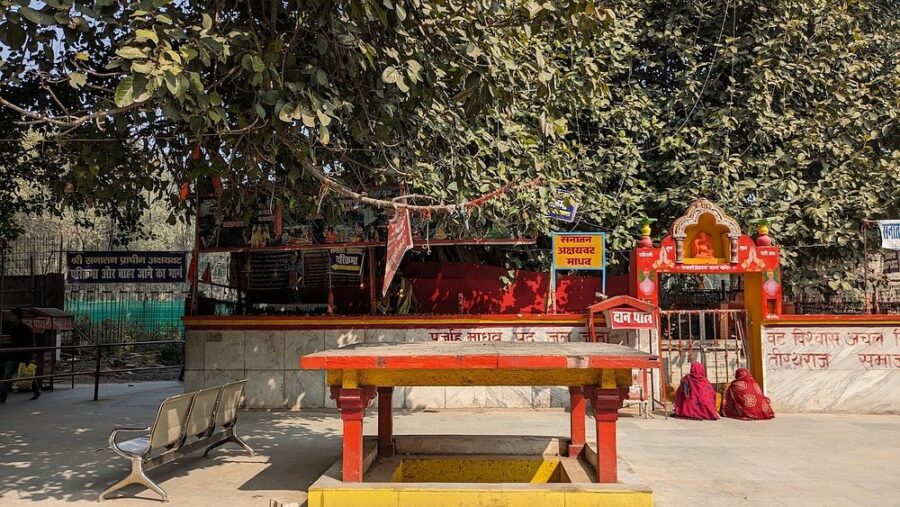
The Akshayavat tree, also referred to as the Akshaya Vat, holds immense mythological significance in Hinduism. Believed to be indestructible, the term “akshaya” signifies “eternal” or “undying,” which perfectly reflects its legendary status. The sacred tree is mentioned in various ancient Hindu texts, including the Puranas and the Ramayana, thereby solidifying its place in Hindu mythology. The legend goes that when the sage Markandeya asked Lord Vishnu to show him the divine power, the entire universe was submerged in water, but the Akshayavat tree in Prayagraj remained above the water. It is also believed that Lord Rama himself visited the Akshayavat tree during his exile. The tree is a silent witness to the ages, a symbol of hope and eternity for countless devotees. This eternal banyan tree is no ordinary banyan tree, I assure you. The Akshayavat’s presence in Prayagraj makes the holy city of Prayagraj even more sacred.
Main Attractions and Activities
When you visit the Akshayavat tree in Prayagraj, you’re in for a treat. Although it’s located inside the Allahabad Fort, access is granted to pilgrims and tourists. Many believe that beneath this tree lies the entrance to Patalpuri Temple. You’ll often see devotees offering prayers and tying threads around parts of the banyan tree, seeking blessings. The Sangam, the confluence of three rivers – Ganga, Yamuna, and the mythical Saraswati – is nearby, adding to the spiritual vibe. During the Kumbh Mela and Maha Kumbh, the area buzzes with activity. The city of Prayagraj truly comes alive. Although I visited when it was much calmer, I’m looking forward to going back in 2025 for the Maha Kumbh. It’s said that circumambulating the Akshayavat bestows blessings and moves one closer to moksha. The Akshayavat tree is considered to be a sacred banyan tree by Hindus.
Visitor Experience
Visiting the sacred Akshayavat, the sacred banyan tree, is an experience unlike any other. The atmosphere around the Allahabad Fort is charged with the energy of countless devotees who come to pay their respects. As you approach the ancient banyan tree, you’ll notice the intricate network of roots and branches, a testament to its age and resilience. The air is filled with the murmur of prayers, the scent of incense, and the feeling of devotion. Many devotees circumambulate the Akshayavat, seeking blessings and spiritual solace. It is believed that touching parts of the banyan tree can lead to the fulfillment of wishes. I found myself utterly captivated by the serenity of the place, despite the thronging crowds. The Akshayavat tree in Prayagraj is one of those places that stays with you long after you’ve left. When the city of Prayagraj hosts the Kumbh Mela, the experience reaches another level altogether.
Tips for Visitors
Planning a trip to see the Akshayavat in Prayagraj? Here are a few tips to make your visit smoother. You’ll want to keep the following points in mind:
- The Akshayavat tree is located inside the Allahabad Fort, so security checks are common. Dress modestly, as this is a place of worship for many Hindus.
- It’s best to visit during the cooler months to avoid the scorching Indian heat. If you’re planning to visit during the Kumbh Mela or Maha Kumbh, book your accommodation well in advance, as Prayagraj gets incredibly crowded.
- Be prepared for crowds and long queues, especially during peak season, and keep an eye on your belongings.
- Carry water to stay hydrated.
- Be respectful of local customs and traditions.
Most importantly, be open to experiencing the spiritual atmosphere; after all, you are visiting a very sacred tree in the city of Prayagraj, India.
Accessibility and Facilities
The Akshayavat tree, situated within the Allahabad Fort in Prayagraj, is generally accessible to pilgrims and tourists, though there can be restrictions, especially during certain events or security concerns. Keep in mind that the Allahabad Fort is maintained by the army, so access rules can change. While the area around the Akshayavat is kept relatively clean, facilities such as restrooms and seating are limited. It’s a good idea to carry your own water and snacks. The closest major transportation hub is Prayagraj Junction railway station. Auto-rickshaws and taxis are readily available to take you to the Allahabad Fort, though negotiating the fare beforehand is always a good idea. The authorities may provide for better infrastructure development for pilgrims until the Maha Kumbh in 2025, but it is better to be prepared. While I didn’t notice specific facilities for differently-abled devotees during my visit, I hope that accessibility will improve in the future to allow everyone to experience the divinity of this sacred tree.
Unique Features
The Akshayavat tree in Prayagraj, India, isn’t just any banyan tree; it possesses unique features that set it apart. Firstly, its supposed immortal nature is a defining trait. The term “Akshaya” signifies the indestructible, and this sacred tree is believed to be impervious to destruction. Prayagraj Fort was built around the ancient tree. Moreover, its location near the Triveni Sangam, the confluence of three rivers, adds to its mystique. The belief that beneath this tree lies the entrance to Patalpuri Temple further distinguishes it, and that it’s the eternal banyan tree is a truly amazing thing. It is truly a sacred banyan tree.
Overall Impressions
My overall impression of the Akshayavat tree in Prayagraj is one of awe and reverence. Despite the crowds and the security checks at the Allahabad Fort, the spiritual atmosphere is palpable. The sheer age of the ancient banyan tree, its gnarled branches, and the stories it holds make it a truly remarkable place. It’s more than just a sacred tree; it’s a symbol of enduring faith and hope. If you are to visit the city of Prayagraj, you should definitely visit the Akshayavat tree. The idea that it is an immortal tree is a fantastic one that really does make it something special. From the holy city of Prayagraj, this is a destination that will change your life forever.
Pros and Cons
Visiting the Akshayavat in Prayagraj offers a unique experience, but it also presents certain challenges.
| Pros | Cons |
|---|
| Witnessing a piece of living history and experiencing a deeply spiritual atmosphere. Proximity to the Sangam and other holy sites. The presence of the sacred Banyan Tree enhances the holy nature of the city of Prayagraj, according to Hindus. | Accessibility can be a challenge due to its location inside the fort. Crowds, especially during the Kumbh Mela and Maha Kumbh, can be overwhelming. Limited facilities. Security checks are common. |
Despite the inconveniences, I am really looking forward to going back for the Maha Kumbh in 2025. The spiritual experience can outweigh the inconveniences for many pilgrims and devotees.
 Real Journey Travels