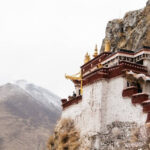
Lhasa sits in a broad river valley on the southern Tibetan Plateau at roughly 3,656 meters (about 11,990 feet), ringed by bare brown ridges and lit by hard, bright sunlight. The first things you notice are physical: thin air that makes a flight of stairs feel like a hill climb, and the sight of the white-and-red Potala Palace stacked up the slope of Marpo Ri above the modern city. Then come the sounds and smells of pilgrims, with murmured mantras, spinning prayer wheels, and yak-butter lamp smoke drifting from temple doorways.
This is the center of Tibetan Buddhism and a city that rewards slow travel. Its main sights are devotional places still in daily use, not museum pieces, so the best days here are the unhurried ones: a circuit of the Barkhor at dawn, a long afternoon at a monastery, a pot of sweet tea in a courtyard. Visiting takes more planning than most Chinese cities because of permits and altitude, but the payoff is a destination that feels unlike anywhere else in the country, and a sensible base for exploring the wider plateau.
Where to Base Yourself & Key Areas
Lhasa is compact enough that your choice of neighborhood mostly decides how much walking you do at altitude. Most visitors stay in or near the old Tibetan quarter around the Jokhang Temple, with the newer Chinese-built districts to the west offering larger, more conventional hotels. Note that foreign visitors generally must arrange the Tibet Travel Permit and a guide through a licensed agency, and many agencies will propose hotels as part of the package.
Area / CorridorBest Suited ForCharacter & AccessTrade-Off to KnowOld Town / BarkhorFirst-time visitors, early-morning pilgrim watchingWhitewashed lanes around the Jokhang Temple; most sights are walkable or a short taxi ride awaySecurity checkpoints and crowds; many guesthouses are small and basicAround the Potala (Beijing Road corridor)Travelers who want views and larger hotelsWide avenues and the Potala Palace square; taxis are easy to findFeels like a modern Chinese city rather than a Tibetan oneWestern Lhasa (Norbulingka side)Quieter stays, comfort-focused tripsNear the Summer Palace park; calmer streetsFarther from evening strolls in the old quarterDrepung & Sera Monastery edgesMonastery-focused itinerariesFoothill settings on the city outskirts, reached by taxi or tour vehicleFew dining options; you will be reliant on transportLhasa River riversideEasy walks, a gentler pace on arrival daysOpen paths and parkland on the city’s southern edgeLess atmosphere; a longer trip into the old quarter
Standout Sights & How to Pace Your Visit
The Jokhang Temple is the spiritual core of the city and the destination of pilgrims who prostrate themselves along the way. Outside, the Barkhor kora (circuit) is a lively loop of devotees, traders, and incense stalls, and walking it clockwise with the crowd is the quickest way to feel the city’s rhythm. The Potala Palace, the former winter residence of the Dalai Lamas, is the headline landmark; visits are typically timed and capped, so your guide or agency will need to reserve entry in advance, and the long climb is a real test at this height.
Beyond the center, Drepung and Sera Monasteries are the great Gelug institutions of the Lhasa valley. Sera is known for its afternoon monk debates in a shaded courtyard, a loud, slap-and-shout performance of scholarship that rarely disappoints. Norbulingka, the former summer palace of the Dalai Lamas, is a gentler, garden-like contrast and a useful low-effort stop when you are still adjusting.
Potala Palace: the signature view and interior; best taken on a day when you have already adjusted to the altitude.Jokhang Temple and Barkhor: go early or near dusk for the strongest pilgrim atmosphere.Sera Monastery: debating courtyard in the afternoon; allow time to wander the lanes.Drepung Monastery: a vast hillside complex that suits a slow morning.Norbulingka: parkland and pavilions, ideal for a lighter day.
With three days, use the first as a rest-and-stroll day (Barkhor, tea, early night), the second for the Potala and Norbulingka, and the third for Sera and Drepung. If you only have two days, combine the Jokhang and Potala and trim one monastery. A fourth day makes the whole trip noticeably more comfortable, and anything beyond Lhasa, such as Yamdrok Lake or Shigatse, should come after you have spent a couple of nights in the city.
Local Food Culture & Dining Scene
Tibetan cooking is built for cold and altitude. Expect tsampa (roasted barley flour mixed into a dough with tea or butter), momos (dumplings usually filled with yak or beef), thukpa noodle soup, and yak stews. Butter tea is salty and rich, an acquired taste that many travelers decide they like by day three, while sweet milk tea, served in the city’s teahouses, is the easier introduction and a social ritual for locals in the afternoon.
Dining clusters around the old town, where small Tibetan restaurants, teahouses, and rooftop cafes overlook the Barkhor, and you will also find Sichuan restaurants and Nepali and Indian kitchens that add variety. On arrival days, keep meals light and drink plenty of fluids; heavy, greasy food and alcohol sit badly at altitude. Check with your guide on vegetarian options if you need them, as meat dominates many menus.
Getting There, Seasonal Timing & Practical Tips
Most visitors fly into Lhasa Gonggar Airport, roughly an hour or so by road from the city, with connections from major Chinese cities such as Chengdu and Beijing, and from Kathmandu for those entering via Nepal. The Qinghai-Tibet Railway from Xining or other Chinese cities is a slower, scenic alternative that gives the body more time to adapt to the elevation. Foreign travelers need a Chinese visa plus a Tibet Travel Permit, which must be arranged through a registered agency before you board, so leave several weeks for the paperwork. Inside the city, taxis and your tour vehicle cover most distances, while the old quarter is best on foot.
April to May and September to October bring the clearest skies and mildest temperatures, though evenings are cold year-round and the sun is intense, so pack layers, sunscreen, and a hat. Summer is warm and wetter, with afternoon showers and the busiest crowds, while winter is dry and cold but quieter, and some services run on reduced schedules. Plan a slow first day, drink water often, and talk to a doctor about altitude medication before you travel. Day trips to Ganden Monastery, Yamdrok Lake, or Drak Yerpa work well after you have spent two nights in Lhasa.
 Real Journey Travels