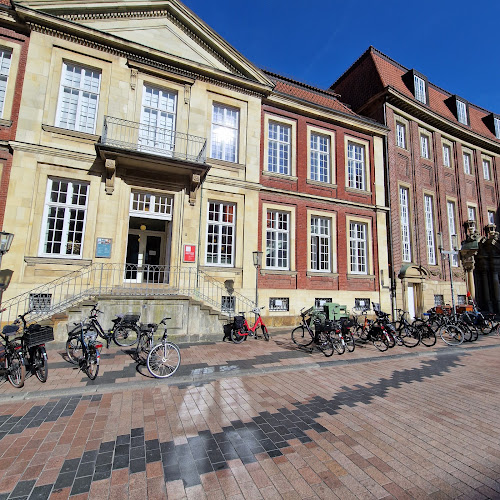
The museum is dedicated largely to Picasso’s graphic work, and its core strength is a very large collection of prints, lithographs and etchings that traces key phases of Pablo Picasso’s career in a way that many larger, painting-focused institutions simply do not. The spaces feel domestic at times — rooms with tall windows, wooden floors and old plaster — and that contrast between the historic architecture and Picasso’s restless modernity is exactly what gives the visit character.
Visitors will find exhibitions that rotate regularly, so the permanent holdings of prints are often shown in new juxtapositions or paired with temporary exhibits that highlight connections to other artists and movements. The museum is not a blockbuster painting blockbuster; it is a specialist place, a research-minded yet accessible museum where work on paper gets the attention it deserves. For someone curious about Picasso’s graphic experiments, his lithographs and the way he handled line across decades, the collection is one of the stronger presentations in Germany.
There are a few practical touches worth noting up front. The main entrance is wheelchair accessible and so are some restroom facilities — details that matter, and the museum does try to be accommodating. A small restaurant on site gives a welcome breather after concentrated looking; it is exactly the kind of place where a visitor might linger over coffee and a slice of cake while still mulling a recent gallery discovery. Paid parking is available nearby in a garage, which helps when someone comes by car, though many guests arrive by bike or public transport because Münster is a compact, very bike-friendly city.
Expect a balanced experience. Many guests leave impressed by the depth and quality of the prints and by the way temporary exhibitions open new windows onto Picasso’s influence. But some people are surprised that the museum emphasizes graphic work over large-scale paintings, and a few find the rooms smaller than anticipated. Those are fair reactions. The museum’s curatorial strength is focus rather than volume: it chooses to tell stories about technique, printmaking and the artist’s graphic evolution, rather than attempt an encyclopedic overview of every medium Picasso touched.
What often goes unnoticed in quick descriptions is how tactile and human the place feels. The museum was once a residence, and that former life shows up in little ways: doors that open into intimate suites of rooms, an inner courtyard that softens the street noise, and plaster moldings that remind a visitor they are in a building with centuries of municipal memory. In certain exhibitions, the curator will use the building’s quirks to their advantage, arranging prints to respond to particular windows or wall niches. That sort of site-specific thinking makes the museum more than a storage space for objects; it becomes a place where architecture and printmaking converse. The guidebooks often skip that nuance, but experienced visitors notice it and appreciate the scale and intimacy.
The collection emphasizes works on paper — etchings, lithographs, drypoints — and includes pieces that illuminate Picasso’s relationships with other artists and printmakers. At times the museum mounts shows that pair Picasso prints with contemporaries or successors to flesh out a particular idea in modern art. Georges Braque and Henri Matisse might appear in the same conceptual orbit on occasion, not as rivals but as interlocutors whose approaches help explain Picasso’s choices. Those thematic pairings are one reason the museum attracts art-historical types as well as casual museum-goers.
For travelers who love to learn while they wander, the museum provides good contextual material. Text panels are concise but informative, and the curators seem to like making connections across technique and biography. The museum’s interpretation is aimed at both specialists and interested laypeople; it respects complexity without getting needlessly obscure. Occasionally the lighting will be dim to protect fragile lithographs, so images that look punchy in a reproduction may read more subtlely in the room. That’s part of the trade-off when viewing original prints: conservation needs shape display choices, and that results in a quieter, more meditative atmosphere than in some louder contemporary-art venues.
There is a small but well-chosen museum shop where reproductions, books and art supplies appear alongside postcards and catalogues. It is the sort of shop where a well-made coffee-table book about Picasso’s prints can be found without hunting high and low. And the on-site restaurant manages to be practical and pleasant; it’s not Michelin-starred and it does not pretend to be, but it offers solid sandwiches and hot drinks and, on a rainy Münster afternoon, it can feel like an honest reward after a focused hour or two of looking.
The museum strikes a particular chord with those who care about technique. A printmaker, for instance, will leave with a list of things to study: the ways Picasso used line for both caricature and tensile tenderness, the shifts in his handling of negative space, the experimental collaborations he undertook with print workshops. For historians, the museum’s rotating special exhibitions and its tendency to cross-reference neighboring artists provide ongoing reasons to return. For casual art fans, the place offers moments of real surprise: seeing a familiar motif rendered in a dozen different ways across different print processes can be oddly moving, and often prompts a reappraisal of Picasso’s imaginative restlessness.
Not everything is perfect. Some visitors mention that certain gallery flows feel a bit cramped when temporary shows run concurrently with popular displays, and signage occasionally assumes a touch more prior knowledge than absolute novices possess. And since the emphasis is not on monumental paintings, anyone expecting a room of Guernicas should adjust expectations. The museum, honestly, is happiest when its audience is open to looking closely and thinking about method as much as myth.
There is also a quietly scholarly bent to programming: lectures, catalog launches and workshops appear in the calendar from time to time, and that programming attracts a loyal local audience as well as visitors from other German cities. On those evenings the museum can feel like a living cultural hub, not a silent case of specimens. The overlap between local intellectual life and visitor interest gives the place a particular local tone that is hard to manufacture; it emerges naturally from the museum’s modest size and focused mission.
The museum’s location in Münster — with its pedestrian-friendly streets, cycle culture and manageable scale — complements the experience. Visitors who build a half-day around the museum can combine a quiet morning of looking with a stroll through the old town, a coffee in a side street, and a later visit to another cultural site. The small footprint makes it easy to combine this museum with a couple of other stops without feeling rushed. That sort of planning-minded approach suits the museum, because its pleasures are accumulative: a close look here deepens the appreciation of Picasso elsewhere, in print rooms, catalogues and larger collections.
Finally, the Art Museum Pablo Picasso in Münster is one of those places that rewards curiosity. It does not shout. Its labels are thoughtful. Its curatorial choices favor depth and technique. If a visitor comes prepared to see graphic work as an entry point into an artist’s practice rather than as an appendix to painting, they will likely find the museum unexpectedly rich. The experience is shaped by a convincing seriousness about Picasso’s printmaking and by a willingness to let the old building and the modern works play off each other in ways that are quietly satisfying. For travelers and art lovers who appreciate concentrated collections, this museum is a memorable stop in Münster’s cultural map.
 Real Journey Travels