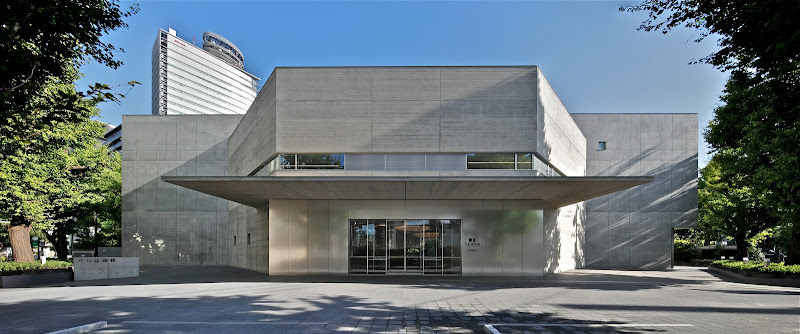
The museum displays Japanese swords spanning several centuries in a compact, modern building set beside a small garden that once belonged to the Yasuda family. That garden — yes, the kyū Yasuda garden — gives the museum a surprising moment of calm in the middle of the city; it’s the sort of detail that turns a visit from merely educational into quietly memorable.
Visitors will notice quickly that this is not a museum of spectacle or theatrical displays. Instead it favors careful lighting, clean exhibition cases and explanatory labels that aim to help people understand why a curve in a blade, a grain pattern (hada) or a hamon line might mean the difference between a mere object and a designated national treasure. The collection includes not only katanas but tachi, tanto and modern blades, plus fittings and works related to sword making and the samurai culture that shaped so much of Japan’s material history. The displays are arranged to invite a slow progression: craftsmanship and technique, then historical context, then the ritual and social roles of swords across time.
There is a strong sense of curation here — someone clearly thought about the narrative from the beginner’s eye to the mildly obsessed enthusiast. The museum does an especially good job explaining the forging process, the long and arduous skill development behind each blade, and the subtle art of polishing. On certain display panels the metallurgy is teased out into plain language. The explanation of differential hardening and the visual poetry of a hamon line is phrased so that someone without a background in metalwork can leave feeling they actually understand what a master smith was chasing.
Accessibility and visitor comfort are practical strengths. The museum provides wheelchair-accessible entrances, parking and restrooms, and onsite staff services help when visitors need directions or additional context. There is no restaurant inside, which is worth noting for itinerary planners; plan to eat nearby in Ryogoku or along the Sumida River after the visit. Restrooms are available, and the building design keeps lines moving without feeling rushed. The space is intentionally modest in scale — not a sprawling national museum — which means a typical visit ranges from 60 to 90 minutes for most people who read a few labels and take photographs where allowed.
One of the most charming, somewhat under-advertised aspects is how the museum situates swords within broader Japanese arts and rituals. On certain floors the exhibits show sword fittings, scabbards and lacquer work as integral parts of the whole. It’s easy to miss how much other crafts — metalworkers, lacquerers, gem-setters — contributed to what people typically think of as “the sword.” The museum brings these crafts out from the margins and shows them as collaborative, interdependent arts. For anyone who loves handicrafts, this is unexpectedly satisfying.
History is present but not heavy-handed. The museum connects blades to periods like the Heian, Kamakura and Edo without drowning visitors in dates. Instead of chronological overload, it focuses on turning points: the techniques developed during times of war, the refinement of aesthetics in peaceful eras, and the role swords played in ceremonies and social status. The narrative balances romantic images of samurai with the rigorous technical description of sword making. So yes, someone who loves samurai films will get some of the romance, but they will also leave with a clearer sense of the brutal discipline and the deep conservation culture that preserved these works.
Some displays rotate — the museum understands preservation needs and the fragility of ancient metal and organic scabbard materials. That means repeat visits can reveal new things. The special exhibitions, when scheduled, often highlight a single smith, a regional school, or a particular technique, and those tend to attract a crowd of enthusiasts. The main floors, meanwhile, keep a steady narrative about craft and cultural context.
Because the museum sits in Sumida, near Ryogoku, it pairs nicely with other local cultural stops — Hokusai fans often make a combined day of it, and the proximity to sumo culture adds an interesting layer to the neighborhood visit. The small garden next to the museum is more than a pretty afterthought. On a personal note — or rather, the guide’s note — there was a late autumn visit when the fallen leaves gathered in the stone and someone was sketching a tsuba (hand guard) they had just studied inside; the way the light dropped across their page and the moss felt like the perfect ending to a morning of looking at centuries-old metalwork. Yes, that sounds a little sentimental, but the place encourages that sort of slow appreciation.
Practicalities, tucked into the description: photography policies change by exhibit, and certain national treasures and delicate items will have tighter restrictions. The museum offers helpful English-language descriptions for many exhibits, but some of the deeper texts remain in Japanese — so travelers with limited Japanese might want to download or bring a guidebook or pick up museum leaflets if available. Staff at the front desk are generally helpful and can point out highlights or clarify the display sequence. It’s one of those small institutions where a staff member’s anecdote about a particular sword can suddenly make the piece come alive.
Expect a mixed but fair range of visitor responses. Many praise the clarity of curation, the craftsmanship focus, and the quiet beauty of the setting — others sometimes wish for more interactive content or a small cafe to linger in afterwards. The museum seems to wear its conservation priorities proudly: fewer flashy gimmicks, more respect for fragile objects. For travelers who prefer tactile or interactive museums this might feel a touch restrained. For those who savor objects and history, it’s ideal.
The narrative of the museum also touches on the cultural sensitivity around swords in Japan. The institution is part exhibition space and part stewardship: it preserves objects, documents smithing techniques and supports a broader conversation about how swords fit into modern Japanese culture. There are occasional demonstrations, lectures or workshops that the museum or associated preservation societies organize; these are not daily occurrences but when they happen, they are informative and often intimate, with small groups and dialogue with craftsmen or curators. For travelers who are keen, checking the event schedule before a trip can pay off in spades.
Because the museum is compact, it’s friendly for families with older children and for travelers on a packed Tokyo itinerary. It’s not a place to rush through; the building’s design invites pausing, reading, and looking. Visitors who love detail — the pattern in a polish, the tiny chisel marks on a habaki (blade collar) — will find themselves lingering. And yes, the katana gets attention, but the museum resists giving it unfair celebrity over other blade forms; the curators treat tanto, tachi and even modern blades with equal respect, which is refreshingly balanced.
In short, the Japanese Sword Museum in Sumida offers a thoughtful, well-curated look at Japanese blades and the cultural ecosystem that produced them. It will suit travelers who value craftsmanship explanations, historical context without being overwhelming, and a peaceful garden moment after concentrated looking. For anyone fascinated by metallurgy, samurai culture, or Japanese art-making traditions, this museum is a compact, highly focused stop in Tokyo that rewards curiosity and patience. The visitor who goes in wanting to learn will come out with a richer appreciation for what a sword really is: not only a weapon, but a convergence of art, ritual, technology and memory.
 Real Journey Travels