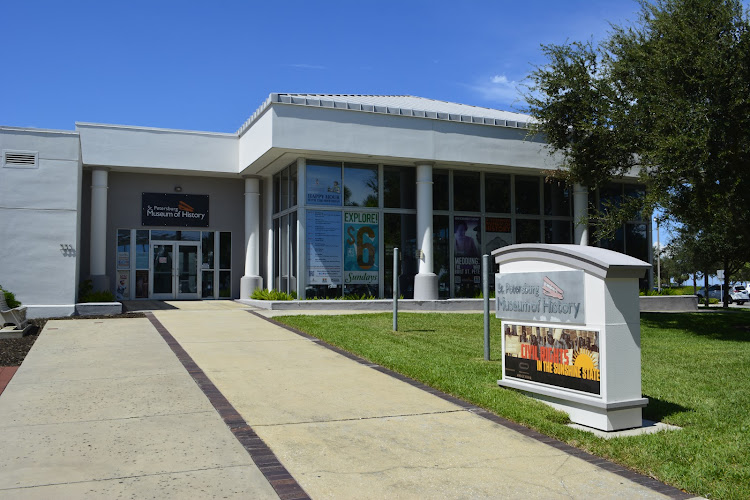
Petersburg and the Tampa Bay region through artifacts, photographs, and immersive exhibits. As a city history museum with roots in preserving local heritage, it balances community-focused displays with a particularly memorable gallery on the beginnings of commercial air travel. Travelers who wander in expecting just dusty relics will often be surprised — the place mixes hands-on learning, archival treasures, and occasional quirky objects that spark real curiosity.
Located in downtown St. Petersburg, the museum sits within easy reach of the waterfront and other cultural stops, so it often functions as the historical stop on half-day itineraries. The exhibits range from early pioneer life in Pinellas County to mid-century postcard-era boom times, and yes, there is a concentrated, well-curated section devoted to the world’s early commercial flights. That flight exhibit is genuinely worth a detour: original photographs, maps, and memorabilia explain how local airfields and entrepreneurial pilots helped establish routine passenger air service in the region. It’s the sort of niche history that delights aviation fans and casual visitors alike.
The collection mixes objects that feel intimate — family photos, letters, domestic items — with larger museum pieces like historic signage, period clothing, and transportation artifacts. A frequent visitor once described a particular afternoon spent tracing the development of the downtown corridor from fishing piers to a bustling tourist magnet; that story captures the museum’s approach. It centers people. The artifacts don’t just sit behind glass; they tell human-scale stories about migration, commerce, and civic identity in St. Petersburg and across Tampa Bay.
Beyond exhibits, the museum operates as an event venue and banquet hall for weddings, fundraisers, and community gatherings. The spaces lend a historic charm that event planners like — think original architectural details and the convenience of downtown access. Visitors who arrive on event days may find a more lively atmosphere, with guided tours often available to complement the festivities. The museum is run by a non-profit organization that emphasizes education, public programming, and preserving cultural heritage, and that ethos shows up in classroom-style exhibits and rotating installations spotlighting local artists or underrepresented narratives.
Accessibility and visitor services are clearly on the museum’s checklist. There is on-site parking, wheelchair accessible entrances and restrooms, and staff offers tours for groups and individuals. Families traveling with children will note kid-friendly displays and educational content that keep younger guests engaged without being patronizing. There’s also a small gift shop that stocks local-interest books and unique souvenirs — a nice place to pick up a Tampa Bay history title or a locally made print. Active military discounts are available, which is a thoughtful touch for veterans and active service members traveling through the area.
Like any publicly frequented institution, the museum gets different reactions. Most people come away impressed by the depth of the local collection and the intimate storytelling. Some visitors wish certain galleries were larger or more interactive; others applaud the mix of permanent and rotating exhibitions. The museum staff are pragmatic and friendly, and they tend to accommodate questions and group needs, but on busy afternoons the visitor experience can depend on timing and whether a private event is in progress. In short: it’s genuinely worthwhile, but planning ahead helps avoid disappointment.
Travelers who enjoy history museums will find many small delights here. Photographs that appear mundane at first glance become vivid when paired with oral histories; a single merchant ledger reveals trade patterns across Pinellas County; and an exhibition case sometimes holds a surprising object that prompts a longer conversation about local culture. There’s a tangible sense that this museum tries to preserve real, ordinary lives alongside the obvious milestones. If a visitor has just a couple of hours in St. Petersburg, a focused visit here can provide immediate context for the rest of the city — why the waterfront developed as it did, how tourism shaped neighborhoods, and how early aviation tied this corner of Florida into the wider world.
Insider note (and this is the kind of thing that makes travel writing fun): a docent once pointed out the tiniest item in a drawer — a worn boarding pass from the 1920s — and suggested imagining the person who clutched that slip on a humid Florida morning. It stuck. Small objects like that make history feel like a sequence of lived choices and weathered moments, not just dates on a timeline. That anecdote captures the museum’s strength: it reveals the human texture behind St. Petersburg’s development.
For travelers interested in art as well as history, the museum sometimes crosses into gallery territory with rotating exhibitions that highlight local artists or thematic projects tied to Tampa Bay culture. These shorter exhibitions are useful for return visitors: they create a reason to come back, because the permanent exhibits remain steady while the special shows rotate through subjects that often explore modern issues in a historical frame. The museum staff tends to curate these with a community-oriented lens, meaning the art and historical programming often dialogue with each other — a pleasant cross-pollination for visitors who like both worlds.
Event planners and couples should take note: the museum doubles as a wedding venue with banquet facilities. That gives it a slightly different texture than a museum purely focused on exhibits. Rooms can be configured for receptions, corporate gatherings, and community events, and the retro-meets-historic aesthetic photographs nicely. Travelers who stop by may find a rehearsal dinner or a local civic event in progress — which can be fun to observe, and occasionally disruptive to a quiet gallery visit. But often the buzz of events just adds to the sense that the museum remains an active part of the living city.
Education is another area where the museum shows its priorities. School programs, guided tours, and docent-led talks support a mission of lifelong learning; visitors who are curious should ask about specialized tours that dive deeper into subjects like early commerce, African American history in Pinellas County, or the development of local transportation infrastructure. The museum is, in many ways, a teaching institution: it encourages questions and offers context. If a traveler has a hunch about a specific topic — say, the region’s maritime past or the history of local newspapers — staff will usually point toward the relevant exhibits or suggest reading material from the gift shop.
What about time commitment? A typical visitor who skim-reads labels and enjoys the flight gallery can expect to spend about 60 to 90 minutes. History buffs who read carefully, take photos for notes, and linger over archival displays should plan for two hours or more. The museum’s scale is friendly — not overwhelming — which is perfect for travelers who want substance without museum fatigue. It often fits neatly into half-day plans, paired with a waterfront walk or nearby art stops.
Practicalities worth mentioning: admission is fee-based, and the museum offers options like guided tours on request. While there’s no full-service restaurant on-site, there are plenty of nearby cafes and eateries around downtown St. Petersburg, which makes it pleasant to combine a museum visit with lunch. Parking on-site is a real convenience in a busy downtown area, and the accessible facilities mean most travelers will find navigation straightforward. If a visitor needs a specific accommodation, contacting the museum in advance tends to yield quick, helpful responses.
In short, the St. Petersburg Museum of History is a strong pit stop for travelers who want to deepen their understanding of St. Petersburg and Tampa Bay. It’s not the flashiest attraction in the region — that title belongs to beaches and major cultural centers — but it does what a good local museum should: it preserves memory, provokes curiosity, and connects the past to present-day community life. For those who enjoy layered storytelling, transport-related history, or event spaces with character, it’s a worthwhile bookmark on a Tampa Bay itinerary. And if a traveler leaves wanting more detail, that’s a sign the museum did its job — it made the past feel alive, relevant, and a little bit irresistible to explore further.
 Real Journey Travels