
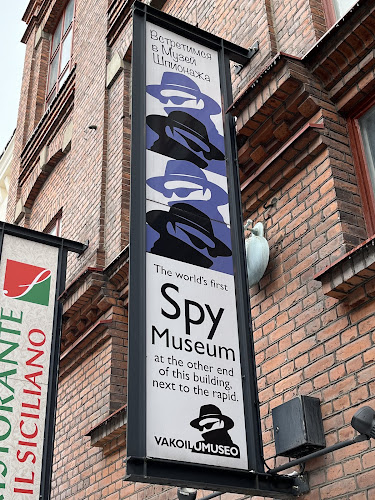
Spy Museum
About Spy Museum
Description
The Spy Museum in Tampere offers a hands-on, slightly mischievous look at espionage that both history buffs and families find hard to resist. Located in a city known for industrial heritage and quirky museums, this small but focused institution displays real espionage and code-breaking equipment alongside well-designed interactive exhibits. Visitors will see relics that feel like props from a Cold War thriller — microfilm readers, bugging devices, disguised cameras — yet most of the objects are authentic and come with context that explains who used them and why. In other words, it is educational without being dry, and playful without being silly. That balance is rare, and it shows here.
The permanent collection emphasizes international espionage practices and methods of surveillance used across the 20th century and into the present. Panels and artifacts explain tradecraft and tactics in a straightforward way, but they also encourage curiosity. For travelers who like to poke, prod and ask awkward questions, this is the kind of museum where staff actually expect it. And they like it. The exhibition flow moves from broad themes — what spying is, how agents were recruited, how information was concealed — into specific devices and stories, such as famous spy tricks, homemade gadgets, and codebooks. For anyone trying to understand how small mechanical devices could shape geopolitics, this place offers surprisingly clear explanations.
The interactive secret agent test is the highlight for many visitors. It turns a museum visit into a tiny mission. Participants walk through a series of stations designed to test observation, memory, and basic codebreaking skills. It is family-friendly and intentionally low-pressure: the goal is fun and light learning rather than creating anxiety. Kids, in particular, tend to linger at the hands-on stations and then drag parents back to watch demonstrations again. Adults often get smug about solving one puzzle quickly, only to be humbled by a later riddle. There is something joyful about watching grown people retreat into competitive, playful mode in front of an exhibit.
Accessibility is solid and thoughtful. The main entrance is wheelchair accessible and there are wheelchair accessible restrooms, so people with limited mobility can explore with fewer obstacles than in many older museums. Practicalities matter when traveling, and the museum has covered the basics: clean restrooms are available on-site, which is always appreciated mid-exploration. However, there is no restaurant inside the building, so visitors should plan for a snack or meal before or after the visit at nearby cafes in the Finlayson or city centre area.
Parking is possible but usually paid. The venue is served by paid parking garages, paid parking lots, and metered street parking in the surrounding area. That means arriving by car is doable, but it pays to budget for parking fees and to allow extra time during busy weekends. Alternatively, public transport in Tampere is reliable and often faster when the city center is busy; many travelers find a tram or bus ride less stressful than circling for a space. The museum’s compact footprint makes it easy to include as a stop during a half-day of sightseeing in Tampere.
Many visitors remark on the museum’s atmosphere: intimate rather than grand, conversational rather than preachy. The interpretive texts are clear but not patronizing, and the staff are known to be helpful without being obtrusive. That said, some travelers expecting a sprawling, blockbuster museum about spy lore might feel the place is modest; it is intentionally curated and focused. For those who appreciate quality over quantity, this works. For those who prefer huge collections and long halls, temper expectations and plan to pair the visit with another nearby museum or a walk through the historic Finlayson district.
There is a distinct Finnish sensibility to the presentation. Explanations get to the point, and exhibits respect the intelligence of the visitor. Moreover, the museum includes a handful of local angles — treatments of regional intelligence history and some lesser-known Finnish espionage stories — that are not widely covered elsewhere. For travelers who read a lot about Cold War history and want a fresh, local take, these snippets are a nice surprise. They enrich the more general international material and create a fuller image of how espionage impacted Northern Europe.
Practical information is woven into the visitor experience without heavy-handedness. Labels often explain how devices were used and include a sentence or two about the human consequences: betrayals, errors, misidentifications, and the odd absurdity that comes with spy craft. This dual focus — technical and human — makes the collection memorable. One visitor remembered leaving the museum less impressed by gadgets and more taken by a simple display that described how a single misread signal changed the outcome of a mission. It is the personal stories that linger, not just the shiny gizmos.
For photo fans, much of the museum permits photography for personal use, though certain artifacts and information panels may be restricted — standard museum practice. The compact galleries are good for quick photo essays: a close-up of an old cipher machine, a candid shot of children concentrating on the agent test, a wider image showing how interactive stations are arranged. Visitors should be mindful of other guests when photographing and avoid flash near delicate displays.
The educational angle is strong and often used by school groups. Teachers appreciate the clear learning outcomes tied to the interactive elements: observation skills, pattern recognition, critical thinking. But this is not only a place for school trips. Solo travelers, couples, and older adults who enjoy modern history will find the exhibits absorbing. The pace is measured; one can easily spend an hour or two, and still leave feeling like there was more to unpack. For most, the optimal visit lasts between 60 and 90 minutes, though inquisitive guests sometimes linger for nearly two hours, testing every puzzle and re-reading the exhibit texts. So, bring patience rather than a sprint-through mindset.
Visitors should note that temporary exhibitions or rotating displays occasionally appear, offering fresh angles on spying, cryptography, and related cultural topics. These short-term shows are an excellent reason to revisit. On some visits, the museum stages themed weekends with special demonstrations or guided mini-tours; these are useful for those who prefer some human explanation over self-guided wandering. When a special program is running, the museum can feel livelier and more communal, which many travelers enjoy.
The shop is small but cleverly curated. It stocks espionage-themed souvenirs, puzzle books, simple spy gadgets, and child-friendly items that echo exhibit themes. Prices are reasonable for museum retail, and the items are good little reminders of a visit: a compact puzzle, a codebook, a toy that looks more elaborate than it actually is. Since there is no on-site restaurant, the little shop sometimes carries snacks and bottled drinks — handy for thirsty visitors but not a substitute for a proper meal.
Finally, the museum’s tone manages to be both playful and respectful of the subject matter. Spying involves moral grey areas, and the exhibits rarely celebrate espionage as heroic. Instead, the narrative tends to present tradecraft as a tool with consequences — sometimes strategic, often human. That nuanced approach helps the Spy Museum stand out among niche museums; it offers more than trivia and gadgets. It invites reflection, even a tiny ethical squint, which is refreshing and — dare it be said — kind of fun for people who like history that asks questions rather than handing out pat answers.
In short, the Spy Museum in Tampere is a compact, well-executed attraction that blends authentic espionage devices with interactive learning in a visitor-friendly package. It works especially well for families with curious kids, travelers who appreciate tidy, informative displays, and anyone who wants to add a slightly offbeat stop to their Tampere itinerary. Expect to leave with at least one new little fact that surprises you, and maybe the urge to try decoding a message later, just to prove you can.
Key Features
Spy Museum
Tours & Activities
GetYourGuide provides this tour inventory. We may earn a commission if you book through it; verify current availability, prices, and terms with the provider.
Visitor Reviews
There are no reviews yet. Be the first one to write one.
Share Your Experience
Have you visited Spy Museum? Help other travelers by leaving a review.